🎬🎬 To Kill a Mockingbird (1962), directed by Robert Mulligan and based on Harper Lee’s Pulitzer Prize-winning novel, is a powerful drama set in 1930s Alabama. The film follows young Scout Finch (Mary Badham), her older brother Jem (Phillip Alford), and their widowed father Atticus Finch (Gregory Peck), a principled lawyer who becomes a moral beacon in their racially divided town.
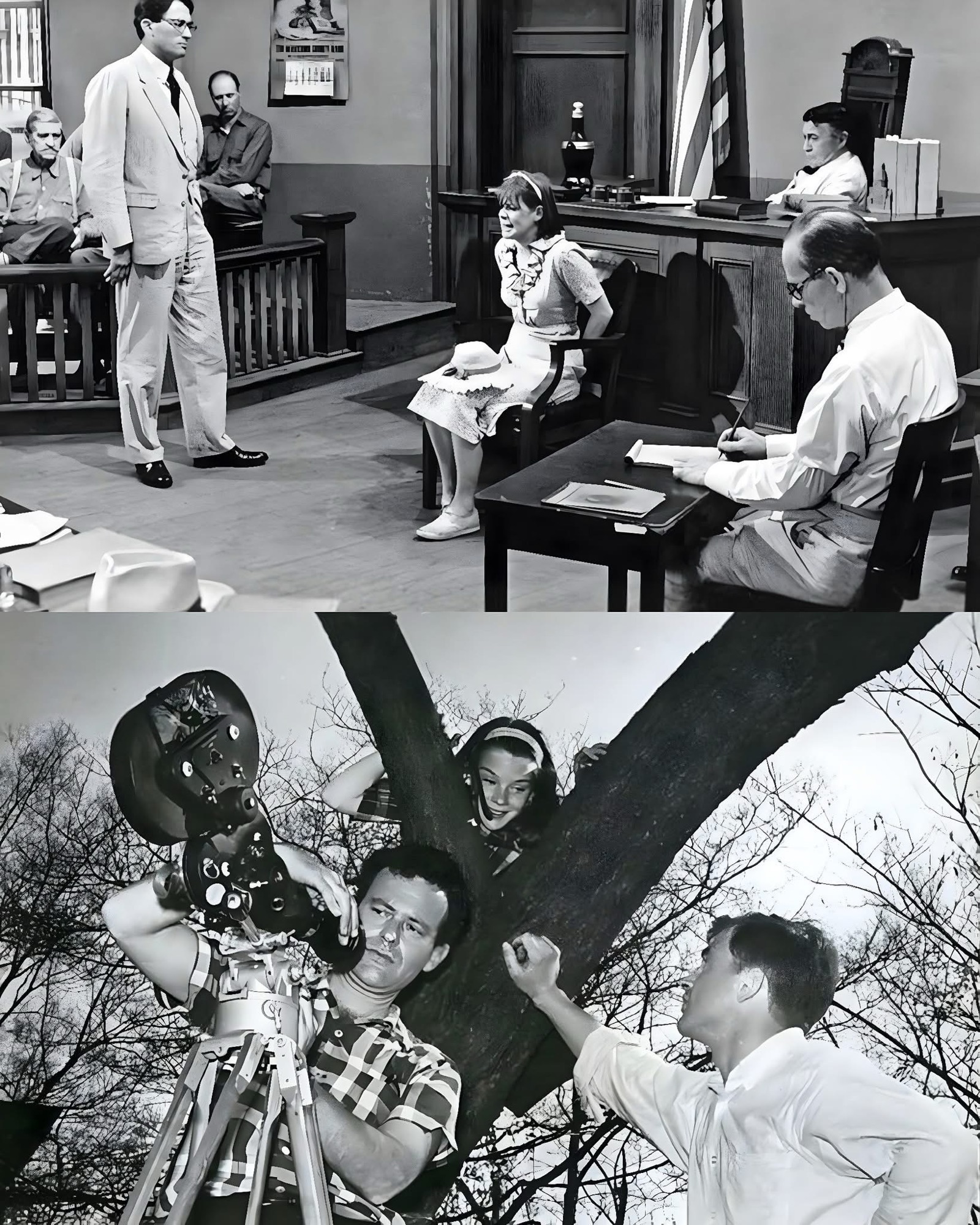

The story unfolds through Scout’s perspective, capturing her childhood experiences and growing awareness of injustice. When Atticus is appointed to defend Tom Robinson (Brock Peters), a Black man falsely accused of raping a white woman, Mayella Ewell, he does so with integrity and compassion, despite community hostility. Atticus’s calm, rational demeanor in court and his unshakable belief in justice stand in stark contrast to the deep-seated racism around him.
As the trial progresses, Scout and Jem witness their father’s quiet bravery and begin to understand the complexities of morality, empathy, and prejudice. Despite Atticus’s compelling defense exposing the lies of Mayella and her abusive father Bob Ewell, the all-white jury convicts Tom, underscoring the era’s entrenched racism.
Parallel to the courtroom drama is the children’s fascination with their reclusive neighbor, Boo Radley (Robert Duvall in his screen debut). Boo, long the subject of eerie myths, ultimately emerges as a silent protector when he saves Scout and Jem from a violent attack by Bob Ewell, revealing the film’s core message about the danger of judging others without understanding them.
Gregory Peck’s performance as Atticus earned him an Academy Award for Best Actor. The film also won Best Adapted Screenplay and Best Art Direction. Revered for its moral clarity and emotional depth, To Kill a Mockingbird remains an enduring classic—a poignant exploration of justice, childhood innocence, and human dignity in the face of societal cruelty.