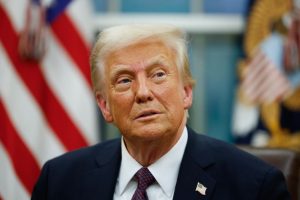
Israel says 3 killed in Iranian barrage after Trump announces ceasefire
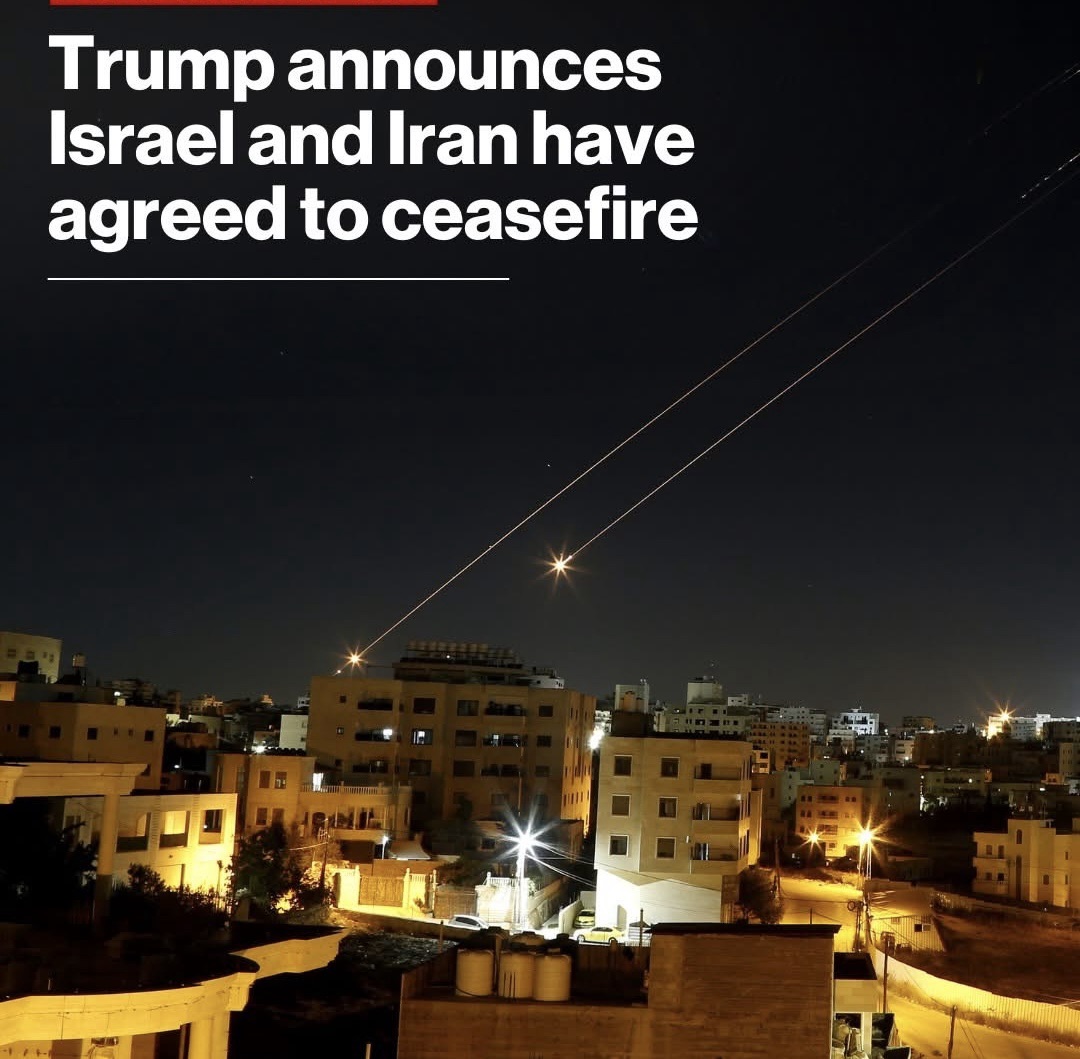
The agreement involves two 12-hour ceasefire periods, starting with Iran.
DUBAI, United Arab Emirates — Israel said at least three people had been killed in Iranian attacks Tuesday morning, hours after U.S. President Donald Trump announced the two Middle Eastern countries had agreed to a “complete and total ceasefire.”
Israel’s Magen David Adom rescue services said at least eight more people were injured in the early morning barrage. At least one person is believed trapped in the rubble and a residential building in Israel’s south sustained heavy damage, according to emergency services.
Waves of missiles sent Israelis to bomb shelters for almost two hours in the morning.
Trump’s announcement came soon after Iran launched a limited missile attack Monday on a U.S. military base in Qatar, retaliating for the American bombing of its nuclear sites.
Iran’s foreign minister said that as long as Israel stopped its attacks by 4 a.m. local Tehran time Tuesday, Iran would halt its own. But nearly an hour after that deadline, Israel’s military warned its public that Iran had launched missiles towards it as sirens sounded. At least one missile interception could be seen over the skies of Jerusalem and warnings of three further attacks followed as day broke.
It’s unclear what the detected missile launches would do for the ceasefire’s timeline.
Trump’s announcement on Truth Social said the ceasefire wouldn’t begin until about midnight Tuesday Eastern time. He said it would bring an “Official END” to the war.
Israel doesn’t confirm ceasefire but appears to pause strikes
Israel did not immediately acknowledge any ceasefire, but there were no reports of Israeli strikes in Iran after 4 a.m. local. Heavy Israeli strikes continued in Tehran and other cities until shortly before that time. Israel in other conflicts has stepped up its strikes just before ceasefires took effect.
“As of now, there is NO ‘agreement’ on any ceasefire or cessation of military operations,” Iranian Foreign Minister Abbas Araghchi wrote in a post on X. “However, provided that the Israeli regime stops its illegal aggression against the Iranian people no later than 4 am Tehran time, we have no intention to continue our response afterwards.”
His message was posted at 4:16 a.m. Tehran time. Araghchi added: “The final decision on the cessation of our military operations will be made later.”
The Israeli military declined to comment on Trump’s ceasefire statement and the office of Israeli Prime Minister Benjamin Netanyahu did not immediately respond to a message seeking comment.
Trump describes conflict as ’12 Day War’
Trump gave the conflict between Israel and Iran a name: the “12 Day War.” That recalls the 1967 Mideast war, known by some as the “Six Day War,” in which Israel fought a group of Arab countries including Egypt, Jordan and Syria.
Trump’s reference carries emotional weight for the Arab world, particularly Palestinians. In the 1967 war, Israel captured the West Bank and east Jerusalem from Jordan, the Gaza Strip and the Sinai Peninsula from Egypt, and the Golan Heights from Syria. Though Israel later gave the Sinai back to Egypt, it still holds the other territories.
Trump communicated directly with Israeli Prime Minister Benjamin Netanyahu to secure the ceasefire, according to a senior White House official who insisted on anonymity to discuss the Monday talks. Vance, Secretary of State Marco Rubio and special envoy Steve Witkoff communicated with the Iranians through direct and indirect channels.
The White House has maintained that the Saturday bombing helped get the Israelis to agree to the ceasefire and that the Qatari government helped to broker the deal.
It’s unclear what role Ayatollah Ali Khamenei, Iran’s leader, played in the talks. He said earlier on social media that he would not surrender.
Iran attack against US implied willingness to de-escalate
Iran attacked a U.S. base in Qatar on Monday, but appeared to indicate it was prepared to reduce tensions. The U.S. was warned by Iran in advance, and there were no casualties, said Trump, who dismissed the attack as a “very weak response.”
Qatar condemned the attack on Al Udeid Air Base as “a flagrant violation” of its sovereignty, airspace and international law. Qatar said it intercepted all but one missile, though it was not clear if that missile caused any damage.
Iran said the volley matched the number of bombs dropped by the United States on Iranian nuclear sites over the weekend. Iran also said it targeted the base because it was outside of populated areas.
Qatar Maj. Gen. Shayeq Al Hajri said 19 missiles were fired at the base that is home to the Combined Air Operations Center, which provides command and control of air power across the region, as well as the 379th Air Expeditionary Wing, the largest such wing in the world. Trump said 14 missiles were fired, 13 were knocked down and one was “set free” because it posed no threat.
Iran announced the attack on state television, with a caption calling it “a mighty and successful response” to “America’s aggression.”
Earlier reports that a missile was launched at a base housing American forces in Iraq were a false alarm, a senior U.S. military official said. The official, who spoke on condition of anonymity because he was not authorized to comment publicly, said debris from a malfunctioning Iranian missile targeting Israel had triggered an alert of an impending attack on the Ain al-Assad base.
By early Tuesday, Qatar Airways resumed its flights after Qatar shut down its airspace over the Iranian attack on Al Udeid Air Base. Flight-tracking data showed commercial aircraft again flying in Qatari airspace, signaling Doha believed the threat on the energy-rich nation had passed.
Israel and Iran trade attacks
Israel and Iran traded barrages early Tuesday morning.
Iran struck Israel with missiles and drones while Israel said it attacked “regime targets and government repression bodies in the heart of Tehran.”
In Tehran, Israel hit the headquarters of the military force that suppressed recent protests and blew open a gate at Evin prison, which is known for holding political activists.
Iranian state television aired footage it said was shot inside Evin, with prisoners under control. However, the Washington-based Abdorrahman Boroumand Center for Human Rights in Iran said many families of detainees “have expressed deep concern about the safety and condition of their loved ones” in the prison.
The Israeli military also confirmed it struck roads around Iran’s Fordo enrichment facility to obstruct access to the site. The underground site was one of those hit in Sunday’s attack by the United States. The Israeli military did not elaborate.
In Vienna, the head of the United Nations nuclear watchdog said he expected there to be heavy damage at the Fordo facility following Sunday’s U.S. airstrike there with sophisticated bunker-buster bombs.
Several Iranian officials, including Atomic Energy Organization of Iran spokesman Behrouz Kamalvandi, have claimed Iran removed nuclear material from targeted sites ahead of time.
Trump floats regime change
Israeli officials insisted they did not seek the overthrow of Iran’s government, their archenemy since the country’s 1979 Islamic Revolution.
But the latest strikes unfolded only hours after Trump himself mentioned the possibility of regime change a day after inserting America into the war with its stealth-bomber strike on three Iranian nuclear sites.
“If the current Iranian Regime is unable to MAKE IRAN GREAT AGAIN, why wouldn’t there be a Regime change???” he asked on his Truth Social website. White House press secretary Karoline Leavitt later described Trump as “simply raising a question.”
Before the news of a ceasefire, an Israeli official, speaking on condition of anonymity to discuss high-level internal deliberations, said Israel aimed to wind down the war in the coming days, but that it would depend on the Iranians.
Israel’s preferred outcome is for Iran to agree to a ceasefire and reenter negotiations with the U.S. over its nuclear program, the official said. But Israel is prepared for the possibility of an extended low-intensity war of attrition or period of “quiet for quiet,” in which it would closely monitor Iran’s activities and strike if it identifies new threats.
Conflict has killed hundreds
In Israel, at least 24 people have been killed and more than 1,000 wounded in the war. Israeli strikes on Iran have killed at least 974 people and wounded 3,458 others, according to the Washington-based group Human Rights Activists.
The group, which has provided detailed casualty figures from Iranian unrest such as the protests surrounding the death of Mahsa Amini in 2022, said of those killed, it identified 387 civilians and 268 security force personnel.
The U.S. has evacuated some 250 American citizens and their immediate family members from Israel by government, military and charter flights that began over the weekend, a State Department official said.
There are roughly 700,000 American citizens, most of them dual U.S.-Israeli citizens, believed to be in Israel.