South Korea banned dog meat. So what happens to the dogs?
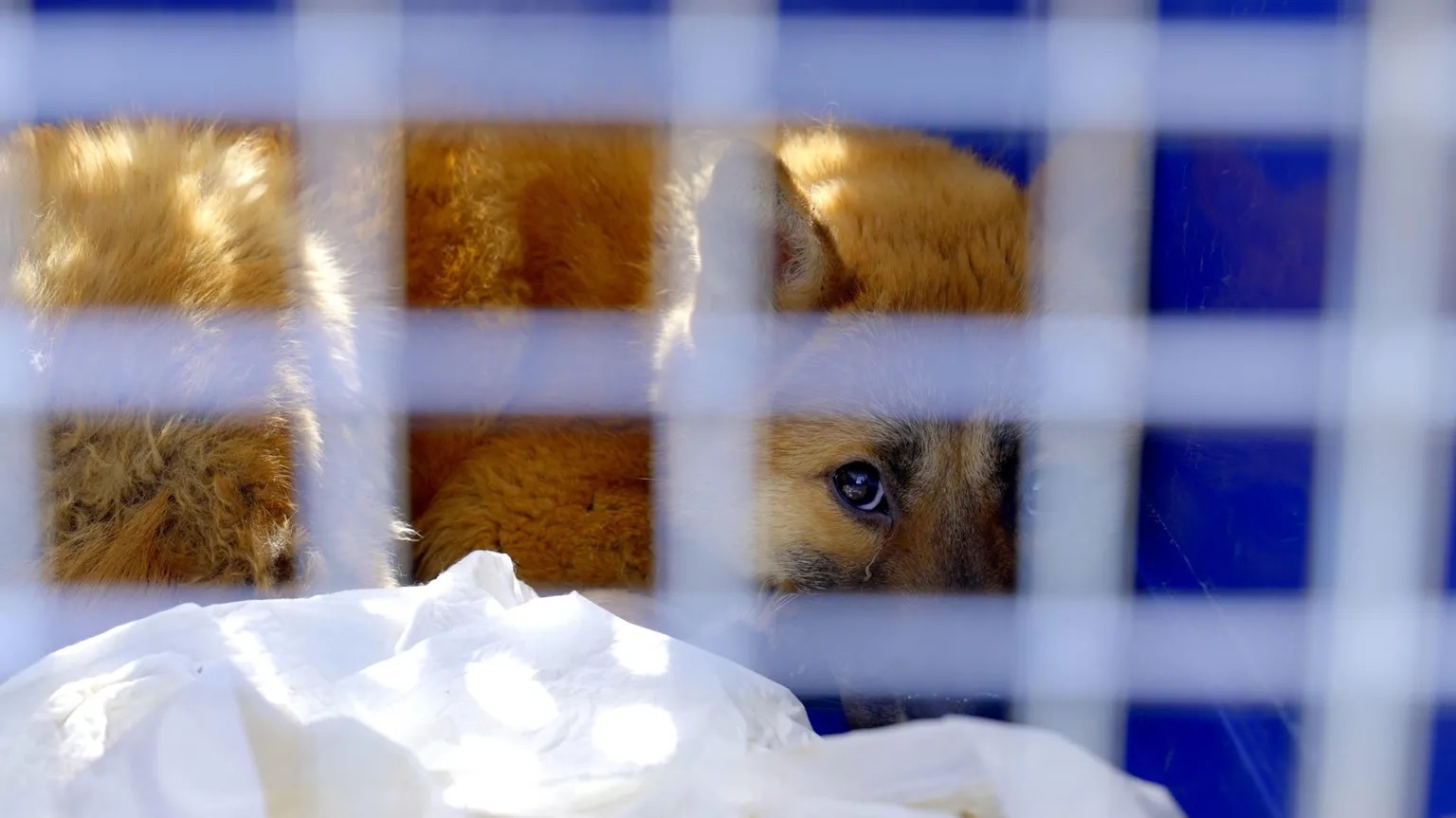
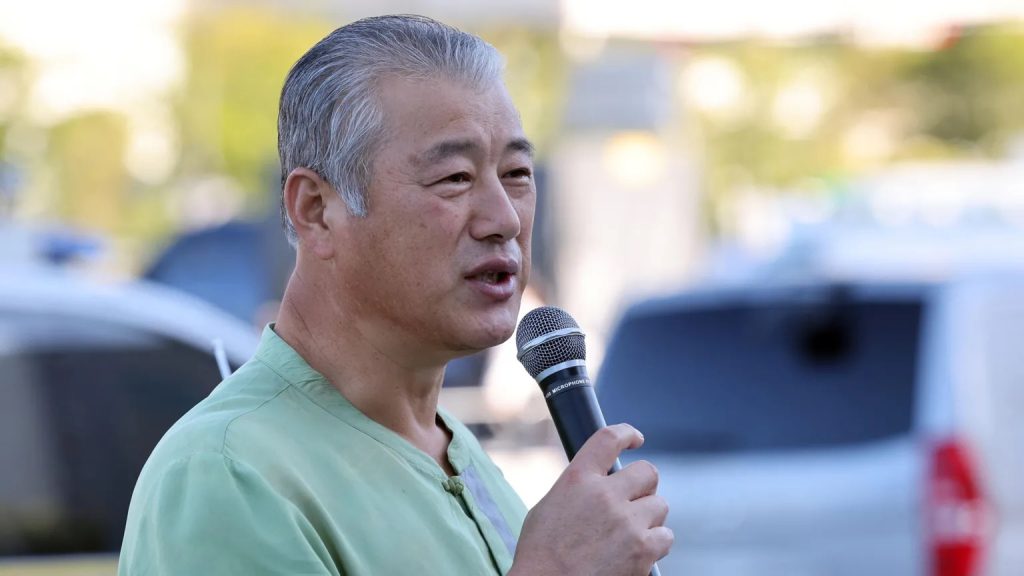
When he isn’t preaching the word of God, Reverend Joo Yeong-bong is raising dogs for slaughter.
Business is not going well though. In fact, it’s on the brink of becoming illegal
Since last summer we’ve been trying to sell our dogs, but the traders just keep hesitating,” Mr Joo, 60, tells the BBC. “Not a single one has shown up.”
In 2024, the South Korean government implemented a nationwide ban on the sale of dog meat for consumption. The landmark legislation, which was passed last January, gives farmers like Mr Joo until February 2027 to shutter their operations and sell off their remaining animals.
But many say that isn’t enough time to phase out an industry which has propped up livelihoods for generations – and that authorities still haven’t come up with adequate safeguards for farmers or the estimated half a million dogs in captivity.
Even those who support the ban, including experts and animal rights advocates, have flagged issues around its enforcement – including the difficulty of rehoming dogs that, having been saved from the kill floor, now face the increasingly likely threat of euthanasia
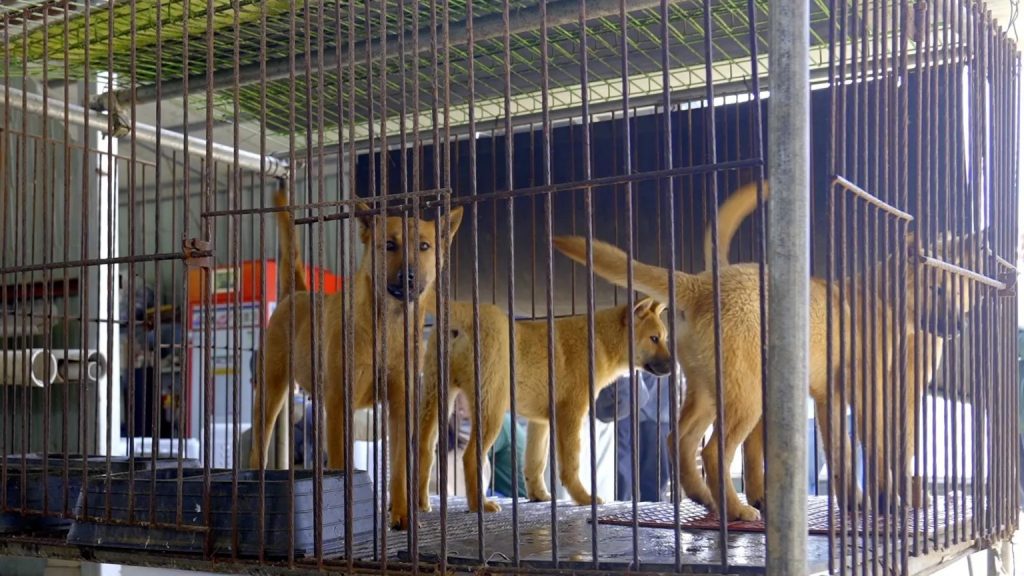
Midway through the grace period, dog farmers are finding themselves with hundreds of virtually unsellable animals, farms that can’t be closed, and little means of putting food on the table.
People are suffering,” says Mr Joo, who is also president of the Korean Association of Edible Dogs, a group representing the industry. “We’re drowning in debt, can’t pay it off, and some can’t even… find new work.
A storm of obstacles
Chan-woo has 18 months to get rid of 600 dogs.
After that, the 33-year-old meat farmer – who we agreed to anonymise for fear of backlash – faces a penalty of up to two years in prison.
“Realistically, even just on my farm, I can’t process the number of dogs I have in that time,” he says. “At this point I’ve invested all of my assets [into the farm] — and yet they are not even taking the dogs.”
By “they”, Chan-woo doesn’t just mean the traders and butchers who, prior to the ban, would buy an average of half a dozen dogs per week.
He’s also referring to the animal rights activists and authorities who in his view, having fought so hard to outlaw the dog meat trade, have no clear plan for what to do with the leftover animals – of which there are close to 500,000, according to government estimates.
“They [the authorities] passed the law without any real plan, and now they’re saying they can’t even take the dogs.”
Lee Sangkyung, a campaign manager at Humane World for Animals Korea (Hwak), echoes these concerns.
“Although the dog meat ban has passed, both the government and civic groups are still grappling with how to rescue the remaining dogs,” he says. “One area that still feels lacking is the discussion around the dogs that have been left behind.”
A foreign press spokesperson from the Ministry of Agriculture, Food and Rural Affairs (Mafra) told the BBC that if farm owners gave up their dogs, local governments would assume ownership and manage them in shelters.
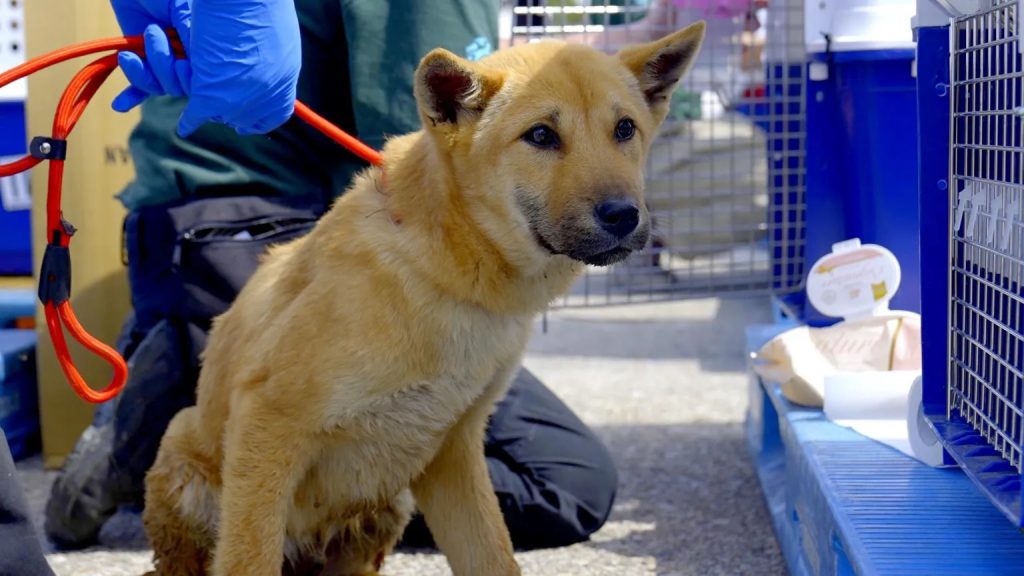
Rehoming them, however, has proven challenging.
Since weight equals profit in the dog meat industry, farms tend to favour larger breeds. But in South Korea’s highly urbanised society, where many people live in apartment complexes, aspiring pet owners often want the opposite.
There is also a social stigma associated with dogs that come from meat farms, Mr Lee explains, due to concerns of disease and trauma. The issue is further complicated by the fact that many are either pure or mixed tosa-inu, a breed that is classified as “dangerous” in South Korea and requires government approval to keep as a pet.
Meanwhile, rescue shelters are already overcrowded.
This perfect storm of obstacles points to a perverse irony: that countless so-called rescue dogs, with nowhere else to go, now face the prospect of being euthanised
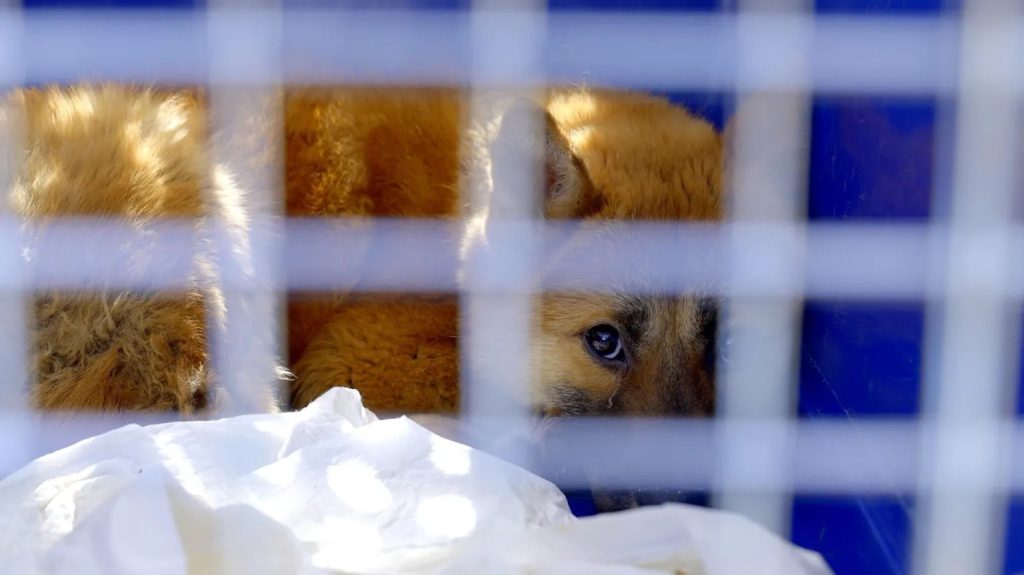
It’s just unbelievable,” says Chan-woo.
“Since the law was made according to the demands of these groups, I assumed they had also worked out a solution for the dogs — like they would take responsibility for them. But now I hear that even the animal rights groups say euthanasia is the only option.”
Cho Hee-kyung, head of the Korean Animal Welfare Association, conceded in September 2024 that while rights groups would try to rescue as many animals as possible, there would “be dogs left over”.
If remaining dogs become ‘lost and abandoned animals’ then it’s heartbreaking but they will be euthanised,” she said.
More recently, Mafra told the BBC it was investing about 6bn Korean won ($4.3m; £3.2m) annually to expand animal shelters and support private facilities, and would offer up to 600,000 Korean won per dog ($450; £324) to farmers who shut their businesses early.
A livelihood unravels
Some have looked for solutions further afield, sending the animals overseas to more willing adopters in countries like Canada, United Kingdom and the United States.
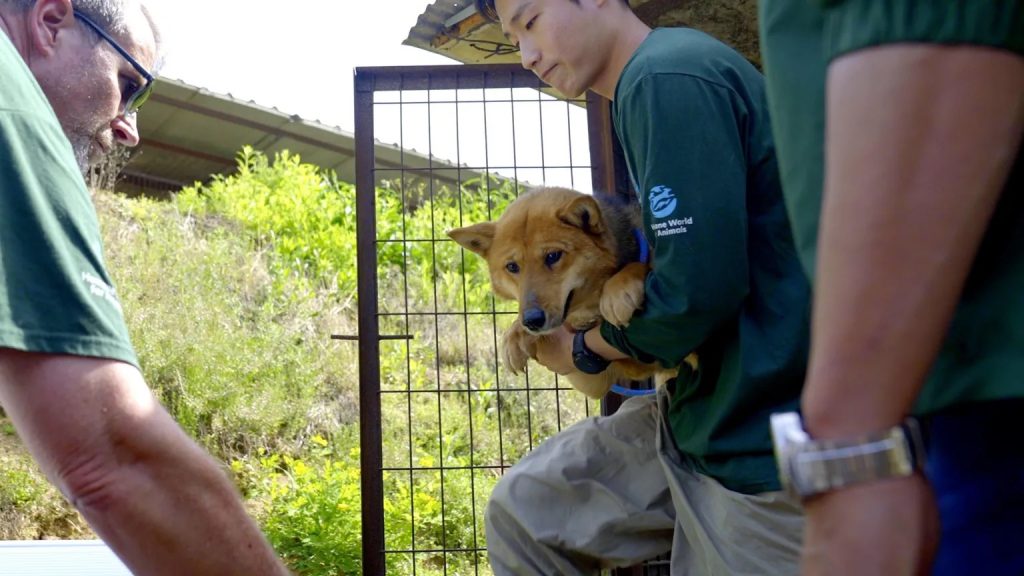
In 2023, a team from Hwak rescued some 200 dogs from a farm in Asan city – all of which have since been sent to Canada and the US.
The former owner of that farm, 74-year-old Yang Jong-tae, told the BBC that as he watched the rescuers loading his dogs into their trucks, he was astonished by the level of compassion they showed.
When I saw how they handled the animals — like they were handling people, so gently and lovingly — it really moved me,” he said.
“We don’t treat them like that. For us, raising dogs was just a way to make a living. But those people from the animal group treated the dogs like they were individuals with dignity, and that really touched my heart.”
Mr Yang hastened to add, however, that he disapproves of the ban on dog meat farming.
“If dog meat is banned because dogs are animals, then why is it okay to eat other animals like cows, pigs or chicken?” he said. “It’s the same thing. These things exist in nature for people to live on.”
Eating dog is not the same as eating other meats, according to Ms Chun. She points out that dog meat carries more risk from a food safety and hygiene perspective — especially in South Korea, where it has not been integrated into the formal, regulated meat production system.
The meat is also consumed in countries such as China, Indonesia, Vietnam, Laos, Myanmar, parts of northeastern India and several countries in Africa, according to Humane World for Animals.
But while consumption rates have fluctuated throughout Korea’s history, it has become increasingly taboo in South Korea in recent years.
A government poll from 2024 found only 8% of respondents said they had tried dog meat in the previous 12 months – down from 27% in 2015. About 7% said they would keep eating it up until February 2027, and about 3.3% said they would continue after the ban came into full effect.
Since the ban was announced, 623 of South Korea’s 1,537 dog farms have closed.
As society and culture have evolved, South Korean society has now made the decision to stop producing dog meat,” Ms Chun says