Two dead in Italy as heatwave scorches much of Europe
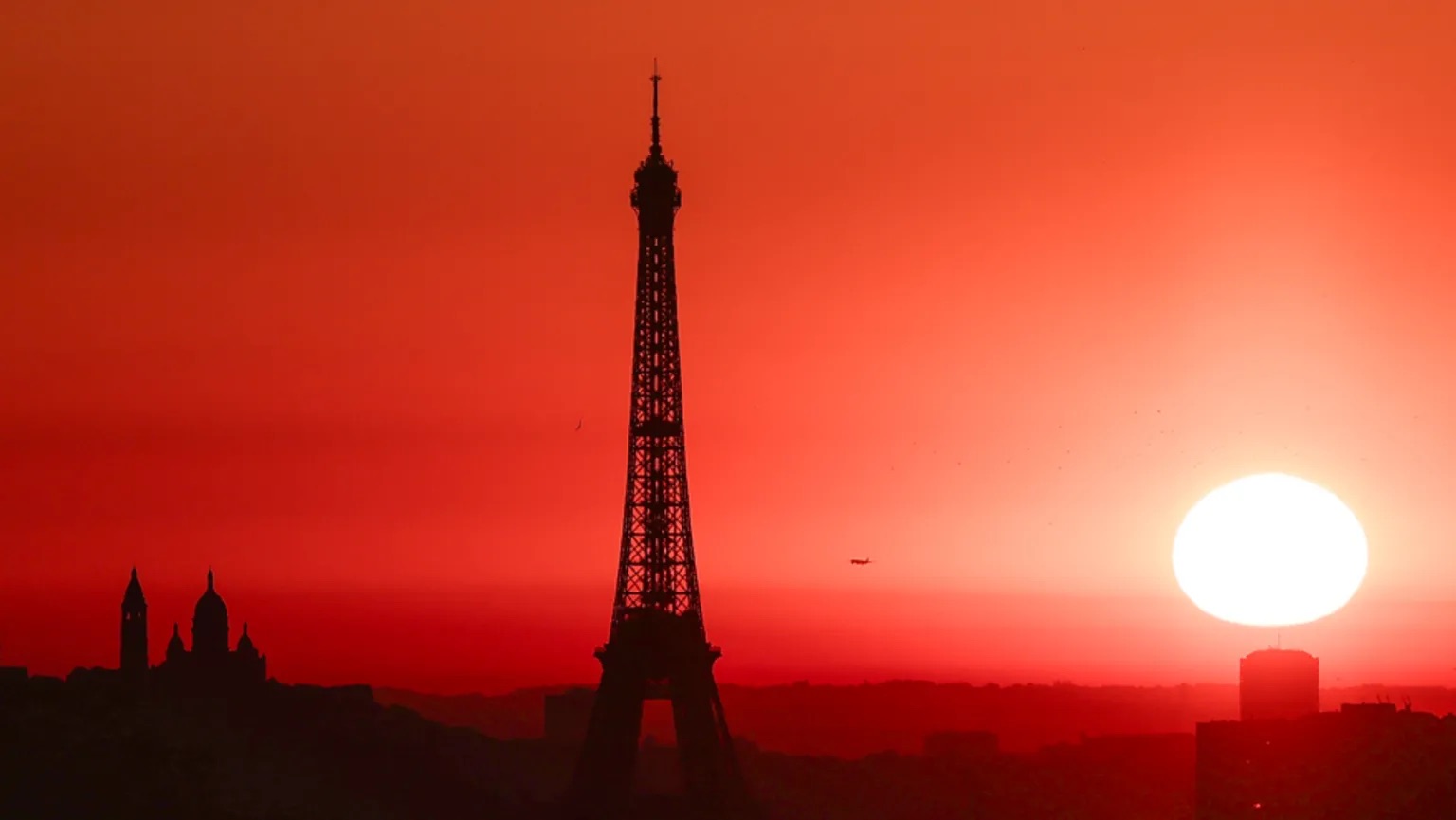

Twenty-one Italian cities are on the highest alert, including Rome, Milan and Venice
Two people have died in Italy as temperatures continue to soar amid an intense heatwave across Europe.
In Bologna a 47-year-old died after falling ill on a construction site while a 70-year-old man was reported drowned during flash flooding at a tourist resort to the west of Turin.
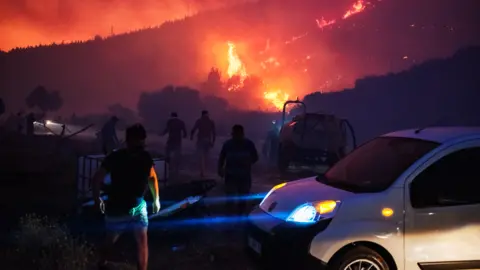
Elsewhere on the continent, tens of thousands of people have been evacuated because of wildfires in western Turkey, while the top of the Eiffel Tower in Paris has been closed because of the heatwave.
Parts of Spain and Portugal recorded their highest ever June temperatures, with 46C registered at El Granado in south-west Spain, a day after records were broken in Mora in central Portugal.
Spain’s Aemet meteorological agency said that several places across the Iberian peninsula had topped 43C, but a respite in temperatures was on its way from Thursday.
Night-time temperatures recorded overnight into Tuesday hit 28C in Seville and 27C in Barcelona.
In Turkey, rescuers evacuated more than 50,000 people — mostly from the western province of Izmir — as firefighters continued to put out hundreds of wildfires that had broken out in recent days.
Fires have also swept through parts of Bilecik, Hatay, Sakarya, and Manisa provinces.
Forestry Minister Ibrahim Yumakli said over the past three days, emergency teams had responded to 263 wildfires nationwide.
In France, many cities experienced their hottest night and day on record for June on Monday, but forecasters have said the heatwave should expect to peak on Tuesday.
Climate Minister Agnès Pannier-Runacher called an “unprecedented” situation.
For first time in five years the Paris region has activated a red alert, along with 15 other French regions. The Ministry of Education has said 1,350 public schools will either be partially or completely closed on Tuesday.
A reading of 46.6 C (115.9F) was registered in Mora, Portugal, about 60 miles east of Lisbon on Sunday. Portuguese weather officials were working to confirm whether that marked a new record for June.
In Italy, the Tuscany region has seen hospital admissions rise by 20%, according to local reports.
Italians in 21 out of the 27 cities have been subjected to the highest heat alert and 13 regions, including Lombardy and Emilia, have been advised not to venture outside during the hottest periods of the day.
In Lombardy, working outdoors has been banned from 12:30 to 16:00 on hot days on building sites, roads and farms until September.
Temperatures in Greece have been approaching 40C for several days and wildfires hit several coastal towns near the capital Athens destroying homes and forcing people to evacuate.

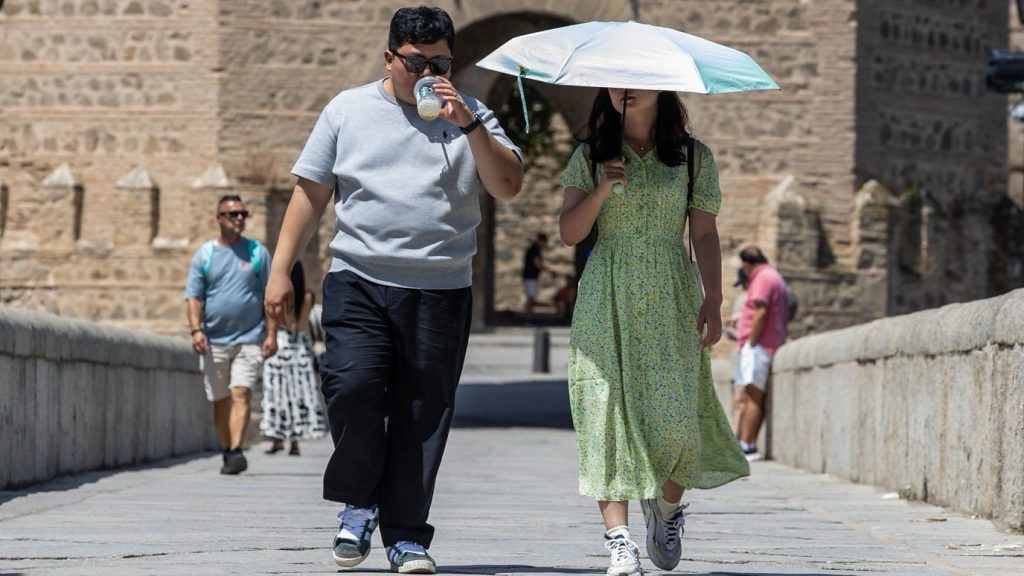
Parts of the UK were just shy of being one of the hottest June days ever on Monday.
The highest UK temperature of the day was recorded at Heathrow Airport in London at 33.1C. Meanwhile, Wimbledon recorded a temperature of 32.9C, the tennis tournament’s hottest opening day on record.
In Germany, the country’s meteorological service warned that temperatures could reach almost 38C on Tuesday and Wednesday — further potentially record-breaking temperatures.
The heatwave lowered levels in the Rhine River — a major shipping route — limiting the amount cargo ships can transport and raising freighting costs.
Countries in and around the Balkans have also been struggling with the intense heat, although temperatures have begun to cool. Wildfires have also been reported in Montenegro.
While the heatwave is a potential health issue, it is also impacting the environment. Higher temperatures in the Adriatic Sea are encouraging invasive species such as the poisonous lionfish, while also causing further stress on alpine glaciers that are already shrinking at record rates.
The UN’s human rights chief, Volker Turk, warned on Monday that the heatwave highlighted the need for climate adaptation — moving away from practices and energy sources, such as fossil fuels, which are the main cause of climate change.
“Rising temperatures, rising seas, floods, droughts, and wildfires threaten our rights to life, to health, to a clean, healthy and sustainable environment, and much more,” he told the UN’s Human Rights Council.
Heatwaves are becoming more common due to human-caused climate change, according to the UN’s Intergovernmental Panel on Climate Change.
Extreme hot weather will happen more often – and become even more intense — as the planet continues to warm, it has said.
Richard Allan, Professor of Climate Science at the University of Reading in the UK, explained that rising greenhouse gas levels are making it harder for the planet to lose excess heat.
“The warmer, thirstier atmosphere is more effective at drying soils, meaning heatwaves are intensifying, with moderate heat events now becoming extreme.”