Vaccine Shortages. Viral Outbreaks. Widespread Illness. More Death.
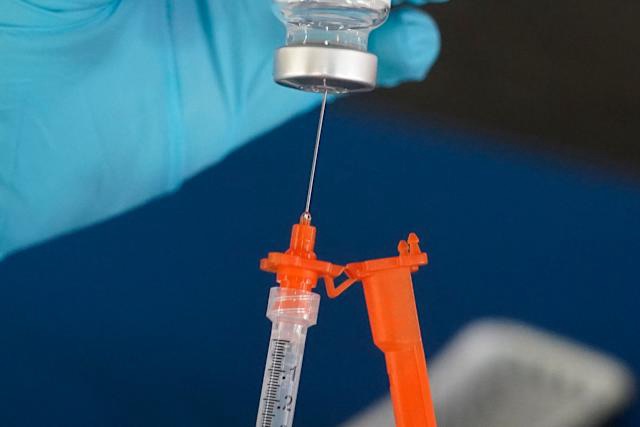

It’s September 2026. Routine childhood vaccines are now optional in the United States, and government officials, after hastily compiling an immense research registry of autistic people, have added the neurodevelopmental condition to the list of compensable vaccine injuries, thereby opening up vaccine makers to an onslaught of lawsuits. Facing decreased demand and increased litigation, some vaccine makers have pulled their shots from the domestic market entirely. Outbreaks are spreading across the country, sickening tens of thousands of people; too many are dying, especially children, pregnant people, and older adults. Something similar is unfolding around the world because the U.S. government ended vaccinations for millions globally.
This is one scenario America faces if we continue down the path being bushwhacked by Robert F. Kennedy Jr. and other anti-vaccine activists at the Department of Health and Human Services. And when I called up vaccine experts to ask whether my dystopian fears made me a doomer, they agreed that this grim scenario was plausible—and that it could get even worse.
Every day seems to bring more ominous news about Kennedy’s war on vaccines. Within just the past few weeks, Kennedy has done the following: He abruptly fired all 17 members of the CDC’s Advisory Committee on Immunization Practices, known as ACIP, and replaced them with largely inexperienced people, some of who are outright anti-vaccine activists—who then promptly voted to ban thimerosal, a rare but safe preservative, from flu vaccines. He changed CDC recommendations so that they no longer say healthy children and pregnant people should receive Covid-19 vaccines. And he announced the U.S. would stop funding Gavi, an international organization that vaccinates children around the world.
“It’s hard to know how this is all going to play out. But right now, everything appears very dark,” said Peter Hotez, dean for the National School of Tropical Medicine at Baylor College of Medicine. And yet, he added, “I don’t think we’ve hit bottom. I think he’s continuing to chip away, with some pretty big chips, to erode our vaccine ecosystem. I don’t see a turnaround at this point. We’re still in free fall as far as I’m concerned.”
I’m not the first to try to gaze into a crystal ball about the future of vaccines in America. In January 2025, at Kennedy’s confirmation hearing, Senator Elizabeth Warren began rattling off the actions he could take as secretary, given his history of profiting from lawsuits against vaccine makers:
The bottom line, Warren added: “Kennedy can kill off access to vaccines and make millions of dollars while he does it. Kids might die. But Robert Kennedy can keep cashing in.”
Sure enough, some of this has come to pass. In an X video in May, Kennedy announced that the CDC was changing its recommendations for the Covid vaccine. The agency turned the childhood recommendation from “should” to “may” and called the process “shared clinical decision-making,” while eliminating the recommendation entirely for pregnant people, who are at significantly higher risk for severe illness and death.
I asked the experts: Could other vaccine recommendations be softened like this? “I think it’s a real possibility—I think in many ways it’s a goal,” said Paul Offit, professor of pediatrics at the University of Pennsylvania Perelman School of Medicine. Project 2025, the right-wing blueprint for the second Trump administration, specifically called for eliminating the CDC as a recommending body. If a vaccine is no longer recommended, “that means that it couldn’t be required for school entry.” (School mandates have long been a target of anti-vaccine activists.)
Others thought it might be even worse. “[Kennedy’s] end goal is to remove most or all childhood vaccines—to make them inaccessible, is my view,” said Dorit Reiss, professor at UC Hastings College of Law. “So your scenario is plausible, although you’re being very cautious in saying they might move to shared clinical decision-making. They could say ‘this is no longer recommended.’” The new ACIP advisers could stop recommending some vaccines entirely: HPV, influenza, and hepatitis B shots have all been targeted by anti-vaccine activists. They could also vote to end Vaccines for Children, a $5 billion program covering the vaccinations of nearly half of all children in the United States
The administration may also make it difficult to approve new vaccines. “It’s not only about Kennedy’s insistence on saline placebos,” Hotez said, referring to the health secretary’s announcement in May that vaccines would need to go through new, unethical clinical trials involving placebo tests. “There’s so little vaccine expertise now, either at FDA because people seem to be leaving, and with ACIP, there’s almost no vaccine expertise in its current group.”
And, of course, there’s the harm that figures like Kennedy do with public advocacy against vaccines. That includes the ACIP advisers’ recommendation on Thursday to remove thimerosal, a preservative used only in multidose vials of flu vaccines—about 4 percent of all flu vaccines given in the U.S.—in order to prevent bacterial and fungal infections. Thimerosal was removed from all other childhood vaccines in 2001 as a precaution when anti-vaccine activists first began linking it to autism—a connection that multiple studies have disproven. Banning it entirely now could undermine American’s sense of vaccines’ safety and necessity.
In June, Health and Human Services awarded $150,000 to the Arizona law firm Brueckner Spitler Shelts for its legal “expertise” on the National Vaccine Injury Compensation Program, which is run by the Health Resources and Services Administration, a subagency of HHS. Drew Downing, a lawyer at the firm, has a reputation for representing people who say they’ve been injured by vaccines, and he has been involved in lawsuits against vaccine makers. Several of the new advisers on ACIP have also served as expert witnesses in lawsuits against pharmaceutical companies.
“I think [Kennedy’s] goal is to either remove vaccines from the vaccine injury compensation program or add to the list of compensable injuries, all of which will weaken the vaccine infrastructure,” Offit said. Autism, for example, could be added to the list of injuries based on the administration’s fast-tracked research to find a link between the condition and vaccines, despite decades of scientific research showing otherwise. Changes to the compensation program could mean vaccine makers simply choose to stop making shots available in the U.S., Offit said: “Make vaccines expensive enough, or make them more subject to frivolous litigation, and they’ll leave.”
Something similar has happened before. In 1980, 18 companies made vaccines; by 1990, that number had fallen to four. A 1981 study suggested that the whole-cell pertussis component of the DTP vaccine could in rare cases cause permanent brain swelling. Subsequent studies found no such link; in fact, the swelling was caused by infant epilepsy. Even so, litigation against pertussis vaccine makers and then manufacturers of all vaccines began to mount, causing vaccine prices to skyrocket and pushing some manufacturers out of business. Faced with a volatile vaccine market, Congress passed a law in 1986 leading to the creation of the National Vaccine Injury Compensation Program.
“If you really want to hurt vaccines, mess with the vaccination compensation program,” Offit said. After all, vaccines aren’t usually a big payday for pharmaceutical companies, he said. “They make money on things that you give frequently. They don’t make as much money as things that you give once or a few times in a lifetime.”
The vaccine market is big, but for pharmaceutical companies, “vaccines are still a very modest component of their revenue compared to all the small molecule drugs that they’re producing,” said Hotez. Facing litigation, companies might decide vaccine production isn’t worth it. “If it becomes untenable for them to remain in the U.S. market, they may just pull the plug on their vaccine side altogether.”