40 years of Mario games that have grown up with fans
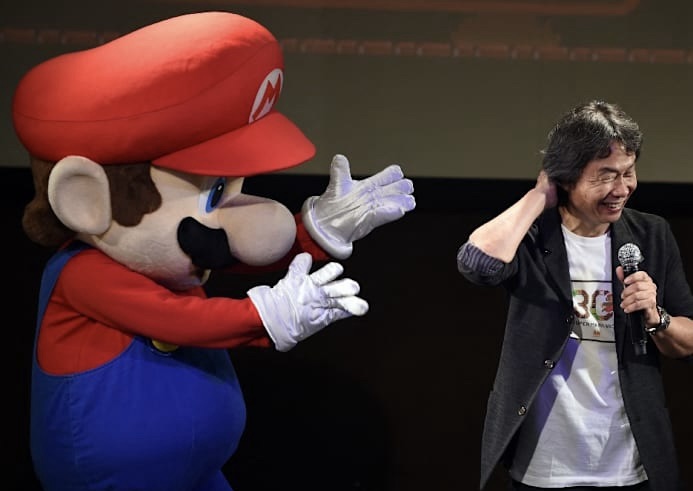
The colourful Super Mario Bros, released for Nintendo’s home consoles in Japan on Sep 13, 1985, was a landmark of early video gaming
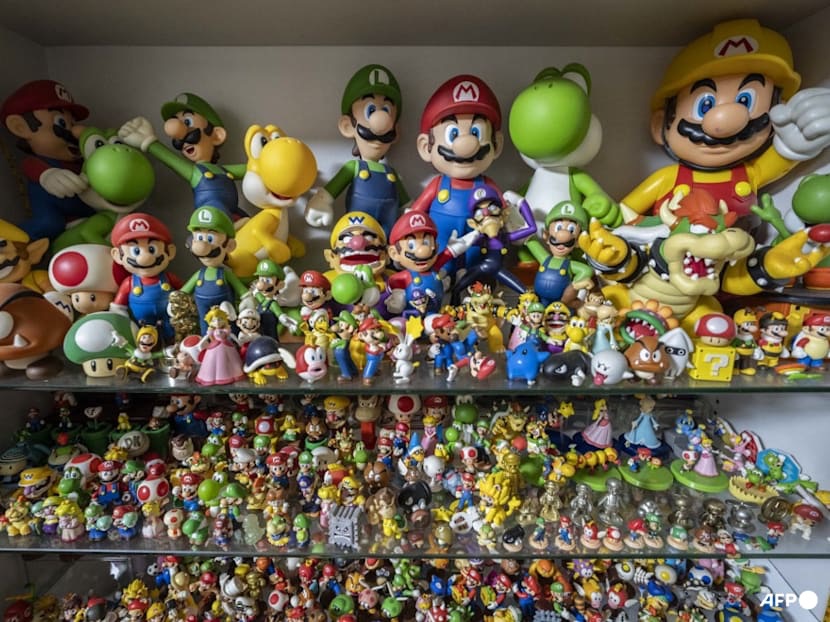
Surrounded by thousands of objects bearing the likeness of Nintendo’s moustachioed plumber, 40-year-old Kikai reflects that his “life would be totally different without Mario” who also marks four decades this week.
The colourful Super Mario Bros, released for Nintendo’s home consoles in Japan on Sep 13, 1985, was a landmark of early video gaming.
Players controlled the eponymous character as he ran and hopped his way from left to right through a colourful world of platforms, pipes and scowling enemies – all set to the jaunty eight-bit music that has stuck in minds for decades.
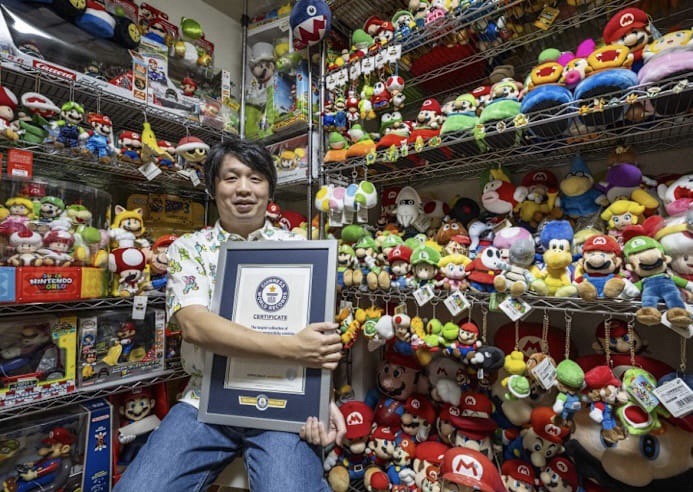
“My father bought me the game, and I’ve been playing for as long as I can remember,” Kikai in his office lined with somewhere between 20 and 30 thousand Mario-related objects, from plastic figurines to plush toys and carpets.
Created by legendary game designer Shigeru Miyamoto, Mario has obsessed several generations of fans like Kikai.
The character’s first appearance came in 1981 arcade game Donkey Kong, when he was known simply as Jumpman.
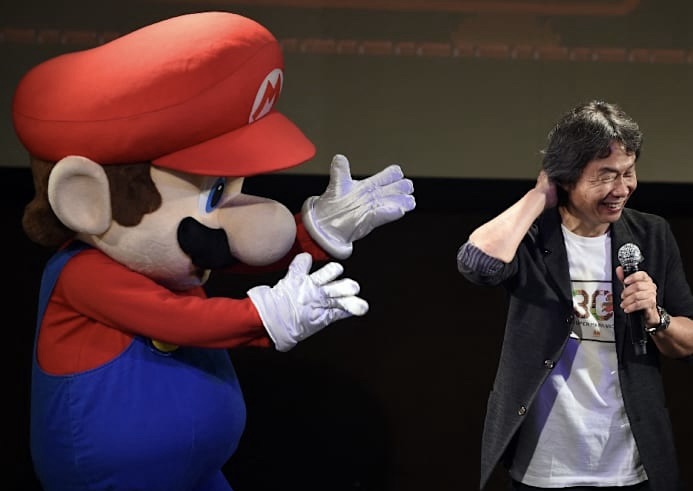
This file photo taken on Sep 13, 2015 shows Nintendo game creator Shigeru Miyamoto reacting while standing with character Super Mario during a live performance of the most well-known Mario music to mark the game’s 30th anniversary in Tokyo. TOSHIFUMI KITAMURA
Mario’s christening came in 1983 with the Mario Bros arcade cabinet, but his true rise to fame was with Super Mario Bros on Nintendo’s Famicom console (known as the NES in Europe), which has sold more than 40 million copies.
LUCKY ACCIDENT
“It was a lucky accident, because at the start there was no plan for this character to become a video gaming icon,” said Alexis Bross, the French co-author of the book Mario Generations.
The plumber’s look was initially chosen to conserve scarce computing resources and make him stand out on screen, with bright blue overalls and a cap that saved on animating hair.
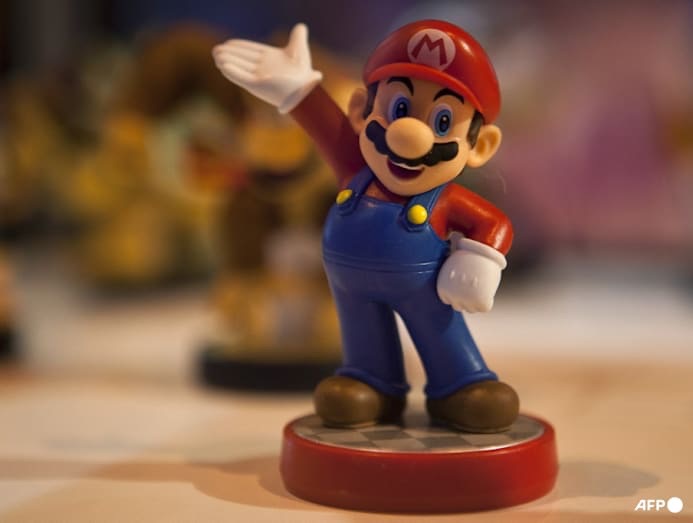
Miyamoto created Mario as “a completely functional character under very strict technical constraints” governing the few pixels making up his image, Bross noted.
But as the games endured through the years, their star became a “generation-spanning” and even “reassuring” presence, he added.
“He’s a regular man, not unlike us, who has no special powers at the outset and stays a bit frozen in time.”
Beyond Mario’s mainline adventures, spinoff games have dropped him, his buddies like brother Luigi and his rivals like dragon Bowser into Mario Golf, Mario Tennis and the vastly popular Mario Kart.
Graphics have evolved from 2D to 3D as the games’ reach has spread to many hundreds of millions of players worldwide.
But the original pixelated look has long inspired artists making their own riffs on the character.
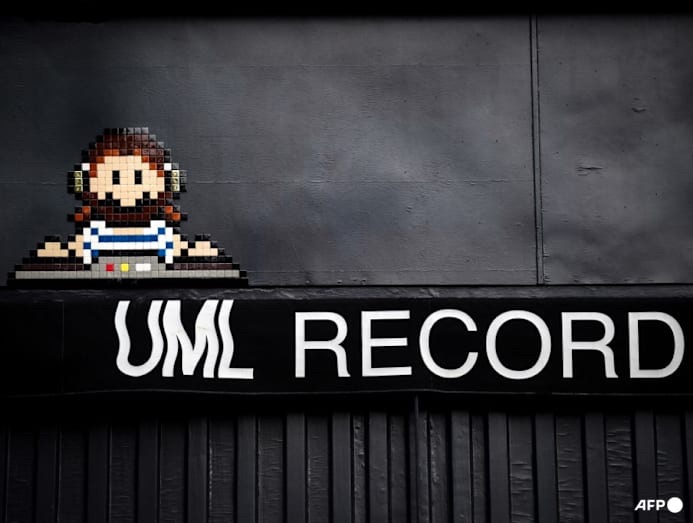

The street artist In The Woup puts a Mario-inspired mosaic on a wall, in Lyon on August 27, 2025
Lyon-based street artist In The Woup, who declined to give his real name, has been mashing Mario up with other characters like Gandalf from The Lord Of The Rings or Star Wars antagonist Darth Vader in guerilla mosaics dotting cities around the world for years.