Trump Highlights Opponents’ Violence While Overlooking His Own Words
Republican Utah Gov. Spencer Cox’s plea for people to stop turning Charlie Kirk’s assassination into a political food fight appears to have fallen on deaf ears among many on the right.
Instead of heeding his call, President Donald Trump and his MAGA allies have doubled down, framing the killing as further proof that political violence is overwhelmingly the domain of the left.
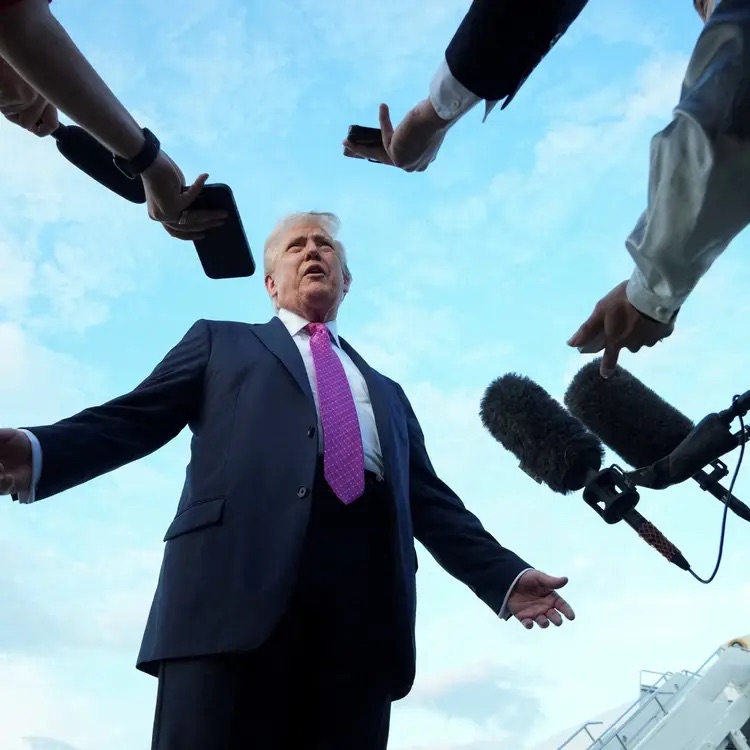
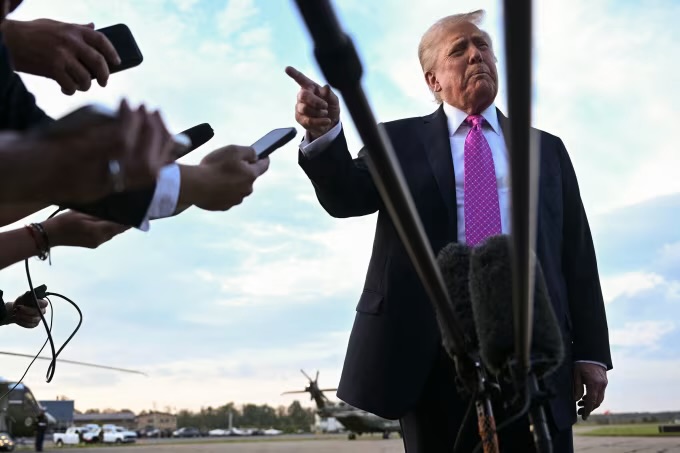
“When you look at the problems, the problem is on the left,” the president told reporters Sunday. “It’s not on the right.”
Vice President JD Vance echoed that sentiment while guest-hosting Kirk’s podcast on Monday:
“While our side of the aisle certainly has its crazies, it is a statistical fact that most of the lunatics in American politics today are proud members of the far left.”
It’s fair to examine whether the killer’s motivations had political roots, and some evidence does appear to connect suspect Tyler Robinson with left-wing causes. Yet the full picture remains incomplete, and many of the details are still unclear.
What is clear, however, is that Trump and his allies are cherry-picking evidence while ignoring the broader reality of political violence in America. They are also casting stones from a glass house when it comes to the role of incendiary rhetoric in fueling such tragedies.
For more than a decade, Trump has peppered his speeches with violent undertones and explicit calls for retribution, often suggesting that force is justified when used by his supporters. That pattern hasn’t slowed — in fact, just last Friday, he once again alluded to the possibility of “taking matters into our own hands” if the political system fails him.
By downplaying violence on the right and weaponizing isolated cases on the left, Trump and his movement risk not only distorting public perception but also normalizing the very climate of hostility they claim to condemn.
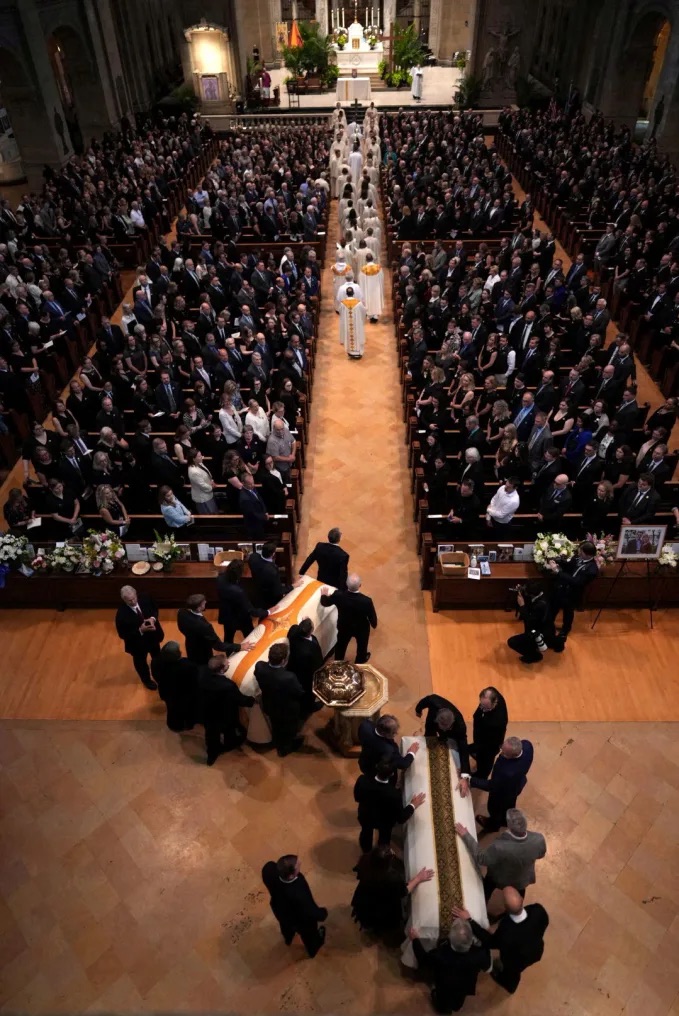
The recent history of violent political episodes
The first thing to note is that Democrats, too, have been frequent targets of violence — and in many cases, the right wing has been the source of it.
In June, two Democratic Minnesota state lawmakers were shot, one of whom later died. In April, there was an arson attempt at the home of Pennsylvania Gov. Josh Shapiro, another Democrat. In December 2022 and January 2023, a failed Republican candidate in New Mexico orchestrated drive-by shootings at the homes of several Democratic officials. That same year, Nancy Pelosi’s husband, Paul Pelosi, was brutally attacked with a hammer by a man who said he was hunting for the then–House Speaker. And back in 2020, federal authorities foiled a violent plot to kidnap Democratic Michigan Gov. Gretchen Whitmer.
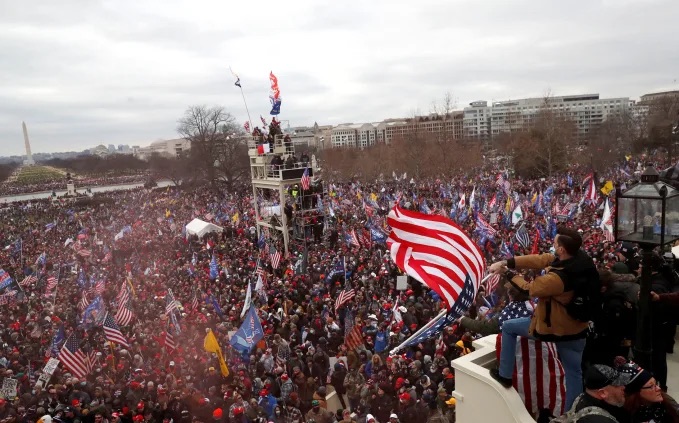
Perhaps the most infamous case came on January 6, 2021, when Trump supporters stormed the U.S. Capitol in an effort to overturn the 2020 election results.
All of these episodes have taken place within just the last five years.
Yet in several of these instances — including the Minnesota shootings, the attack on Paul Pelosi, and even the January 6 insurrection — prominent Republicans were quick to suggest, often without evidence, that Trump’s opponents were somehow responsible. These claims have repeatedly proven premature or misleading. As is often the case in tragedies of this nature, the motivations of the perpetrators are complex and not always clearly ideological.
In fact, Trump himself has shown little willingness to acknowledge the full picture of politically motivated violence. On Monday, when asked about the assassination of former Minnesota House Speaker Melissa Hortman just three months ago, he initially admitted he was “not familiar” with it. Asked why he didn’t order flags to be lowered to half-staff — as he had for Charlie Kirk — Trump replied that he would have done so if Democratic Gov. Tim Walz had requested it.
Even when it comes to the most high-profile act of political violence in recent years — last July’s assassination attempt against Trump himself — his allies have rushed to cast blame on the left. But the available facts don’t support that conclusion. The alleged shooter, Thomas Matthew Crooks, was a registered Republican, and his exact motives remain unclear.
The point isn’t to argue which side of the political spectrum is “more violent.” It’s that the reality of political violence in America is far more complicated than Trump’s selective framing suggests.
Nevertheless, in his video message following Kirk’s assassination last week, Trump once again painted a one-sided picture. He cited his own assassination attempt as an example of “radical left political violence” — a claim that has not been proven — while ignoring the many recent examples of violence carried out by individuals linked to the right.
This pattern highlights a broader issue: by exaggerating threats from the left while downplaying or dismissing violence on the right, Trump and his allies are distorting the public’s understanding of political violence and inflaming the very divisions that fuel it.
Trump’s and MAGA’s own rhetoric has often been quite violent
The other key part of Trump’s and his allies’ political framing is that attacks like the one on Kirk are the result of the left’s supposedly extreme rhetoric.
They’ve often cited those who compared Trump and Kirk to Nazis or called them fascists.
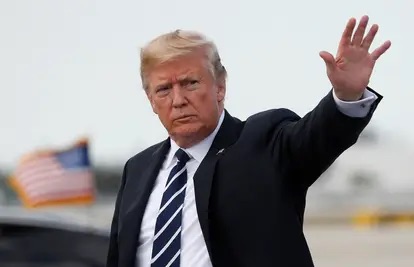
“This kind of rhetoric is directly responsible for the terrorism that we’re seeing in our country today, and it must stop right now,” Trump said Wednesday.
Republican Sen. Katie Britt of Alabama, appearing on Fox News on Sunday, blamed the media for airing claims that Trump is a fascist or like Adolf Hitler, calling it “the rhetoric that led us to this moment.”
But the “fascist” framing is a great example of the glass house from which this claim is being cast. In fact, Trump has spent years labeling his political opponents fascists, both before and after his two assassination attempts
And to the extent Nazi comparisons are beyond the pale, that’s also a standard Trump hasn’t abided. In 2017, he compared the US intelligence community’s actions to “Nazi Germany.” In May 2024, he said the Democrats were running a “Gestapo administration” – a reference to the Nazi secret police.
The larger point, though, is that Trump’s own rhetoric has been remarkably violent. He and his MAGA allies have often been rather callous and cavalierabout political violence when it wasn’t their side targeted.
Perhaps the most remarkable example in recent years was the Paul Pelosi attack, which became a punchline for many, including Trump.
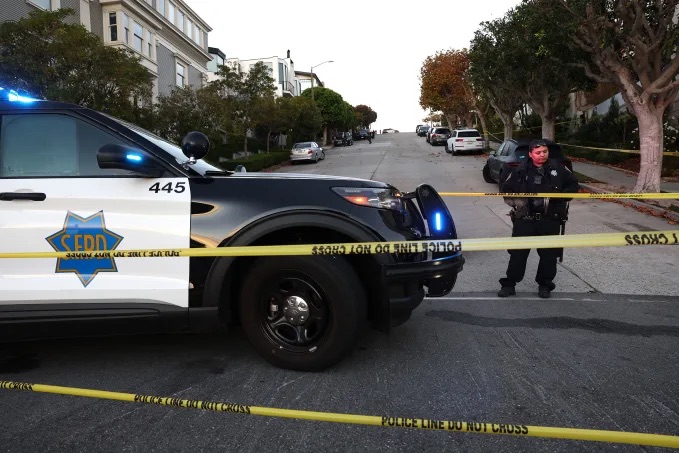
Many prominent Republicans made similarly flippant comments. Donald Trump Jr. at one point approvingly retweeted a picture of a hammer atop a pair of underwear with the message, “Got my Paul Pelosi Halloween costume ready.” (Pelosi was attacked in his home in the middle of the night.)
Some other examples:
- Trump last year mused about the prospect of Liz Cheney being fired upon.
- He once suggested “Second Amendment people” might be able to prevent Hillary Clinton from being able to pick judges.
- In 2020, he reposted a video of a supporter saying, “The only good Democrat is a dead Democrat.”
- While he was out of office, he reposted a supporter who warned of 80 million people rising up to “physically fight” for Trump.
- During the 2020 campaign, he made light of a dangerous scene in which his supporters surrounded a Biden campaign bus on the highway. “I LOVE TEXAS!” Trump posted.
- In 2018, he publicly praised then-Montana Rep. Greg Gianforte after the GOP congressman assaulted a reporter, saying, “any guy who can do a body slam … he’s my guy.”
- He has repeatedly, suggestively alluded to the prospect of his own supporters rising up in justified violence, including over his indictments and his baseless claims of widespread voter fraud. His comments often mention the prospect of riots. At the same time, he’s also said he doesn’t support violence and that he hopes his supporters stay peaceful.