Former Vice President Dick Cheney dead at 84
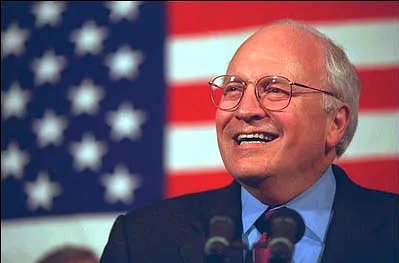
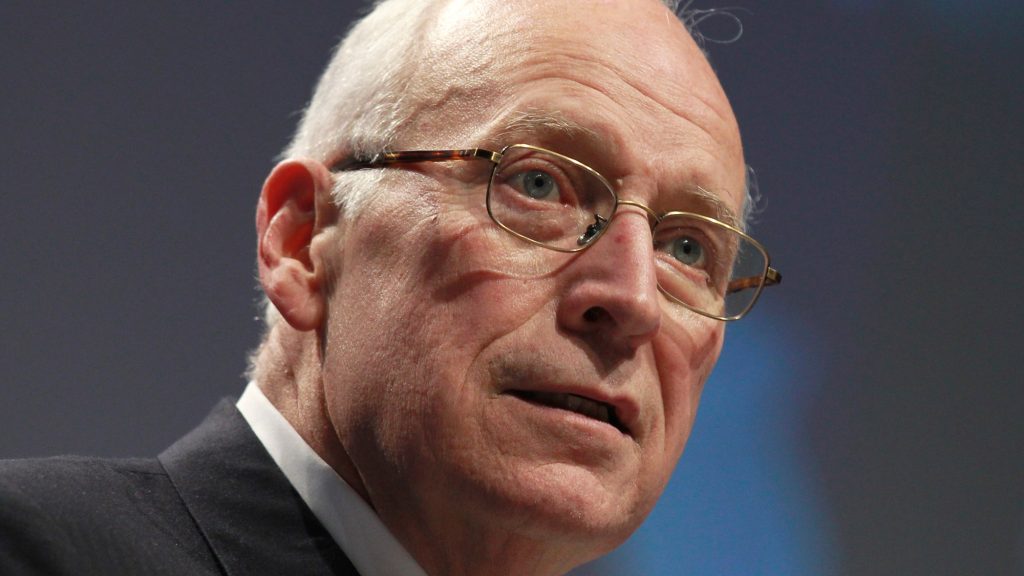
Former Vice President Dick Cheney, considered by many political observers to be the most politically active and influential vice president in U.S. history, has died. He was 84.
“Richard B. Cheney, the 46th Vice President of the United States, died last night, November 3, 2025,” his family said in a statement. “He was 84 years old. His beloved wife of 61 years, Lynne, his daughters, Liz and Mary, and other family members were with him as he passed. The former Vice President died due to complications of pneumonia and cardiac and vascular disease.”
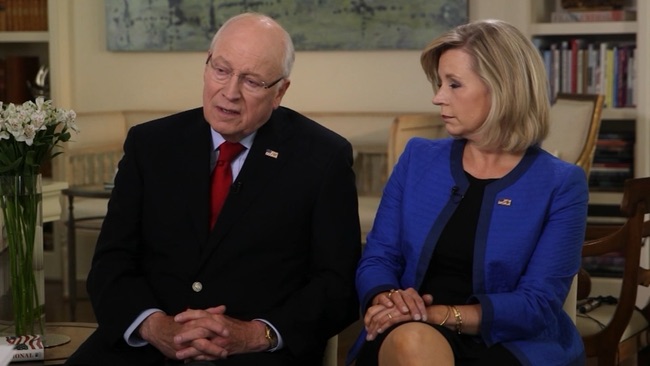
He worked for nearly four decades in Washington. He served as the youngest White House chief of staff under President Gerald Ford; represented Wyoming in the U.S. House of Representatives — where he worked with congressional leadership and President Ronald Reagan; was secretary of defense under President George H.W. Bush; and later served two terms as vice president under Bush’s son, President George W. Bush.
He was also CEO of Halliburton, an energy company based in Texas that had a global presence.
When terrorists attacked the United States on Sept. 11, 2001, it was Cheney who first took charge while the president was out of Washington.
“When the president came on the line, I told him that the Pentagon had been hit and urged him to stay away from Washington,” Cheney recalled in his memoir, “In My Time.” “The city was under attack, and the White House was a target. I understood that he didn’t want to appear to be on the run, but he shouldn’t be here until we knew more about what was going on.”
He and senior staff gathered at the Presidential Emergency Operations Center, where they monitored the horror unfolding
“I stayed up into the morning hours thinking about what the attack meant and how we should respond,” Cheney wrote in his memoir. “We were in a new era and needed an entirely new strategy to keep America secure. The first war of the twenty-first century wouldn’t simply be a conflict of nation against nation, army against army. It would be first and foremost a war against terrorists who operated in the shadows, feared no deterrent, and would use any weapon they could get their hands on to destroy us.”
As vice president, Cheney was also known as the mastermind behind much of the Bush administration’s strategy in Iraq.
“His power is unparalleled in the history of the republic, frankly, for that position,” John Hulsman, a research fellow at The Heritage Foundation, a conservative Washington-based think tank, told ABC’s “Nightline” in 2005
Cheney said he looked upon his role as vice president as being an adviser to the president
“I don’t run anything, I’m not in charge of a department or a particular policy area and for me to be out all of the time commenting on the issues of the day — pontificating if you will — on what’s going on, to some extent infringes upon everybody else in the administration, especially with those specific people who have got specific responsibilities,” he told ABC News Chief Global Affairs Martha Raddatz in an interview in March 2008, when she was a White House correspondent
“My value to him is the fact that we can talk privately I can tell him what I think, sometimes he agrees, sometimes he disagrees he doesn’t take my advice all the time by any means,” he continued. “But the contribution that I make and my value to him, I think, is greater because he knows and everybody else knows I’m not going to be in the front pages of the paper tomorrow talking about what I advised the president on what particular issue.”
Cheney was also a leading defender of the Bush administration’s “War on Terror” and unabashedly defended the controversial enhanced interrogation techniques approved by the Bush administration against high-value detainees. He and his daughter Rep. Liz Cheney, who served as a Republican congresswoman from Wyoming until 2023, argued that those techniques, which included waterboarding — an interrogation tactic that simulates drowning — yielded valuable information from detainees. Waterboarding was used on three prime terror suspects held in Guantanamo Bay, CIA Director Michael Hayden said in 2008.
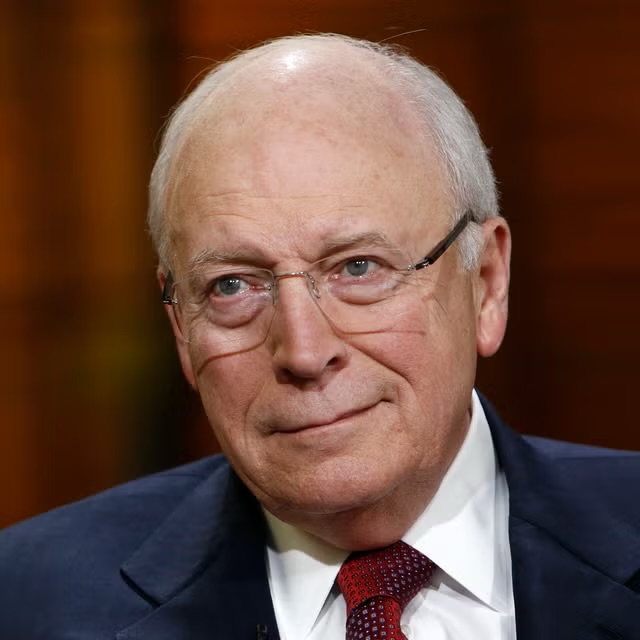
“I was and remain a strong proponent of our enhanced interrogation program,” Cheney said in May 2009, as he delivered a dueling speech to Obama’s remarks explaining why the president was ending the use of enhanced interrogation techniques. “The interrogations were used on hardened terrorists after other efforts failed. They were legal, essential, justified, successful and the right thing to do.”
And later, in the 2013 documentary “The World According to Dick Cheney,” the former vice president said, “Tell me what terrorist attacks you would have let go forward because you didn’t want to be a mean and nasty fellow. Are you going to trade the lives of a number of people because you want to preserve your honor, or are you going to do your job, do what’s required, first and foremost your responsibility is to safeguard the United States of America and the lives of its citizens.”
After his time in office ended, he remained politically active while former President George W. Bush had moved back to Texas and refrained from commenting on politics in an effort to avoid “undermining” the current president.
During President Barack Obama’s administration, Cheney emerged as an outspoken critic of the president’s national security policies — charging that Obama’s counterterrorism policies were making the country less safe.
It has always been easy for those who are evil to kill, but now it is possible for a few to do so on an unimaginable scale,” Cheney wrote in his 2011 memoir
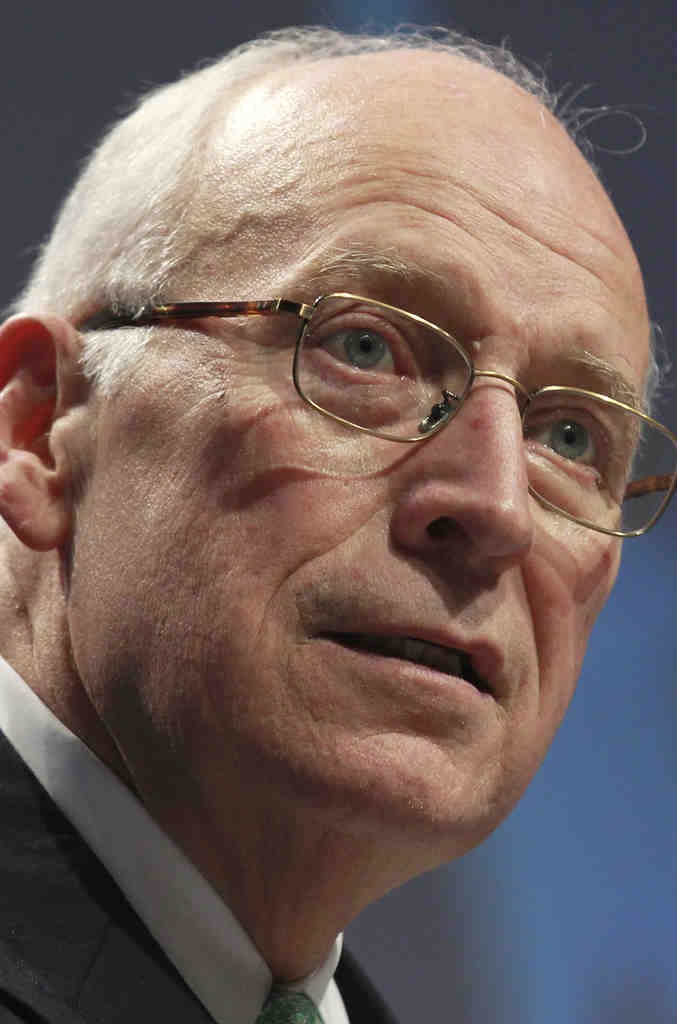
“The key, I think, is to choose serious and vigilant leaders, to listen to the men and women who want us to entrust them with high office and judge whether they are saying what they think we want to hear or whether they have the larger cause of the country in mind,” he continued. “It’s not always easy to move beyond pleasing promises, but in the case of America, the greater good is so grand.”