A Captivating Collection of Rare and Beautiful Photos of Jane Russell from the 1940s and 1950s
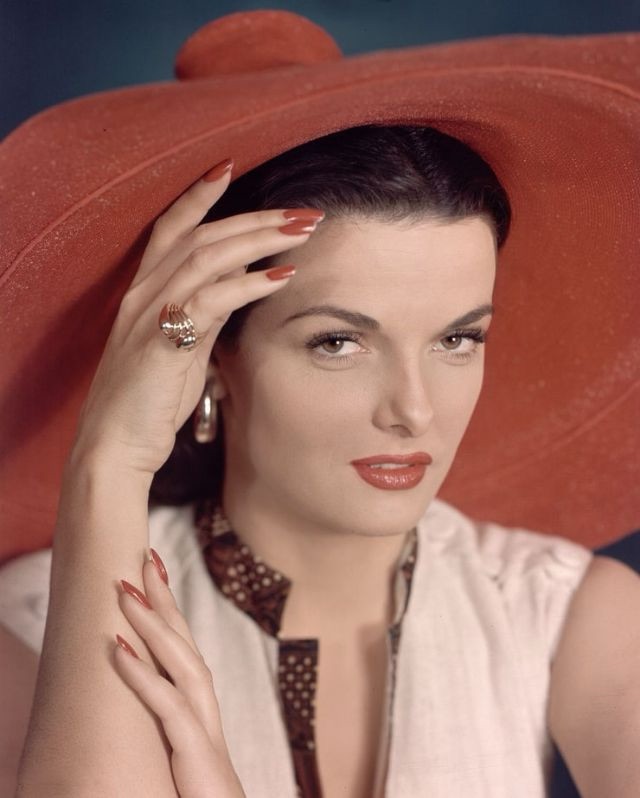

Jane Russell was more than just a Hollywood beauty—she was a powerhouse of charisma, talent, and elegance. Born in 1921 in Bemidji, Minnesota, she became one of the most recognizable actresses and sex symbols of the 1940s and 1950s. With her captivating presence, sultry voice, and striking silhouette, Russell left an indelible mark on the golden age of Hollywood. Beyond her screen persona, she was a singer, a humanitarian, and a woman of strong convictions.
Early Life and Path to Hollywood
Jane Russell’s journey to stardom was anything but ordinary. Raised in a religious and disciplined household, she initially aspired to become a designer. However, fate had other plans. Her striking looks and statuesque figure caught the attention of Howard Hughes, a film mogul known for his extravagant productions.
In 1940, Hughes cast her in The Outlaw, a film that became notorious for its provocative promotional campaign focusing on Russell’s figure. Though the movie faced censorship issues and delays, it propelled her to instant fame, setting the stage for a prolific career in Hollywood.

Watch this colorized version of the classic western The Outlaw (1943), starring Jane Russell and Jack Buetel, with subtitles for an enhanced viewing experience.
Film Career: An Icon of Beauty and Talent
Jane Russell’s film career spanned over two decades, featuring a variety of roles that showcased both her glamour and her acting prowess. While she was often cast as the sultry, confident woman, her performances were filled with charm and nuance.
One of her most celebrated roles was in Gentlemen Prefer Blondes (1953), where she starred alongside Marilyn Monroe. While Monroe played the naive yet cunning Lorelei Lee, Russell brought depth and wit to the character of Dorothy Shaw, proving she was more than just a Hollywood bombshell.
Other notable films include:
- His Kind of Woman (1951), where she starred opposite Robert Mitchum
- Macao (1952), another collaboration with Mitchum
- The Tall Men (1955), a Western adventure film featuring Clark Gable
- The Fuzzy Pink Nightgown (1957), which allowed her to showcase her comedic talent
Though often remembered for her beauty, Russell was a competent actress who could hold her own alongside some of Hollywood’s greatest male stars.

Fashion, Style, and Timeless Appeal
Jane Russell’s style was the epitome of classic Hollywood glamour. She exuded confidence in every outfit, from elegant gowns to tailored suits, always enhancing her statuesque figure. Her signature red lips, bold eyebrows, and voluminous curls made her a fashion icon of her time. Unlike many of her contemporaries, she embraced a more sophisticated, powerful look, setting her apart from the overtly delicate or girlish images promoted in Hollywood.

Her on-screen presence was undeniably magnetic. She carried herself with grace and confidence, whether playing a nightclub singer, a femme fatale, or a tough frontier woman. Her beauty, combined with her sharp wit and intelligent demeanor, made her one of Hollywood’s most distinctive stars.

A Passion for Music and Performing Arts
Beyond acting, Jane Russell had a deep love for music. She recorded several albums and was particularly known for her smooth, jazzy vocals. She often performed in musical films, proving she was a multi-talented artist. In the late 1950s, she formed a gospel group called The Hollywood Christian Group, using her platform to spread positive messages through music.
Her transition from film to music allowed her to explore a different artistic side, showcasing her versatility and dedication to the arts.

Philanthropy and Humanitarian Efforts
Jane Russell’s impact wasn’t confined to the silver screen. She was deeply involved in charitable work, particularly concerning child adoption. In 1955, she founded the World Adoption International Fund (WAIF), an organization dedicated to helping orphaned children find homes. Her passion for adoption advocacy stemmed from personal experiences, and she worked tirelessly to improve adoption policies in the United States and abroad.

In addition to her work with WAIF, Russell was also a vocal supporter of religious and conservative causes, using her influence to promote social and political issues she believed in. While some of her views were controversial, her commitment to philanthropy remained a defining aspect of her legacy.

Recognition and Lasting Influence
Despite often being underrated in comparison to some of her peers, Jane Russell received several accolades for her contributions to film and entertainment. She was honored with a star on the Hollywood Walk of Fame, and her handprints were immortalized alongside Marilyn Monroe’s at Grauman’s Chinese Theatre.

Her influence extended beyond Hollywood, inspiring future generations of actresses who admired her confidence, poise, and multifaceted talent. Unlike many actresses of her time who struggled to maintain relevance, Russell gracefully transitioned out of the limelight, leaving behind a body of work that continues to be celebrated today.