A Golden Era Beauty Who Chose Privacy Over Immortality
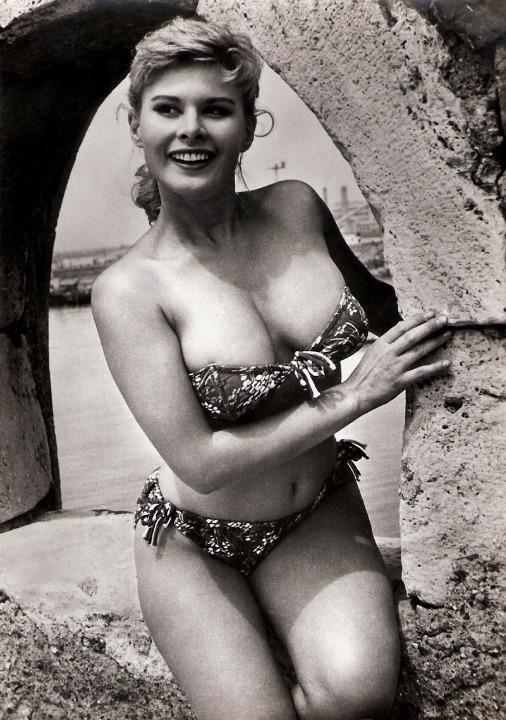
She was the kind of actress who could light up a screen without even trying. With a radiant smile, flaming red hair, and an easy, magnetic charm, Marisa Allasio captured the hearts of audiences and directors alike. Many believed she was destined to rule over Italian cinema, but at the height of her fame, she made a decision that stunned everyone — she walked away from it all. Her story is one of beauty, courage, and quiet defiance against the very world that adored her.
Maria Luisa Lucia Allasio, known to the public as Marisa, was born on July 14, 1934, in Turin, Italy. Her father, Count Federico Allasio, was a celebrated World War I hero, as well as a well-known football player and coach for the Genoa football club. From him, she inherited strength, dignity, and discipline. From her mother, she gained warmth and gentleness — qualities that would later shine through her performances.
Growing up in the years following World War II, Marisa dreamed not of stardom but of freedom and adventure. Yet fate had other plans, and the world of cinema soon claimed her.Her entry into film was almost accidental. In 1952, at just eighteen, she made her first appearance in Perdonami! (Forgive Me!), directed by Mario Costa. Though the role was small, her lively screen presence was impossible to overlook.

Italian filmmakers immediately sensed that she embodied the essence of a new, postwar Italy — youthful, modern, and filled with vitality. Soon after, she appeared in Gli eroi della domenica (Heroes of Sunday, 1952) and Cuore di mamma (A Mother’s Heart, 1953), developing a vivacious and relatable screen image that connected instantly with audiences.
By the mid-1950s, Marisa Allasio had become one of the defining faces of Italian cinema. In contrast to the smoldering sensuality of Gina Lollobrigida or the regal glamour of Sophia Loren, Marisa represented something different. She was fresh, playful, and full of life — the embodiment of what Italians called the ragazza moderna, or modern girl. Confident, flirtatious, and full of spirit, she symbolized a generation of women stepping into independence and self-expression in a rapidly changing Italy.
Her major breakthrough came in 1956 with Dino Risi’s Poveri ma belli (Poor But Beautiful), a romantic comedy set in Rome during the country’s economic revival. Marisa played Giovanna, a spirited young woman torn between two charming but idle Roman boys. The film captured the optimism and humor of the times, and her natural performance won over audiences and critics alike.
With her warmth, comic timing, and undeniable charisma, she became a household name almost overnight.The film’s massive success led to two sequels, Belle ma povere (Beautiful But Poor, 1957) and Poveri milionari (Poor Millionaires, 1959). Together, the trilogy defined an era of Italian romantic comedies and solidified Allasio’s status as one of the country’s most beloved stars.
Her name began to appear alongside Italy’s top actors and directors, and her smiling face adorned magazines across Europe. She was no longer just an actress — she had become the embodiment of Italy’s youthful energy and optimism.During these peak years, Marisa worked alongside some of the biggest names in Italian cinema. She starred with Alberto Sordi in Il conte Max (1957) and with Vittorio Gassman in La ragazza del Palio (The Girl of the Palio, 1957), where she portrayed a passionate young woman swept up in the rivalries of Siena’s famous horse race.
Her roles showcased her versatility — she could be comedic, fiery, or deeply tender, all within the same scene. Viewers loved her not just for her beauty, but for the sincerity she brought to every performance.Yet behind her growing fame, Marisa began to feel the limitations of her career. Italian cinema in the 1950s often treated actresses as ornaments — glamorous figures meant to decorate the screen rather than shape it. Though she appreciated her success, Marisa longed for something more substantial and real. Then, in 1958, life offered her an unexpected turn.
At a glittering social event in Rome, she met Count Pier Francesco Calvi di Bergolo, a member of Italian nobility and the son of Princess Jolanda of Savoy, daughter of Italy’s last king, Victor Emmanuel III. Their connection was immediate. The two fell deeply in love, and soon their romance became the talk of Italy. When they married, their union was celebrated as a fairytale match between cinema’s sweetheart and royal lineage.
But that same wedding also marked the end of Marisa’s film career. At only twenty-four years old, and at the very height of her stardom, she retired from acting to dedicate herself fully to her husband and their future family. “I wanted a real life, not one made of lights and lenses,” she once explained, reflecting on her decision. While many found her choice surprising, it was entirely in character. She had always followed her own heart, and this time was no different.

Marisa and her husband had two children, and she lived a serene, private life, far removed from the noise of fame. While many of her peers continued to chase roles and appearances, she seemed perfectly content to let the world of film remain a fond chapter of her past. Rarely giving interviews or public statements, she became a figure of quiet mystique — a reminder of a time when Italian cinema was bursting with life and laughter.
Marisa Allasio passed away on July 17, 2024, just three days after her 90th birthday. Her passing inspired tributes from film historians and admirers across Italy, who remembered her not only as a symbol of beauty but as a spirit of her generation. She had embodied postwar Italy’s optimism — a nation rebuilding itself with joy, humor, and resilience.Though her career lasted only a few years, her influence was lasting.
Marisa represented more than a film star; she was a cultural moment — spontaneous, genuine, and full of light. Her brief but brilliant journey in cinema remains a reminder that grace and strength can exist even in the simplest choices. She did not chase immortality through fame; instead, she lived her life with quiet confidence, choosing love and peace over glitter and applause. In doing so, Marisa Allasio proved that sometimes, stepping out of the spotlight is the most radiant act of all.









Post Comment