A Legendary Star Who Captivated Millions, But Left Us Too Soon at Just 43!: Who Is She?
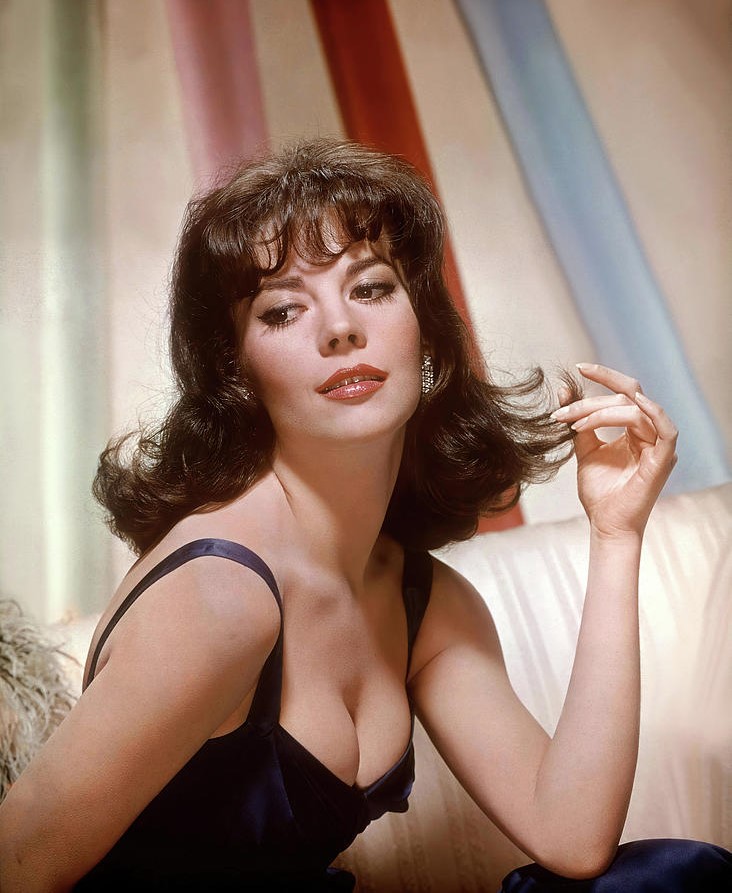
Natalie Wood’s name evokes both brilliance and mystery — the story of a woman who rose from child stardom to become one of Hollywood’s most gifted and beloved actresses, only for her life to end far too soon. Her career, spanning nearly four decades, was defined by grace, intelligence, and an emotional honesty that set her apart from the glossy glamour of her era. Yet, behind the fame and beauty was a woman constantly striving to be seen for more than just her face — an artist searching for truth in her work, and in herself.

She was born Natalia Nikolaevna Zakharenko on July 20, 1938, in San Francisco, California, the daughter of Russian immigrants who fled political turmoil. Her mother, Maria, had dreams of fame for her daughter and pushed young Natalie into acting at a tender age. At just four years old, she appeared in her first film,Happy Land (1943). Though her role was small, her expressive eyes and natural poise caught the attention of directors and casting agents.
Wood’s early life was a whirlwind of auditions, rehearsals, and film sets. Her mother became a driving — and sometimes overbearing — force in her career, shaping the little girl’s path in a business known for its unforgiving demands. But even as a child, Natalie possessed a rare gift: she wasn’t simply performing; she was feeling. She had a depth that seemed far beyond her years, a quality that made audiences believe every word she said.
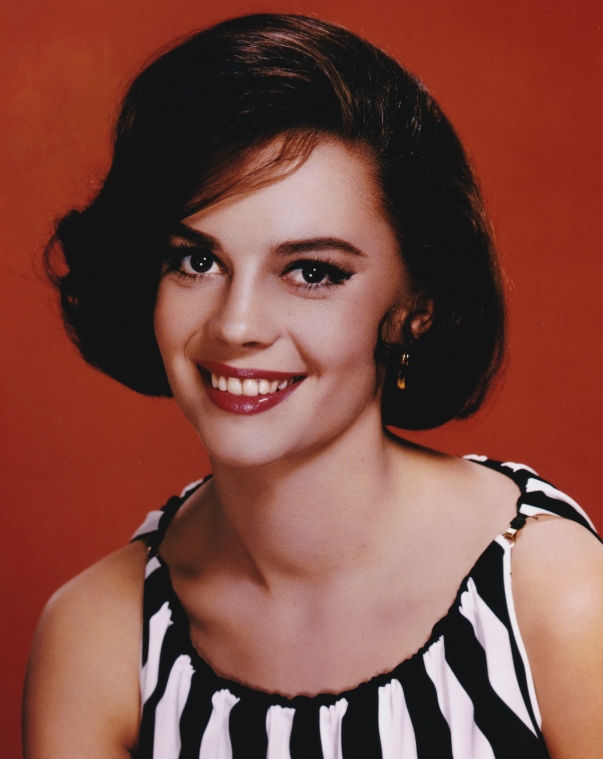
Her breakthrough came at age eight with Miracle on 34th Street (1947). As Susan Walker, the skeptical little girl who learns to believe in Santa Claus, Natalie became a symbol of innocence and hope in postwar America. Her performance captivated millions, and suddenly she wasn’t just another child actor — she was a star.
As she transitioned into adolescence, Natalie faced one of the hardest challenges for any child performer: growing up on screen. Hollywood was littered with the stories of child stars who faded into obscurity once the novelty wore off. But Natalie defied that pattern. Determined to evolve, she began taking on more mature and emotionally complex roles.
Her defining transformation came in Rebel Without a Cause (1955), opposite James Dean and Sal Mineo. As Judy, a vulnerable teenager searching for love and understanding, she revealed a sensitivity and authenticity that stunned critics. The role earned her an Academy Award nomination for Best Supporting Actress — and more importantly, it announced her as a serious actress capable of carrying powerful dramatic weight.
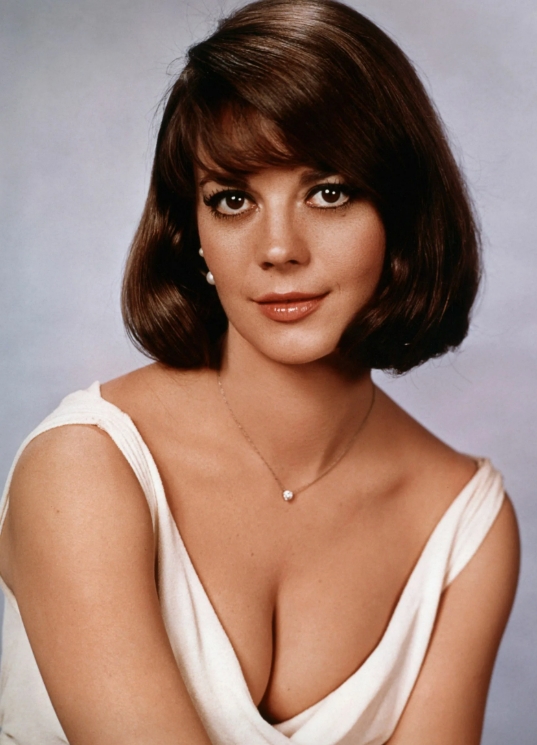
Throughout the 1950s and 1960s, Natalie Wood’s career flourished. She appeared in The Searchers (1956), one of John Ford’s masterpieces, and in Marjorie Morningstar (1958), where she continued to explore themes of identity and independence. By the early 1960s, she had become one of Hollywood’s most bankable and versatile stars.
In West Side Story (1961), she played Maria, the Puerto Rican girl who falls in love with a man from a rival gang. Though the film was controversial for casting non-Latino actors in Latino roles, Natalie’s performance remains one of her most iconic. Her portrayal of love, loss, and youthful idealism helped makeWest Side Story one of the most celebrated musicals of all time.
That same year, she delivered one of her most moving performances in Splendor in the Grass (1961), directed byElia Kazan. As Deanie, a young woman torn between love, desire, and societal expectations, Wood gave a raw, emotionally charged performance that mirrored her own struggles with self-image and heartbreak. Critics hailed it as her finest work, and it earned her another Academy Award nomination.

Off-screen, Natalie’s life was equally captivating — and complicated. She married actor Robert Wagner in 1957 when she was just 19, and the pair quickly became one of Hollywood’s golden couples. Their romance fascinated the press, but behind the glamorous façade were tensions and insecurities that ultimately led to divorce in 1962. Despite this, Natalie and Robert would remarry a decade later, in 1972, proving that love — even imperfect love — often finds its way back.
Between marriages, she was romantically linked to stars like Warren Beatty, her co-star in Splendor in the Grass, and Elvis Presley. But those relationships never eclipsed her deep desire for stability and family. Beneath her star persona, Natalie longed for a normal life — one not defined by fame or tragedy.
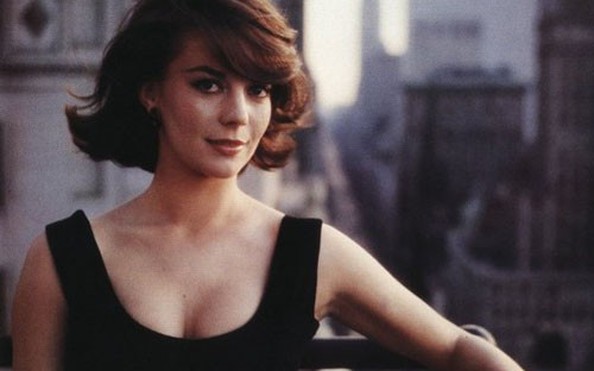
By the 1970s, Natalie Wood had become both a Hollywood veteran and an enigma. She worked selectively, choosing roles that reflected her maturity and intelligence. Films like Bob & Carol & Ted & Alice(1969) revealed her ability to handle bold, modern themes with humor and sensitivity. She was one of the few actresses of her generation who successfully transitioned from child star to adult icon — an achievement that remains rare in Hollywood.
Yet, her story took a devastating turn on November 29, 1981. While on a weekend boat trip off the coast of Catalina Island with her husba
d Robert Wagner and actor Christopher Walken, Natalie drowned under mysterious circumstances. The details surrounding that night have remained shrouded in speculation and controversy for decades. Though her death was ruled an accidental drowning, questions have lingered — about what really happened, and about the silence that followed.
Her passing at just 43 shocked the world. Hollywood lost not only one of its brightest stars but one of its most human.

In the years since, Natalie Wood’s legacy has endured — not because of the tragedy, but because of the timelessness of her work. From the innocence ofMiracle on 34th Street to the aching intensity of Splendor in the Grass and the romantic brilliance of West Side Story, she left behind performances that continue to move audiences generations later.
She was more than her beauty, more than her fame, more than the mystery of her death. She was an artist who gave everything she had — even her vulnerability — to the screen.
Natalie Wood once said, “At night, when I go to bed, I ask myself if I was a little better person today than I was yesterday.”
It is that quiet grace — that yearning for growth and goodness — that defines her best. Her light, though gone too soon, continues to flicker in every scene she ever graced, reminding us that the most beautiful stars are the ones that never truly fade.











Post Comment