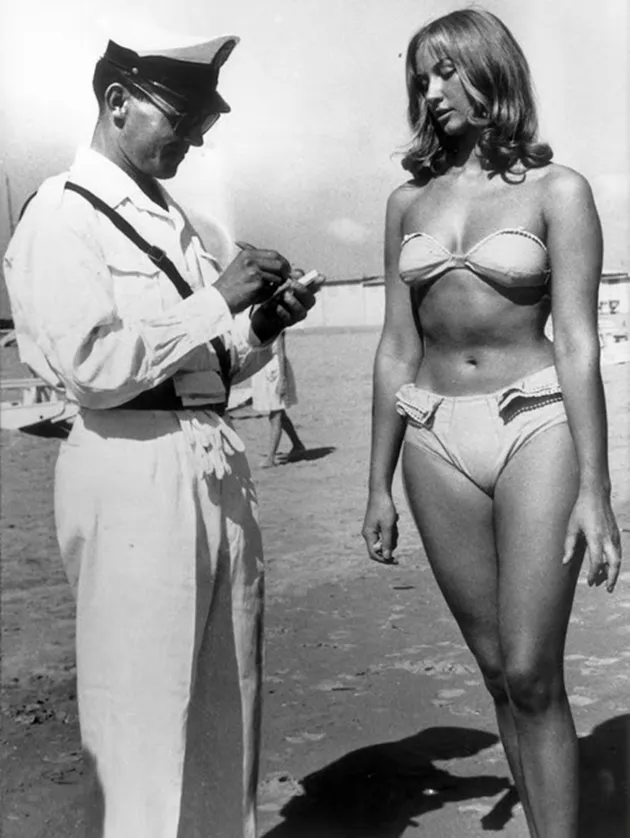
A woman is ticketed for wearing a bikini, 1957. But why
In today’s world, bikinis are a staple of beach fashion, but in the 1950s, they were seen as scandalous and even illegal in some places. A now-iconic photo from 1957 captures a moment that perfectly illustrates this cultural shift—a police officer issuing a ticket to a woman for wearing a bikini on a beach in Rimini, Italy.
With a smirk on his face, the officer is seen enforcing modesty laws that were still prevalent across Europe at the time. This moment is a stark reminder of how society once viewed women’s fashion and how public perceptions of modesty and decency have evolved over time.
The Origins of the Bikini: A Revolutionary Fashion Statement
The bikini wasn’t always a controversial piece of swimwear. It was officially introduced to the world on July 5, 1946, by French engineer Louis Réard. The name “bikini” was inspired by Bikini Atoll, a site where the United States conducted atomic bomb tests. Réard believed his invention would make just as much of an impact as those powerful explosions—and he was right.
The first model to wear a bikini publicly was Micheline Bernardini, a Parisian showgirl. French women quickly embraced the new design, but outside of France, the reaction was far less enthusiastic. Many deemed the bikini too revealing, too scandalous, and completely inappropriate for public wear.
Why Was Wearing a Bikini Illegal in the 1950s?
The 1950s were a time of strict social norms and conservative dress codes, especially for women. In many countries, including Italy, Spain, and the United States, bikinis were considered too provocative and even immoral.
The Catholic Church, which held strong influence over cultural norms in Italy, publicly condemned bikinis. Many governments responded by implementing laws that prohibited women from wearing two-piece swimsuits in public. Women who dared to defy these restrictions risked fines, public shaming, and even being escorted off the beach by law enforcement.
The Bikini Ban in Italy: A Clash Between Fashion and Tradition
Italy, known for its deep religious roots and traditional values, was one of the countries that initially rejected the bikini. Beaches in Rimini, a popular seaside destination on the Adriatic coast, were no exception.
During this time, authorities actively policed women’s swimwear, ensuring that bathing suits met strict decency standards. Women who wore bikinis in public were often ticketed, as seen in the famous 1957 photo.
The image itself captures an era when women’s bodies were heavily policed, and fashion was still dictated by outdated moral codes.
How the Bikini Became a Global Phenomenon

Despite early backlash, the bikini’s popularity could not be stopped. By the late 1960s, both eastern and western societies began embracing the bikini, thanks in part to pop culture and Hollywood’s biggest stars.
Hollywood’s Influence on Bikini Acceptance
Actresses like Ursula Andress and Raquel Welch played a significant role in changing perceptions of the bikini.
- Ursula Andress made history in 1962 with her iconic white bikini scene in Dr. No, the first James Bond film.
- Raquel Welch further cemented the bikini’s place in pop culture with her role in One Million Years B.C. (1966), where she wore a fur bikini that became one of the most famous images of the decade.
These women, along with the rise of beach culture, surfing, and media representation, helped push the bikini into mainstream acceptance.

The Rise of the Sexual Revolution
The 1960s and 1970s were also marked by significant cultural shifts, including the sexual revolution and the feminist movement. These changes played a crucial role in challenging outdated modesty laws and allowing women more freedom in their clothing choices.
Bikinis were no longer seen as symbols of indecency but as fashion statements, symbols of empowerment, and even status symbols.
From Controversy to Normalcy: The Legacy of the Bikini
Fast forward to today, and bikinis are a staple of summer fashion. What was once illegal is now an industry worth billions of dollars, with countless styles, brands, and designs available.
What does this say about societal progress? It shows that fashion, like culture, is always evolving. What was once scandalous can become the norm, and restrictive rules can and should be challenged.
The 1957 image of a woman being ticketed for wearing a bikini is now a symbol of how far society has come in embracing personal freedom and self-expression.
Conclusion: A Photo That Captures a Cultural Shift
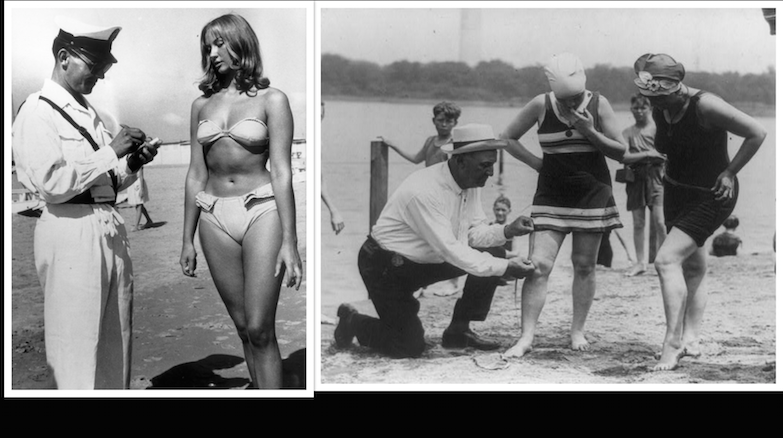
The photo of a woman receiving a ticket for wearing a bikini in 1957 may seem absurd by today’s standards, but at the time, it reflected a real struggle against rigid social norms and outdated morality laws.
What was once seen as shocking has now become widely accepted, proving that fashion has the power to challenge societal norms and push for progress.
The next time you step onto a beach in a bikini, remember that it wasn’t always this easy—women had to break barriers and defy rules just to wear what they wanted