After “No Kings” Protests, Democrats Still Searching for a Path Forward
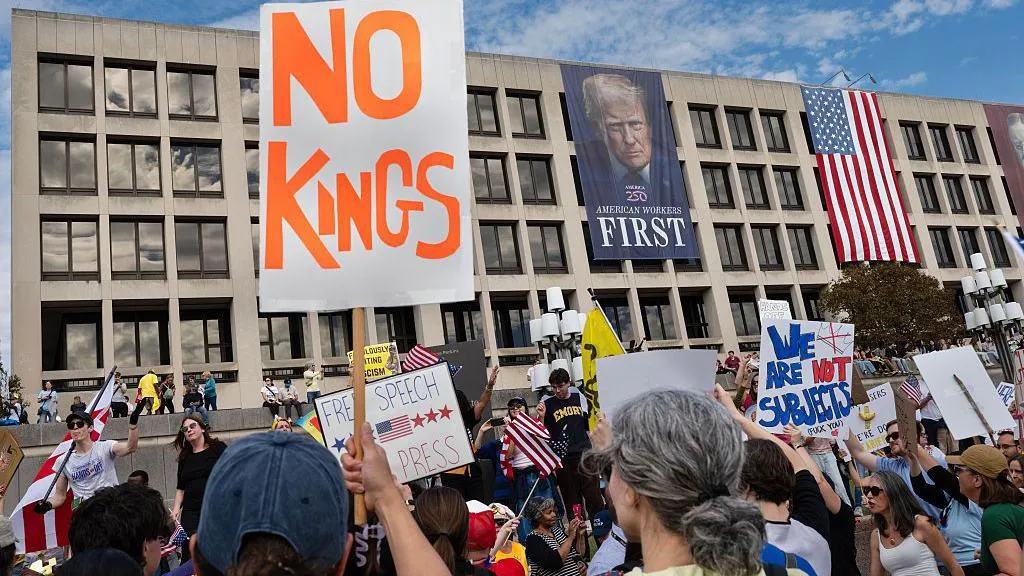
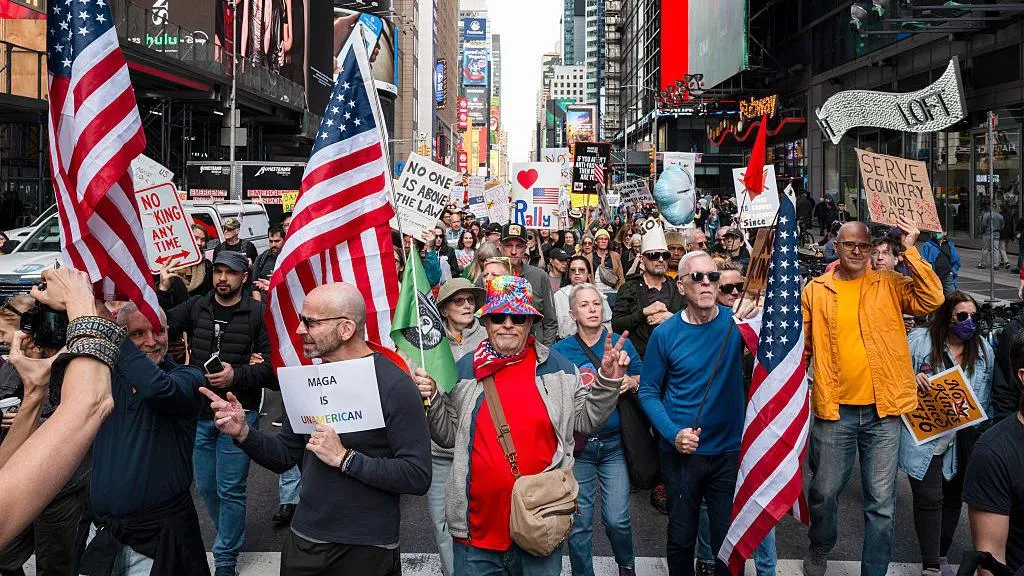
Millions of demonstrators took to the streets across America this weekend for what organizers called the “No Kings” protests — massive rallies aimed squarely at President Donald Trump and his use of presidential authority. From New York to Los Angeles, liberal activists, Democratic lawmakers, and a handful of anti-Trump Republicans marched in what they described as a “defense of democracy.”
But while the media hailed the turnout as a show of unity, the question now facing the Democratic Party is simple: what’s next?
The demonstrations were largely peaceful, with music, speeches, and thousands of anti-Trump signs filling city streets. In Washington, D.C., Senator Chris Murphy (D‑CT) told the crowd that “Americans are saying loudly and proudly that we are a free people, not a people that can be ruled.”
Yet, just down Pennsylvania Avenue, the White House seemed unfazed. Deputy Press Secretary Abigail Jackson dismissed the event with a two-word response — “Who cares.” President Trump, never one to miss an opportunity for satire, posted several tongue-in-cheek AI-generated videos on Truth Social, mocking the rallies as “liberal theater.”
While Democrats and the media frame the turnout as proof of a political resurgence, the numbers tell a different story. The Democratic Party’s favorability remains at historic lows — barely one-third of Americans view it positively — and deep divisions continue to plague its ranks.
Many of those marching this weekend weren’t just angry at Trump. They were frustrated with their own party’s leaders, who they say have failed to take a tough enough stance against the president. One protester in D.C. told NBC News, “We’re just taking it on the chin. The high road doesn’t work anymore.”
A Party Without Power — and Without a Plan
With no control over Congress and a shrinking share of independent voters, Democrats are struggling to find a clear strategy for opposing Trump. The ongoing government shutdown — now entering its fourth week — has become their main leverage point. Senate Democrats have blocked short-term spending extensions, insisting on health-insurance subsidies and social funding that Republicans have refused to include.
It’s a risky gamble. While polls show the public blames Trump and the GOP for the shutdown, the longer it drags on, the more ordinary Americans — including many in the Democratic base — will suffer. Thousands of federal workers are missing paychecks. Food-assistance programs are drying up. And the Trump administration, unfazed, is using the shutdown to push new federal cuts and reduce government spending — a move conservatives have long supported.
Democratic leaders know they’ll eventually have to strike a deal with the White House. But any compromise could alienate the activist base that filled the streets this weekend. As Senator Tim Kaine (D‑VA) admitted, “If we shake hands with President Trump on a deal, we don’t want him then next week firing thousands more people or cancelling public health funds.”
Testing the “Resistance” at the Ballot Box
This November’s state elections will offer the first real test of whether anti-Trump sentiment can translate into actual votes. Democrats are hoping that the same crowds chanting “No Kings” will show up at the polls.
In Virginia, former Congresswoman Abigail Spanberger (D) currently leads her Republican challenger in a governor’s race that could preview the political mood heading into next year’s midterms. Meanwhile, in New Jersey — where Trump nearly halved the GOP’s margin of defeat compared to previous cycles — Democrats face a surprisingly competitive race.
At a rally in Montclair, New Jersey, Democratic National Committee Chair Ken Martin urged protesters to do more than just march: “It’s one thing to show up at protests. It’s another to move the needle and get back some power.”
The problem, however, is that Democrats are far from unified about how to get that power back.
Old Fights, New Fault Lines
Even as Democrats rally around opposition to Trump, the party’s internal fractures are showing. Former Vice President Kamala Harris’s recent book tour has been repeatedly interrupted by pro-Palestinian activists protesting the administration’s Middle East policies. Meanwhile, moderates calling for a renewed focus on economic issues over cultural battles have faced pushback from the party’s progressive wing.
Several Democratic primaries — including in Maine, California, Michigan, and Massachusetts — are shaping up as bitter fights between younger, activist candidates and the party’s establishment old guard. These divisions threaten to overshadow any unified anti-Trump message.
For now, the “No Kings” protests gave Democrats a temporary sense of purpose — a common cause to rally around. But as the chants fade and the signs come down, the reality remains: the Democratic Party is still a movement in search of a message, a leader, and a plan.
As President Trump’s team confidently prepares for next year’s midterms, Democrats are left with one uncomfortable truth — marching may make headlines, but it doesn’t win elections.







Post Comment