AOC built her own political machine. Now she’s deciding her next move.

Earlier this year, Rep. Alexandria Ocasio-Cortez received an unexpected call — from a former colleague who had once criticized her brand of left-wing politics. The New York Democrat, now one of the most influential figures in her party, didn’t hesitate to help. She sent out a fundraising email calling centrist Abigail Spanberger “a brawler for the working class,” signaling a surprising alliance between two Democrats who had once represented opposite ends of the party.
That single gesture captured how far Ocasio-Cortez — the onetime outsider mocked by Nancy Pelosi as a “social media phenomenon” — has come in just seven years. Once seen as a threat by her own party, she has evolved into a power broker whose endorsement is now sought by both progressives and moderates alike. Her fingerprints are on races from New York to Virginia, and her presence has become a defining force in Democratic politics.
From Outsider to Insider Power Player
On election night in November, Ocasio-Cortez was in Brooklyn celebrating another win: the election of Zohran Mamdani, a fellow democratic socialist, as New York’s new mayor. She beamed as she hugged him amid cheers and cameras. “The Democratic Party cannot last much longer by denying the future,” she told CNN that night — a clear warning to establishment Democrats.
At 36, Ocasio-Cortez remains polarizing on the national stage, with more Americans viewing her unfavorably than favorably, according to a Washington Post–Ipsos poll. Yet within the Democratic Party, her stature has grown immensely. Her massive fundraising operation rivals anyone in Congress, she commands a loyal online following, and even once-skeptical establishment figures now view her as a unifying voice during a time of party upheaval following another Trump victory.
AOC’s Crossroads: Senate or White House?
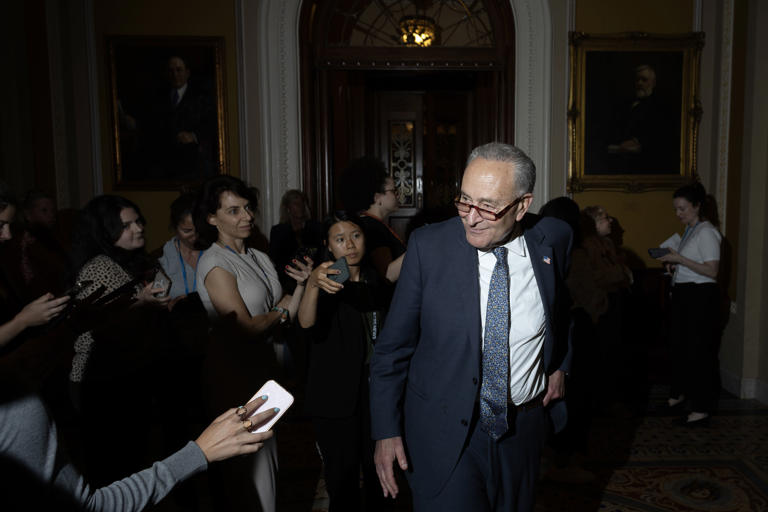
Now, Ocasio-Cortez faces the biggest decision of her political career. According to multiple sources familiar with her thinking, she is seriously considering a Senate run or a 2028 presidential bid. Either path would be historic — the first could pit her against Senate Majority Leader Chuck Schumer, while the second would make her one of the youngest major presidential candidates in U.S. history.
“I know I’m being asked about New York — that is years from now,” she recently told reporters, brushing off speculation. But those close to her say the congresswoman feels an obligation to ensure the populist, progressive movement she helped build continues to have a voice in national politics. “If she runs,” one confidant said, “she wants to win — not just make a point.”
From Bartender to Political Architect
When Ocasio-Cortez launched her first campaign in 2017, some advisers suggested she play down her past as a bartender. She refused. “I want to represent the bartenders and waitresses of this district,” she said. That authenticity resonated with voters in the Bronx and Queens, propelling her to a stunning 2018 primary victory over longtime incumbent Joseph Crowley.
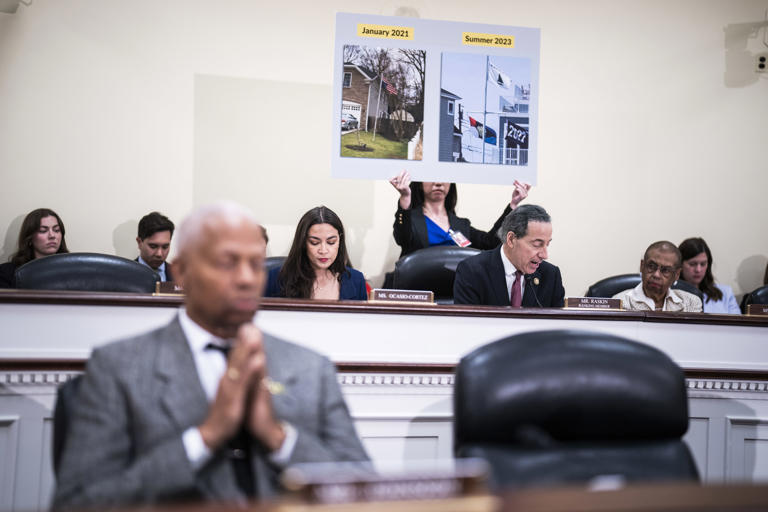
Her early days in Congress were turbulent. Ocasio-Cortez clashed with party leadership, participated in a climate protest in Pelosi’s office, and was derided as naïve. Pelosi dismissed her Green New Deal as a “Green Dream.” Yet the young congresswoman weathered the criticism, learning to navigate Washington’s power structures without losing her base.
Over time, she refined her approach — less confrontation, more influence. By 2021, she had built bridges with mainstream Democrats like Jamie Raskin and Debbie Dingell, earning respect for her policy depth and work ethic. Her alliance with the Biden administration and later with Vice President Kamala Harris further demonstrated her shift from outsider firebrand to coalition-builder.

Navigating Party Tensions
Still, Ocasio-Cortez’s relationship with her party remains complex. She began paying dues to the Democratic Congressional Campaign Committee only in 2024 and lost her bid to chair the Oversight Committee after Trump’s reelection. Her calls to impeach Trump for his strike on Iran’s nuclear facilities also drew pushback from Democrats eager to avoid further polarization.
Critics on the left accuse her of becoming too establishment. The Democratic Socialists of America even withdrew their endorsement in 2024, citing her moderate stance on Israel. Yet centrists continue to call her too radical, warning that her progressive policies could alienate swing voters. “She’s gone left on everything,” said Lanae Erickson of the centrist think tank Third Way. “I don’t think she could win a general election.”
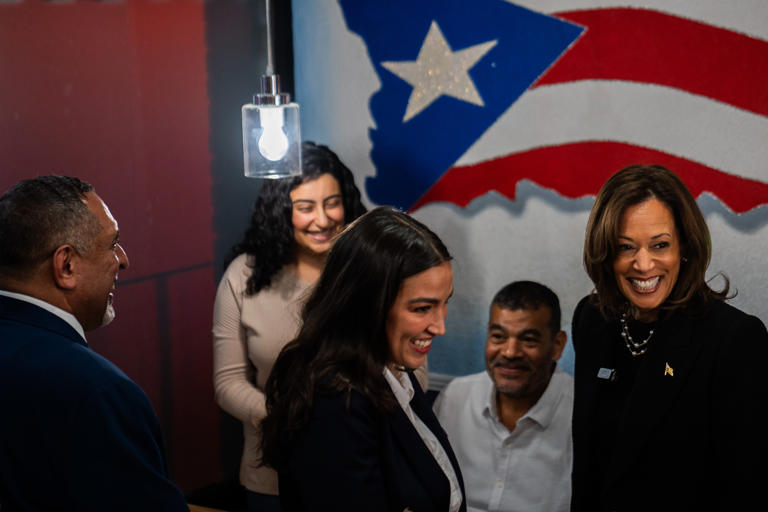
Ocasio-Cortez herself acknowledges the tension. “I have a weird relationship with Democrats,” she admitted earlier this year. “I’m a dissenter, but I also know this party is a coalition — and if we want change, we have to shift that coalition from within.”
A Partnership with Sanders — and a New Generation Rising
Her closest ally remains Sen. Bernie Sanders, the man whose 2016 campaign first inspired her political awakening. The two have developed a bond rarely seen in Washington — partners in ideology and strategy. Sanders has invited Ocasio-Cortez to join him on his “Oligarchy Tour,” where they call for higher taxes on the rich and expanded social programs. Many of his former staffers now work for her.
Still, Sanders rejects the notion that she’s his “heir apparent.” “She’s blazing her own path,” one associate said. And indeed, she has — advising new progressive leaders like Zohran Mamdani, campaigning for candidates nationwide, and defining a new brand of pragmatic populism.
The Road Ahead
Whether Ocasio-Cortez aims for the Senate, the presidency, or continues to wield influence from the House, one thing is certain: she’s no longer the scrappy underdog dismissed as a Twitter celebrity. With nearly 10 million Instagram followers, a $20 million war chest, and a political movement built in her image, she stands at the center of America’s progressive future.
Republicans, for their part, are already sharpening their attacks. Vice President J.D. Vance called the idea of her presidency “the stuff of nightmares.” Trump himself recently lashed out after she floated impeachment — prompting her trademark Bronx-born clapback:
“I’m a Bronx girl,” she wrote. “You should know we can eat Queens boys for breakfast.”
AOC may be weighing her next move, but one thing’s clear — whatever she chooses, she won’t be underestimated again.












Post Comment