Burl Ives, Elizabeth Taylor, and Paul NewmanCat on a Hot Tin Roof 1958 Directed by Richard BrooksA dying plantation owner tries to help his alcoholic son solve his problems.

Classic Spotlight: Cat on a Hot Tin Roof (1958)
Starring Elizabeth Taylor, Paul Newman, and Burl Ives
Directed by Richard Brooks
When Cat on a Hot Tin Roof hit theaters in 1958, it instantly became one of the most powerful and provocative dramas of its time. Adapted from Tennessee Williams’ Pulitzer Prize-winning play, the film dives deep into themes of family conflict, repression, greed, and emotional decay — all set against the sweltering backdrop of a Mississippi plantation.
At the heart of the story is Brick Pollitt, portrayed by Paul Newman, a once-promising athlete turned bitter alcoholic. Brick spends his days drowning in self-loathing and whiskey, haunted by guilt and disillusionment. His stunning wife Maggie, played by Elizabeth Taylor in one of her most memorable performances, fights desperately to rekindle their dying marriage and secure their place in the Pollitt family’s inheritance.
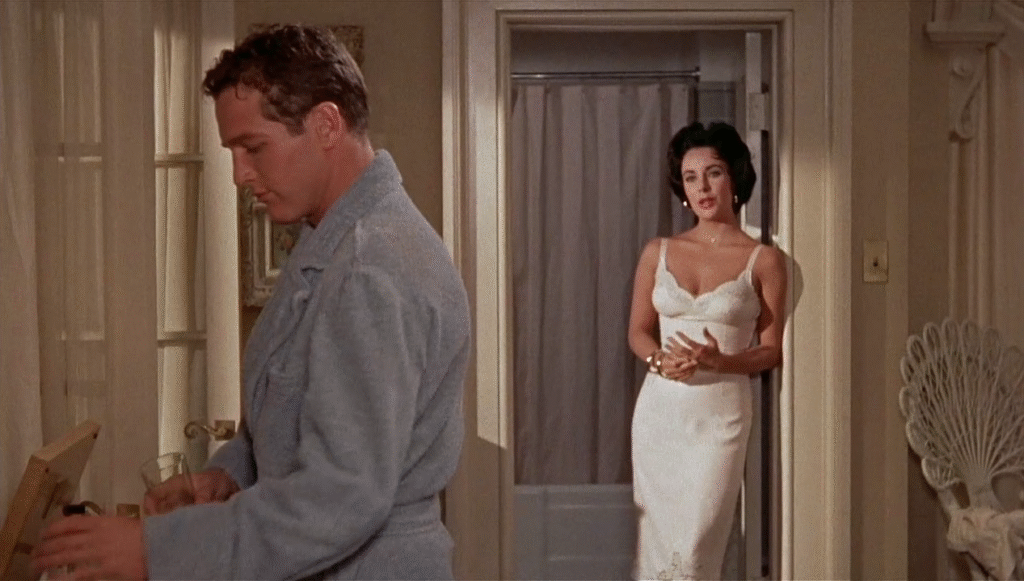
The drama unfolds when Big Daddy — played with raw power and complexity by Burl Ives — returns home from the hospital with the false belief that he’s free of cancer. Unaware of his true diagnosis, he tries to reconnect with his estranged son Brick and confront the lies, secrets, and resentments tearing the family apart. As tensions rise, every conversation becomes a battlefield, and every silence reveals what can’t be said out loud.
Director Richard Brooks expertly balances Tennessee Williams’ poetic dialogue with cinematic tension, using the confined setting of the Pollitt mansion to heighten the emotional heat — much like the “cat on a hot tin roof” of the title. Taylor’s fiery passion and Newman’s quiet torment create a magnetic on-screen chemistry that made the film an instant classic.
Though Hollywood’s censorship at the time softened some of Williams’ original themes, Cat on a Hot Tin Roof still remains remarkably daring for its era. Its exploration of truth, desire, and denial continues to resonate, making it one of the defining films of 1950s American cinema.

Why it still matters:
More than six decades later, Cat on a Hot Tin Roof remains a masterclass in acting and storytelling. It’s a film that shows how family love can wound as deeply as it heals, and how the hardest truths are often the ones we hide from ourselves.













Post Comment