Chasing “Perfection”: How One Woman Revealed The Changing Face Of Beauty Through History
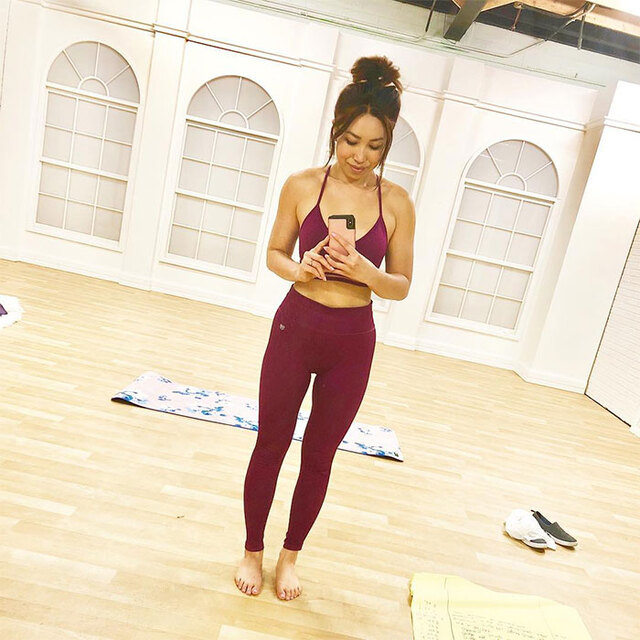
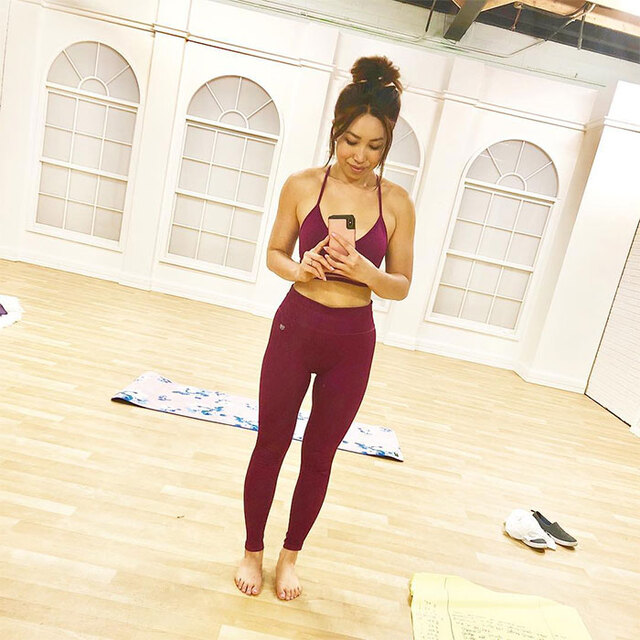
Beauty has never been a fixed concept. What was once praised as the pinnacle of attractiveness can quickly fall out of favor, replaced by an entirely new “ideal.” From the soft curves of Renaissance paintings to the ultra-thin silhouettes of the 1990s and the Instagram-inspired bodies of today, women have been chasing ever-shifting standards for centuries. Fitness blogger Cassey Ho decided to expose this exhausting cycle in a striking way: by reshaping her own image to match the “perfect body” of different eras. The result is both eye-opening and unsettling—forcing us to ask: if perfection keeps changing, does it even exist at all?
The Experiment: One Woman, Many “Perfect” Bodies
Cassey Ho, known for her Blogilates fitness platform, wanted to challenge the idea that women’s bodies need constant “upgrading” to stay desirable. Using digital editing, she reimagined herself in different historical periods according to the standards that dominated at the time.
The results were astonishing. In one version, she had the soft, round curves admired during the Renaissance. In another, she was razor-thin, with sunken cheeks reflecting the 1990s heroin chic. By comparing side by side, she highlighted how arbitrary these ideals are—and how much pressure they put on women to reinvent themselves just to be “good enough.”
A Timeline of Beauty Ideals
Before we break down each era, it’s worth remembering that beauty has never been a matter of biology alone—it has always been a reflection of culture, wealth, media, and power. Each period in history carried its own version of the “perfect” body, shaping how women dressed, behaved, and even felt about themselves.
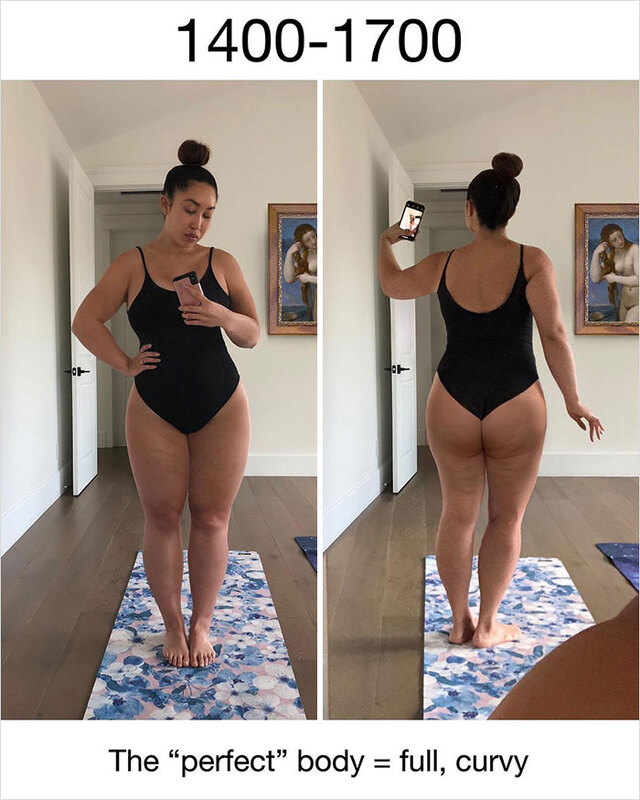
Renaissance (1400–1700): Wealth in Curves
During the Italian Renaissance, beauty was synonymous with abundance. A rounded belly, generous hips, and a full chest weren’t just attractive—they symbolized health, fertility, and social status. Being thin suggested poverty, while fullness showed privilege. Paintings from the era celebrated voluptuous forms, setting the tone for centuries to come.
Rediscover authentic beauty in Real Women – Beauty Through The Decades The Realistic Way—watch now to see how beauty standards truly evolve!
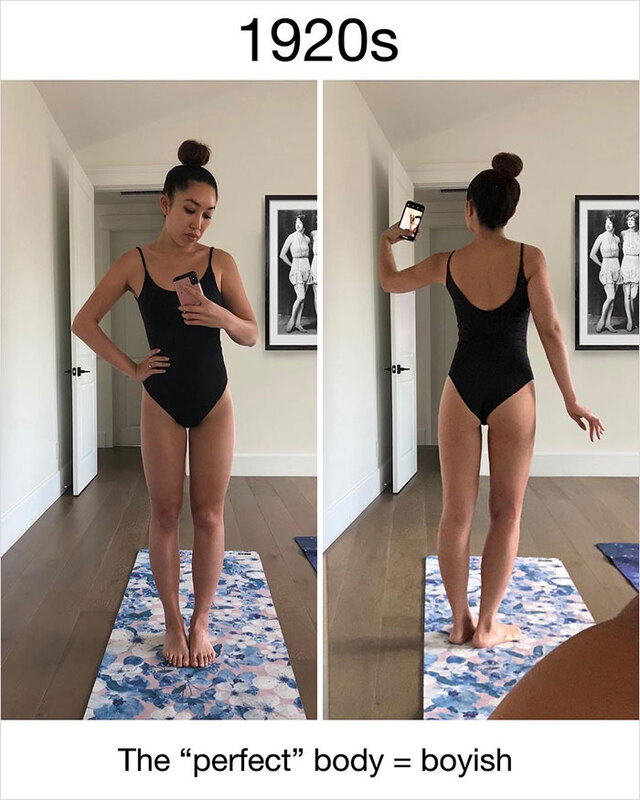
he Flapper Era (1920s): Boyish and Androgynous Charm
Fast forward to the Jazz Age, and the mood completely shifted. Women cut their hair short, bound their chests, and chose drop-waist dresses that hid curves. The “flapper” body was slim, youthful, and almost androgynous. It represented liberation from Victorian ideals, but it also imposed its own pressures: to look thin and carefree at all costs.
The Hourglass 1950s: Curves Return with a Vengeance
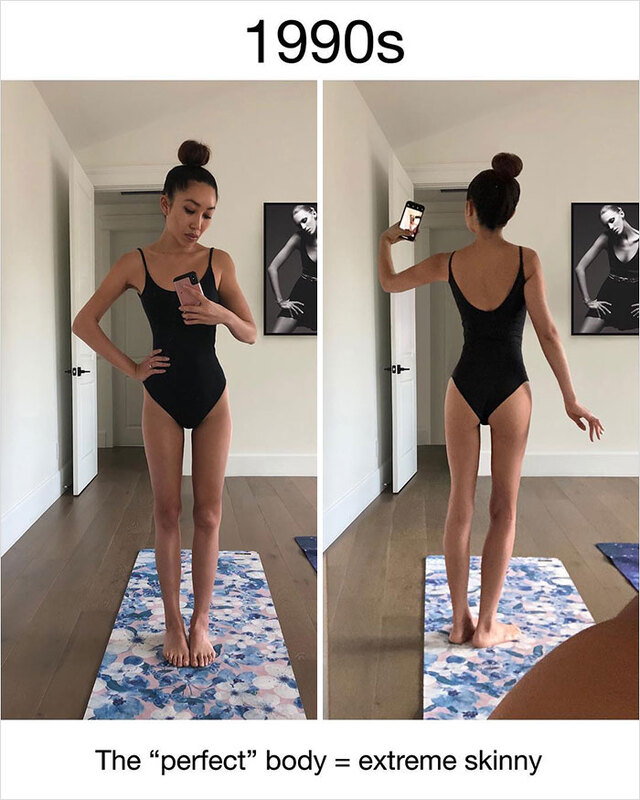
By the mid-20th century, curves were back in style. Stars like Marilyn Monroe and Elizabeth Taylor embodied the “ideal” with their tiny waists, full busts, and rounded hips. Advertisements even promoted weight-gain products to help women achieve this look. The hourglass figure was framed as soft, glamorous, and ultra-feminine.
The Heroin Chic 1990s: Skinny Dominates
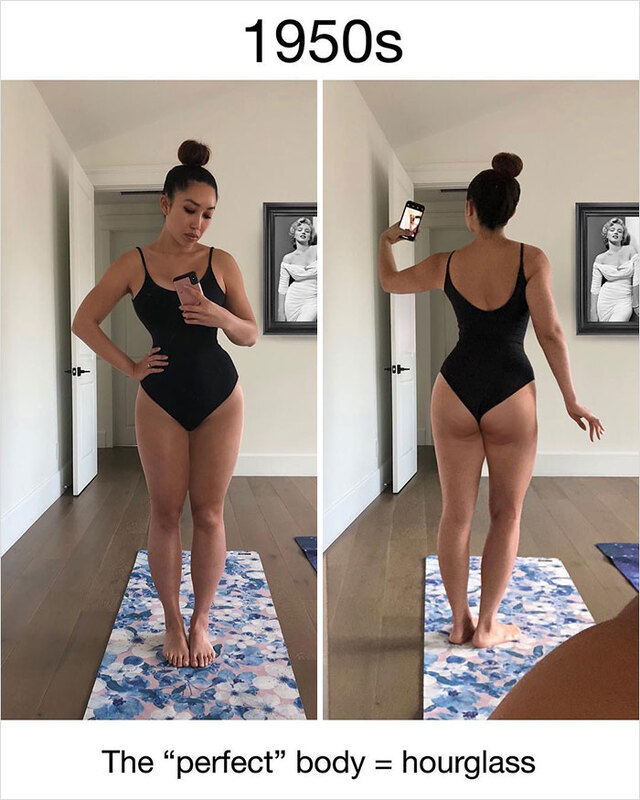
The pendulum swung again in the 1990s. Supermodels like Kate Moss popularized what became known as “heroin chic”—a look marked by sharp bones, pale skin, and a fragile appearance. Runways and fashion magazines glorified this extreme thinness, pushing women to pursue a body that often required harsh dieting or unhealthy habits.
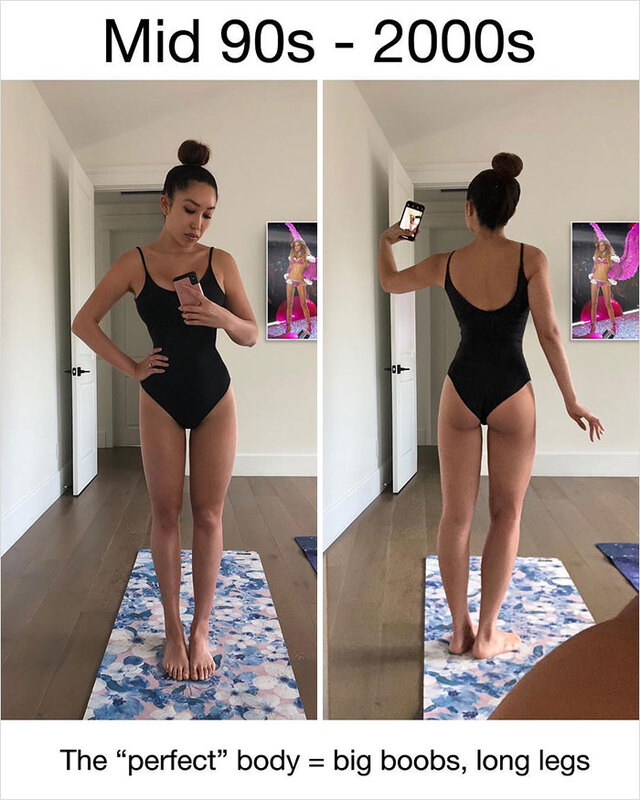
Victoria’s Secret Era (Mid-90s–2000s): Tall, Slim, and Busty
At the same time, mainstream pop culture leaned toward another ideal: the supermodel body. The Victoria’s Secret Angels symbolized this trend—long legs, flat stomachs, and augmented busts. Cosmetic surgeries for breast enlargement skyrocketed, making this the most common procedure in the U.S. by 2010.
Explore “Beauty Standards Around The World” to uncover how diverse cultures shape our ideals of beauty—tune in now!
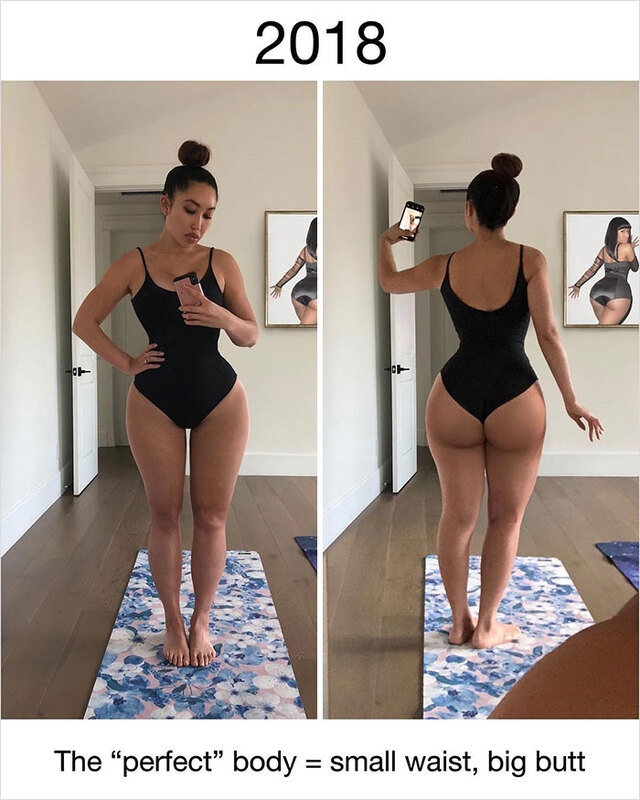
Instagram Age (2010s–2018): Big Butts and Tiny Waists
With the rise of social media, especially Instagram, beauty standards began to accelerate. Influencers showcased extreme hourglass figures, with tiny waists and exaggerated hips. Butt implants and injections surged by more than 50% between 2012 and 2014. Cosmetic surgeons themselves became social media stars, posting before-and-after transformations to thousands of followers.
Witness the evolution of ideals in “How Beauty Standards Change Over the Years”—click to watch and see how beauty has been redefined through time!
Fast Fashion vs. Fast Beauty
One of Cassey’s most thought-provoking comparisons was between fast fashion and fast beauty. Just as clothing trends change overnight, body ideals now shift at dizzying speed. But unlike a wardrobe, you can’t just throw out your body and buy a new one.
This culture of rapid reinvention creates a cycle of dissatisfaction. Yesterday’s “perfect” feature becomes today’s flaw. A thigh gap, once worshipped, suddenly loses appeal when curves come into style. A curvy figure, once celebrated, becomes less desirable when lean, athletic bodies dominate Instagram. And the cycle never ends.
The danger, as Cassey pointed out, is that while clothes can be swapped, surgical procedures and extreme dieting come with lasting consequences—physically and mentally. Treating our bodies like disposable fashion items is not just unrealistic, it’s harmful.
Public Reactions and Conversations
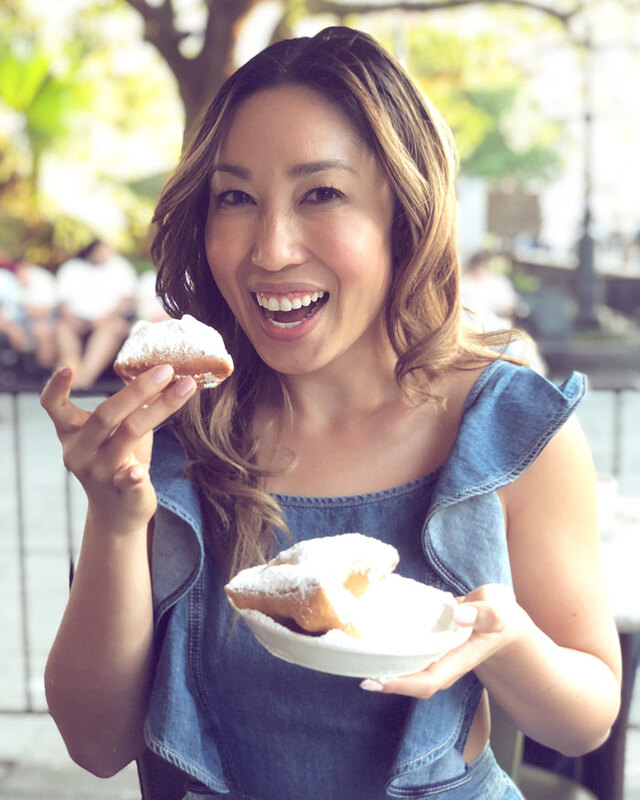
Cassey’s project struck a chord with audiences worldwide. Many praised her for exposing the absurdity of beauty standards and reminding women that the pressure they feel isn’t their fault. In the comments, people shared their own stories of struggling to fit into ever-changing ideals—feeling “too skinny” in one era, then “too curvy” in another.
Some noted how men’s beauty standards, though less extreme, also exist. Muscular physiques, six-packs, and height expectations can weigh heavily. But women remain disproportionately targeted by billion-dollar industries built on telling them they are never enough.
Her visual timeline became more than just art—it became a starting point for much-needed conversations about self-worth, cultural conditioning, and the dangers of comparison culture.
The Bigger Message: Learning to Love Your Body
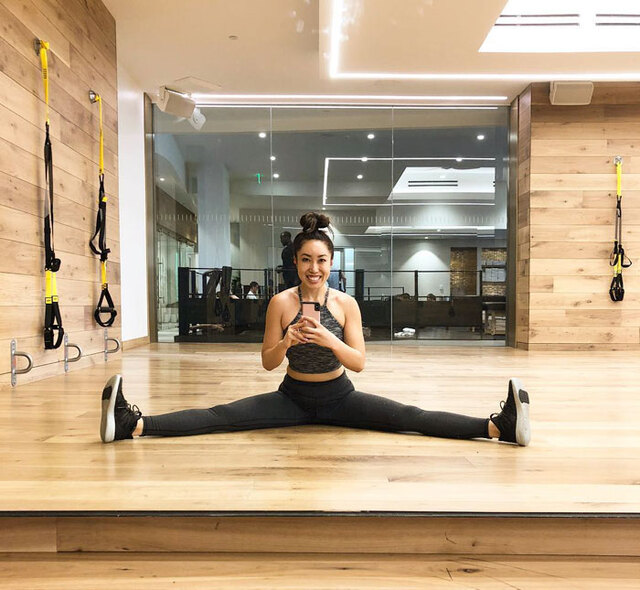
In the end, Cassey’s message was clear: stop chasing trends and start embracing yourself. Every body is unique, and real beauty doesn’t come from squeezing into a mold that was never designed to last.
“Please treat your body with love and respect,” she urged her followers. “Don’t succumb to the beauty standard. Embrace your body because it is YOUR own perfect body.”
It’s a reminder that perfection doesn’t exist—it’s constantly rewritten by fashion, media, and money. What does exist is individuality, health, and self-acceptance.
Final Thoughts: Beyond Beauty Standards
The history of beauty reveals one truth: the “ideal body” is never permanent. It changes with culture, economics, and technology, leaving generations of women feeling pressured to reshape themselves endlessly.
But the bigger truth, the one Cassey Ho highlighted, is that no matter the trend, you already own the only body that truly matters—your own. Instead of chasing an illusion, it’s time to step off the treadmill of perfection and recognize that real beauty has always been deeper than size, shape, or symmetry.












Post Comment