Demi Moore Confessed It Was ‘Difficult’ To Watch Bruce Willis Change As Dementia Progressed
Bruce Willis and Demi Moore were once one of Hollywood’s most beloved couples. The two actors married in 1987, and for more than a decade, they shared a busy life that balanced blockbuster careers and raising a family. Together, they welcomed three daughters: Rumer in 1988, Scout in 1991, and Tallulah Willis in 1994. Despite the demands of fame and the inevitable pressures of the spotlight, Bruce and Moore often spoke about the joy they found in parenting and the respect they held for each other’s work.
By 1998, however, the marriage had come to an end. Their divorce came as a surprise to fans, yet the former couple managed to maintain a strong bond for the sake of their children. Over the years, they remained close friends and continued to celebrate milestones together, from birthdays to weddings. Their blended family eventually expanded when Bruce married Emma Heming Willis in 2009, and Moore was warmly included in many family gatherings.
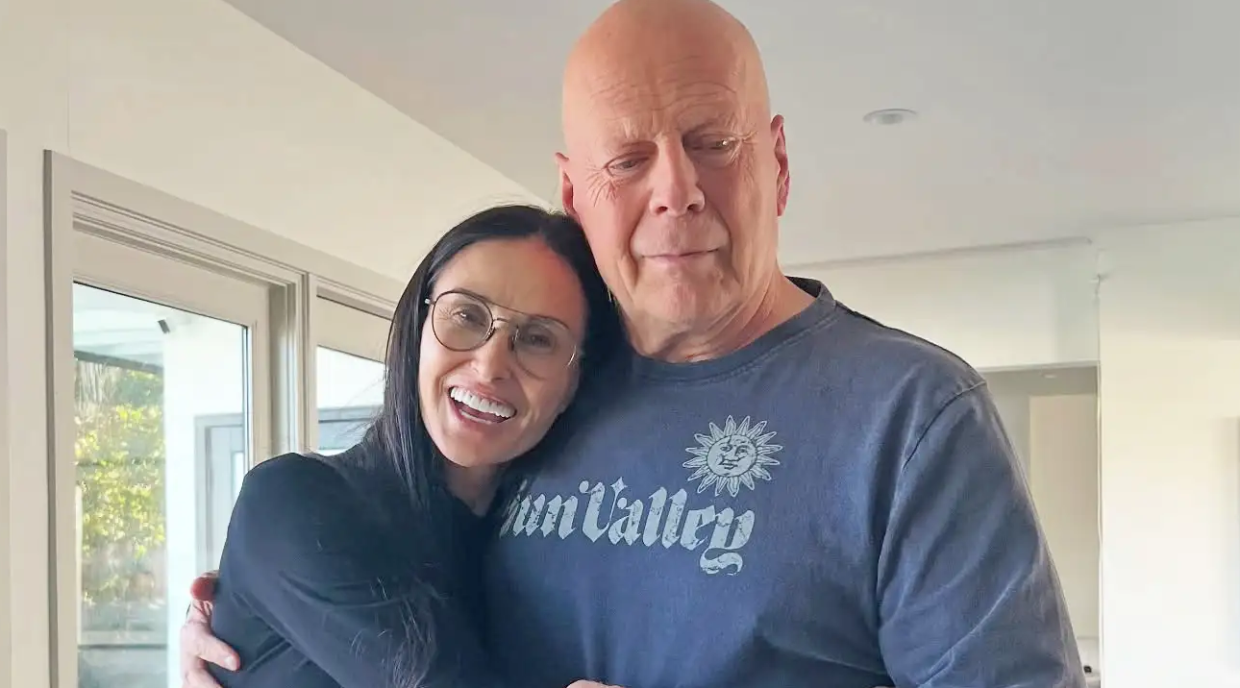
Now, as Bruce continues to face the challenges of frontotemporal dementia, the deep history between him and Moore has taken on even more meaning. The actress has stayed a constant presence in his life, offering support not only to their daughters but also to Emma, Bruce’s wife of 15 years. Moore also joined Emma in a heartfelt conversation with Oprah Winfrey about how it felt to witness Bruce’s health struggles and what they have learned from the experience. Read on to learn more about Moore’s emotional reflections on Bruce’s current state.
On a moving episode of “The Oprah Podcast,” Moore opened up about what it was like to watch Bruce live with dementia. Oprah asked:
“How has it been for you personally to watch this moment, someone you have shared much of your life with and children with suffer from this disease?”
Moore responded:
“It’s difficult. It’s hard to see somebody who was so vibrant and strong and so directed shift into this other parts of themself.”
Moore also shared one perspective of hers that has brought her comfort.
“My particular perspective is, one, I really always say it’s so important just to meet them where they’re at. Don’t have an expectation of them needing to be who they were or who you want them to be. And when you do that I find that there is an incredible sweetness and something that’s soft and tender and loving. Perhaps it is more playful and childlike in a certain sense because of how much more caretaking they need,” she said.
For Moore, the key was to stay present.
“The most important thing for me is showing up in being present,” she explained, adding, “if you project where it’s going, it only creates anxiety.” She also praised Bruce’s wife.
“I have so much compassion for Emma,” Moore said, describing Emma as “masterful” in the way she has cared for Bruce and emphasizing the need for caregivers to look after themselves as well.
“There is no road map for how to deal with this,” she added, acknowledging that “so much fell on Emma to really figure this whole thing out.”
Moore’s words were filled with acceptance and grace.
“If you replay where it was and what you’ve lost, it only creates anxiety and grief,” she reflected. “So when you stay present, there is so much – and there’s still so much of him there. And it may not always be verbal, but it is beautiful, given the givens.”













Post Comment