Donald Trump Claims Plan to Issue $2,000 ‘Tariff Dividend’ Checks to Americans Without Congressional Approval
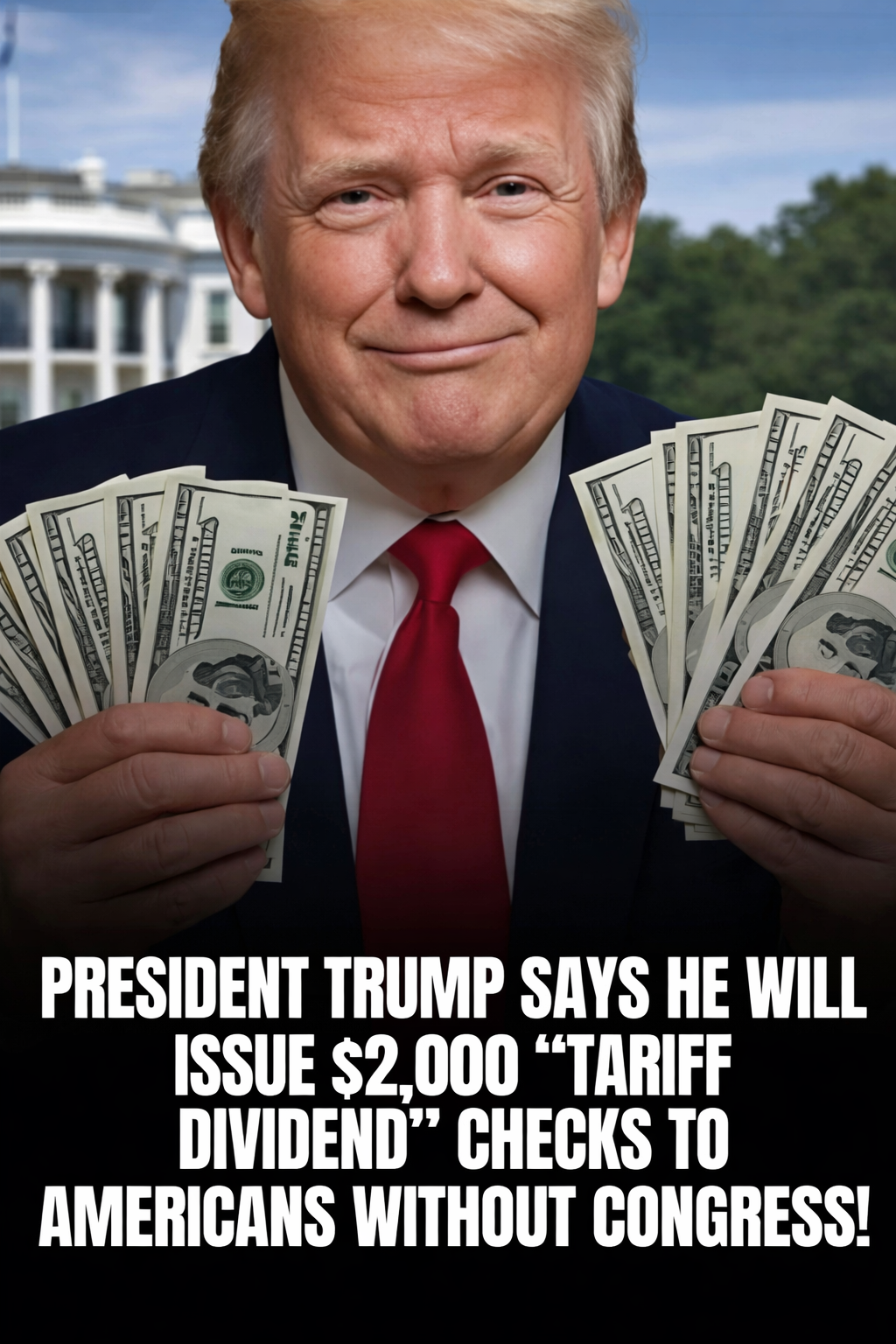
Former U.S. President Donald Trump has sparked widespread debate after claiming that he would issue $2,000 “tariff dividend” checks directly to American citizens—without the involvement or approval of Congress—if he returns to the White House.
Speaking during a recent appearance and echoed across social media, Trump suggested that revenue generated from new or expanded tariffs on foreign imports could be redistributed directly to Americans. According to Trump, this approach would allow the federal government to return money to citizens while simultaneously pressuring foreign nations through tougher trade policies.
Trump referred to the proposal as a “tariff dividend,” arguing that tariffs paid by foreign companies and countries should benefit American households rather than being absorbed entirely into government spending. He framed the idea as a way to help working- and middle-class Americans cope with rising living costs, inflation, and economic uncertainty.
The claim immediately drew attention due to its bold nature—particularly Trump’s assertion that such payments could be issued without congressional approval. Under the U.S. Constitution, Congress traditionally controls federal spending, and most experts note that direct payments to citizens typically require legislative authorization.
Legal scholars and policy analysts were quick to point out that while tariffs do generate government revenue, redirecting those funds into direct payments would almost certainly face legal and constitutional challenges. Critics argue that bypassing Congress could violate long-established checks and balances within the federal system.
Supporters of Trump, however, praised the idea as innovative and decisive. Many applauded the concept of returning tariff revenue directly to Americans, viewing it as a strong “America First” economic move and a contrast to traditional Washington politics.
Economists remain divided on the broader impact of such a policy. Some warn that tariffs often lead to higher consumer prices, meaning Americans could indirectly pay more for goods even if they receive a one-time check. Others argue that targeted tariffs, if carefully implemented, could generate revenue without significantly burdening consumers.
As of now, no official policy proposal or detailed plan has been released outlining how the “tariff dividend” checks would be implemented, who would qualify, or when payments might occur. There has also been no confirmation from government agencies or legal authorities supporting the feasibility of issuing such payments unilaterally.
The claim adds to an already intense political climate as Trump continues to outline ambitious and controversial ideas ahead of the next election cycle. Whether the proposal evolves into a formal policy plan—or remains a campaign talking point—remains to be seen.
For now, the idea of $2,000 checks funded by tariffs has captured public attention, fueling both enthusiasm and skepticism across the political spectrum.








Post Comment