122-Year-Old Woman Enjoyed Wine and Smoking Yet Lived a Long Life
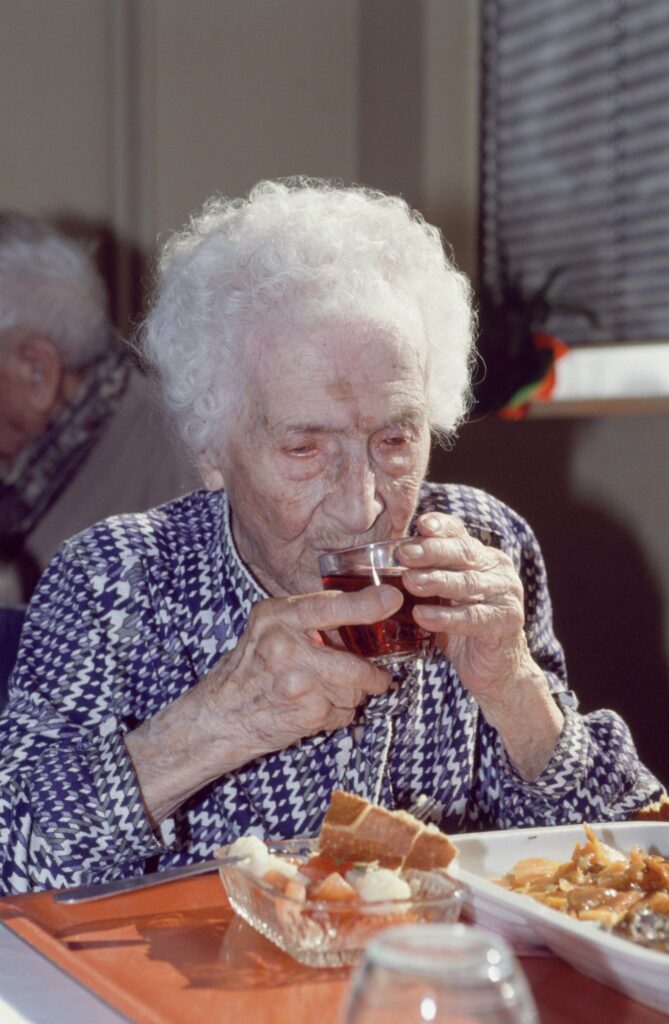
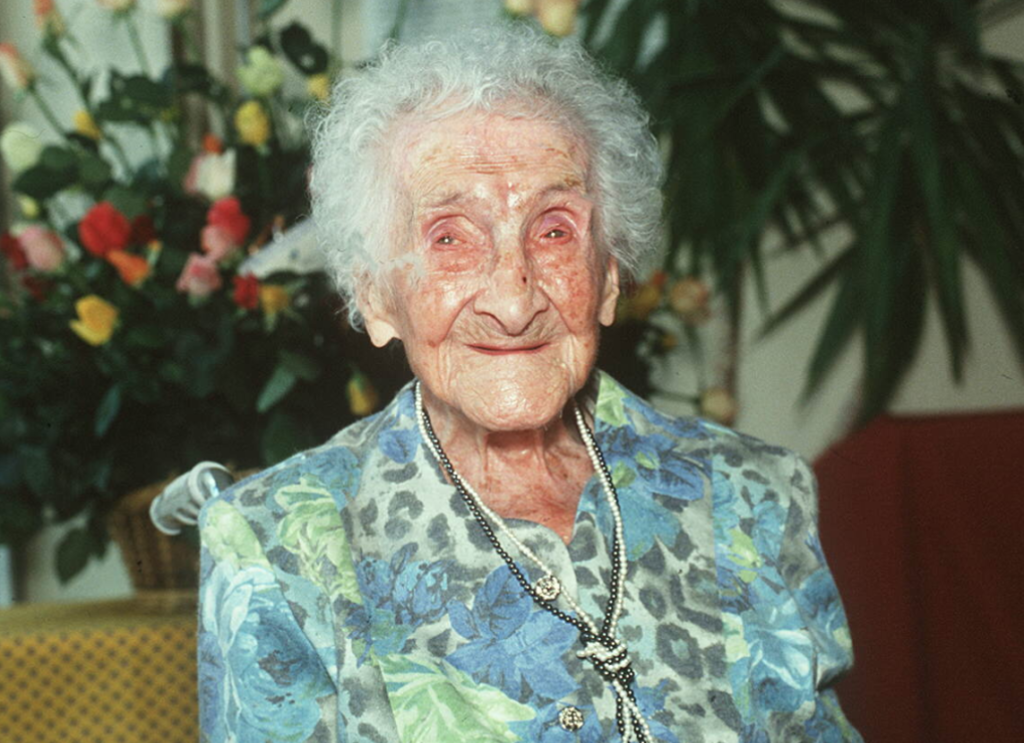
Jeanne Louise Calment is remembered as the longest-lived human being in recorded history whose age has been confirmed beyond any serious doubt. Her life, which extended for more than twelve decades, continues to intrigue scientists, historians, and readers around the world because it challenges conventional ideas about aging, health, and the limits of the human lifespan. What makes her story extraordinary is not only how long she lived, but how fully she experienced life across eras of dramatic global change.
She was born on February 21, 1875, in Arles, a small and sunlit town in southern France. At the time of her birth, the world was still shaped by horse-drawn transportation, handwritten letters, and gas lamps. Electricity was rare, medicine was limited, and the average life expectancy was a fraction of what it would later become. Jeanne Calment entered a world that could scarcely imagine the technological and social revolutions she would live to witness. When she passed away on August 4, 1997, at the age of 122 years and 164 days, the world had entered the digital age, defined by computers, global communication, and the early internet.
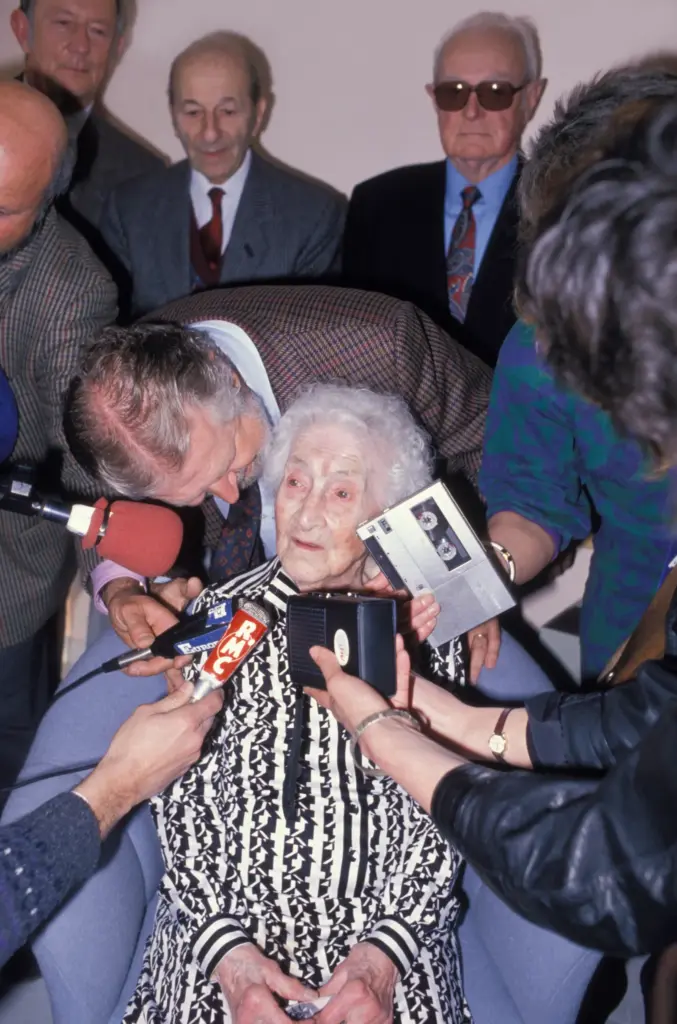
Her age has been verified through one of the most rigorous documentation processes ever applied to a supercentenarian. Researchers examined birth records, census documents, marriage certificates, photographs, legal papers, and numerous other archival sources spanning more than a century. These materials were reviewed repeatedly by demographers and longevity experts over several decades. The conclusion has remained consistent and unanimous: Jeanne Calment truly lived longer than any other verified human being in history. This recognition earned her a permanent place in Guinness World Records and made her a central figure in scientific studies of extreme longevity. To this day, she remains the only verified person to have lived beyond the age of 119, a milestone that places her in a category entirely her own.
The sheer historical scope of her life is almost impossible to comprehend. Jeanne Calment lived through three centuries and witnessed events that reshaped the modern world. She was alive when the Eiffel Tower was built and lived long enough to see it become a global symbol of France. She experienced the invention and spread of electric lighting, the telephone, automobiles, airplanes, radio, and television. She lived through both World Wars, witnessing the devastation they brought and the profound social and political changes that followed. She observed the fall of empires, the transformation of Europe, and the rise of the United States as a global power. By the end of her life, she had also seen the dawn of the internet, a development that revolutionized how people communicate and share knowledge.
Despite living through wars, economic crises, and rapid technological change, Jeanne Calment maintained a remarkable sense of continuity in her daily life. She remained rooted in her hometown of Arles, surrounded by familiar streets, neighbors, and routines. This stability may have played an important role in preserving her mental and emotional wellbeing as the world around her transformed at an unprecedented pace.
What has fascinated researchers and the public just as much as her age are her lifestyle choices, many of which appear to contradict modern health advice. Unlike individuals who credit their long lives to strict diets, intense exercise regimens, or total abstinence from indulgence, Jeanne Calment lived with moderation and pleasure. She loved chocolate and reportedly ate up to two pounds of it per week, enjoying dessert with nearly every meal. Wine, particularly port wine, was part of her routine, consumed calmly and without excess. Perhaps most surprisingly, she smoked cigarettes for almost a century, beginning at age 21 and continuing until she was 117 years old.
While smoking and high sugar consumption are widely associated with serious health risks, Jeanne Calment seemed to avoid many of the diseases commonly linked to these habits. She did not suffer from cancer or severe cardiovascular illness, and her overall health remained relatively stable well into extreme old age. Her case suggests that longevity cannot be explained by lifestyle alone and that genetic factors may play a powerful role. Many scientists believe she may have possessed rare genetic traits that enhanced her resistance to disease, improved DNA repair, and reduced age-related inflammation.
Despite her indulgences, Jeanne Calment remained physically active for most of her life. She rode a bicycle well into her nineties and continued to walk independently long after turning 100. She managed her own affairs and maintained an active presence in her community. One of the most famous anecdotes from her later life describes how, on her 100th birthday, she walked from house to house in Arles to personally thank people for their congratulations. This act was not only a demonstration of physical strength but also of social engagement and emotional vitality.
Equally remarkable was her mental clarity and sharp sense of humor, which she retained until the very end of her life. Even as her eyesight and hearing declined, her wit remained intact. On her 120th birthday, she joked that she could see badly, hear badly, and feel almost nothing, but that everything was fine. She often laughed about aging, once remarking that she had only one wrinkle and was sitting on it. This lighthearted attitude reflected a deep emotional resilience and an ability to accept aging without fear or bitterness.
Modern research increasingly emphasizes the importance of mental and emotional health in aging. Chronic stress is known to accelerate biological aging through inflammation and oxidative damage, while positive emotional states and laughter can have protective effects on the body. Jeanne Calment appeared to possess an extraordinary resistance to stress. According to researchers who studied her life, she was calm, untroubled by minor problems, and rarely anxious about things she could not control. Her personal philosophy was simple: if something could not be changed, it was not worth worrying about.
Social connection also played a significant role in her life. Jeanne remained engaged with her community, maintained relationships, and showed curiosity about the world around her. Living in Arles, with its mild climate, close-knit social structure, and access to fresh food, may have further supported her wellbeing. Today, social engagement is recognized as a crucial factor in both mental health and longevity, and Jeanne Calment embodied this principle naturally throughout her life.
From a scientific perspective, her longevity highlights the complex interaction of many factors rather than a single secret formula. Genetics, environment, lifestyle, emotional resilience, and social engagement likely combined to create the conditions for her extraordinary lifespan. Researchers often cite her as a powerful example of how extreme longevity is rarely the result of one habit or intervention, but rather the convergence of multiple positive influences over a lifetime.
Beyond science, Jeanne Calment’s life has left a lasting cultural impression. Photographs and interviews from her later years capture not only her advanced age but also her humor, intelligence, and warmth. She became a symbol of human adaptability and resilience, demonstrating that it is possible to age with dignity, curiosity, and joy even as the body slows down.
In a world increasingly focused on anti-aging treatments, strict diets, and the fear of growing old, Jeanne Calment’s story offers a different perspective. Her life suggests that longevity is not solely about extending years at any cost, but about living those years fully, maintaining balance, and approaching life with acceptance and humor. She reminds us that aging is a natural process, and that a calm mind, social connection, and a joyful outlook may be just as important as any medical advancement.
Jeanne Calment did not simply live a long life; she lived a rich one, spanning eras, witnessing history, and embracing each stage of existence with remarkable grace. Her story continues to inspire and challenge our understanding of what it truly means to live well and age wisely.











Post Comment