Fashion designer Giorgio Armani dead at 91

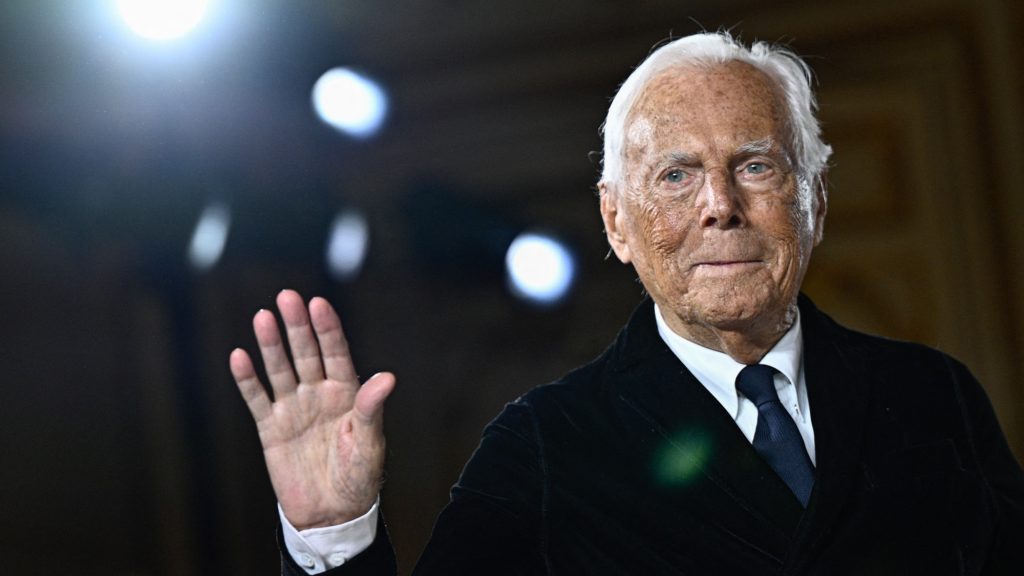
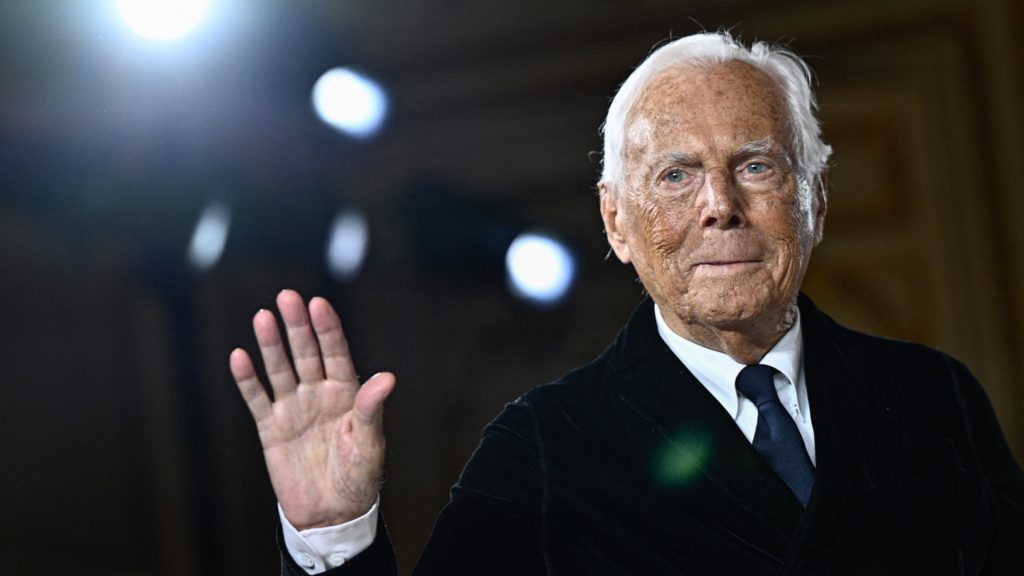
MILAN — Giorgio Armani, the Italian designer who turned the concept of understated elegance into a multibillion-dollar fashion empire, has died, his fashion house confirmed. He was 91.
Armani died at home, the fashion house said. Armani, one of the most recognizable names and faces in the global fashion industry, missed Milan Fashion Week in June 2025 for the first time during the previews of Spring-Summer 2026 menswear to recover from an undisclosed condition. He was planning a major event to celebrate 50 years of his signature Giorgio Armani fashion house during Milan Fashion Week this month.
Starting with an unlined jacket, a simple pair of pants and an urban palette, Armani put Italian ready-to-wear style on the international fashion map in the late 1970s, creating an instantly recognizable relaxed silhouette that has propelled the fashion house for half a century.
From the executive office to the Hollywood screen, Armani dressed the rich and famous in classic tailored styles, fashioned in super-soft fabrics and muted tones. His handsome black tie outfits and glittering evening gowns often stole the show on award season red carpets
At the time of his death, Armani had put together an empire worth over $10 billion, which along with clothing included accessories, home furnishings, perfumes, cosmetics, books, flowers and even chocolates, ranking him in the world’s top 200 billionaires, according to Forbes.
The designer also owned several bars, clubs, restaurants and his own basketball team EA7 Emporio Armani Milan, better known as Olympia Milano. Armani opened more than than 20 restaurants from Milan to Tokyo since 1998, and two hotels, one in Dubai in 2009 and another in Milan, in 2010
Armani himself was the foundation of his style
Armani style began with Giorgio Armani himself, from the penetrating blue eyes framed in a permanent tan and early-age shock of silver hair, to the trademark jeans and t‑shirt work clothes and the minimalist decoration of his private homes.
Armani’s fashion vision was that of easygoing elegance where attention to detail made the difference.
“I design for real people. There is no virtue whatsoever in creating clothes and accessories that are not practical,” he liked to say when asked to identify his clientele.
In conversation, the designer’s disarming smile and exquisitely mild manners belied the tough businessman underneath, who was able to turn creative talent into a fashion empire worth over $10 billion. Never a merger nor a sale, Re Giorgio (King George) as the Italians call him, was always his own boss
Born July 11, 1934, in Piacenza, a small town south of Milan, Armani dreamed of becoming a doctor before a part-time job as a window decorator in a Milan department store opened his eyes to the world of fashion.
In 1975, Armani and his partner Sergio Galeotti sold their Volkswagen for $10,000 to start up their own menswear ready-to-wear label. Womenswear followed a year later
The symbol of his new style was the liningless sports jacket, which was launched in the late 1970s and became an instant success from Hollywood to Wall Street. The designer paired the jacket with a simple t‑shirt, an item of clothing he termed “the alpha and omega of the fashion alphabet.”
The Armani suit soon became a must in the closet of the well-heeled man. And for women, the introduction of the pantsuit in the executive workroom was all but revolutionary. Dubbed the “power suit” with its shoulder-padded jacket and man-tailored trousers, it became the trademark of the rising class of businesswomen in the 1980s.
Over the years Armani would soften the look with delicate detailing, luxurious fabrics and brighter shades for his basic beige and gray palette. His insistence on pants and jackets led some critics to label his fashion “androgynous.”
Armani hits Hollywood
The 1980 film classic “American Gigolo” launched both Armani and actor Richard Gere on their Hollywood careers. Dressed in Armani, Gere became America’s new favorite heart throb, and “Geeorgeeo” as they called him, the glam set’s most popular designer.
The Hollywood connection earned him wardrobe film credits in over 200 films, and in 2003 a place on Rodeo Drive’s “Walk of Fame.”
Oscar night always sparkled, with smart suiting for the men, and glittering gowns for the ladies. The 2009 best actor winner Sean Penn picked up his statue in a black-on-black Armani outfit, while best actress nominee Anne Hathaway walked the red carpet in a shimmering white strapless evening gown from Armani’s latest Prive couture collection
Other longtime devotees included Jodie Foster, George Clooney, Sofia Loren and Brad Pitt. David and Victoria Beckham were the “face” of his 2009 underwear ad campaign.
So significant was the impact of Armani style, not only on how people dressed but how they approached fashion, that in 2000 New York’s Guggenheim museum presented a retrospective of Armani’s first 25 years in fashion.
“I love things that age well, things that don’t date and become living examples of the absolute best,” Armani said of his efforts