Jackie Kennedy’s Wedding Dress That Made History
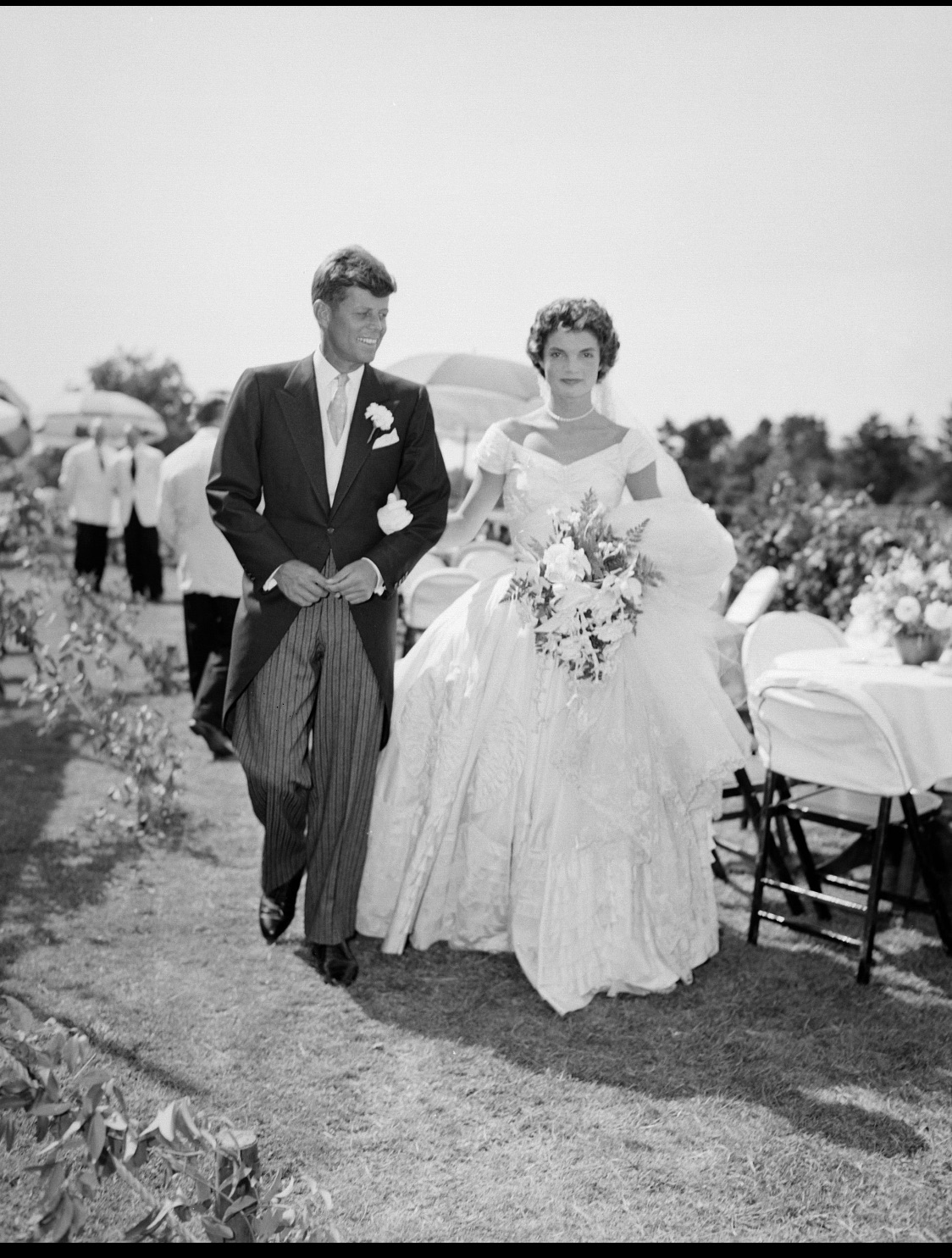
Jackie Kennedy wore a silk taffeta gown designed by Ann Lowe when she married President John F. Kennedy in 1953.
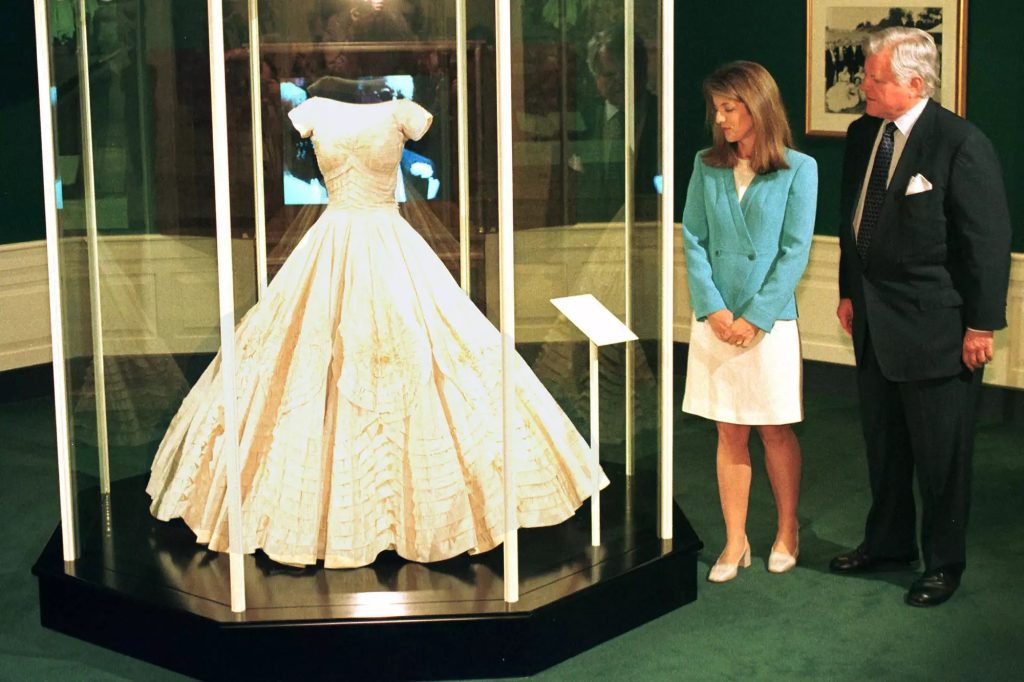
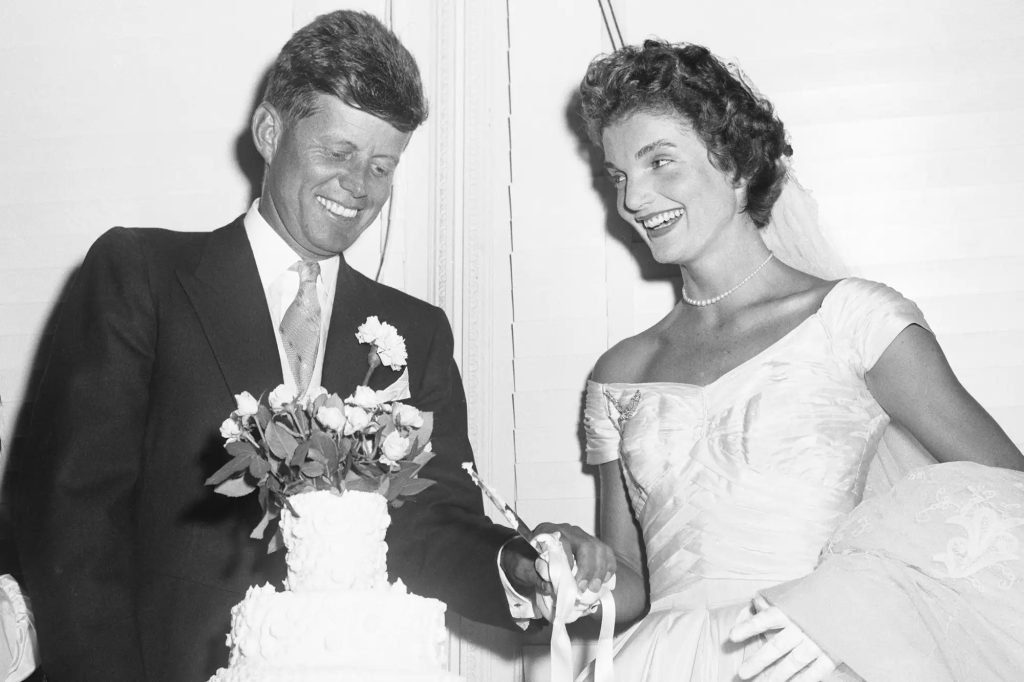
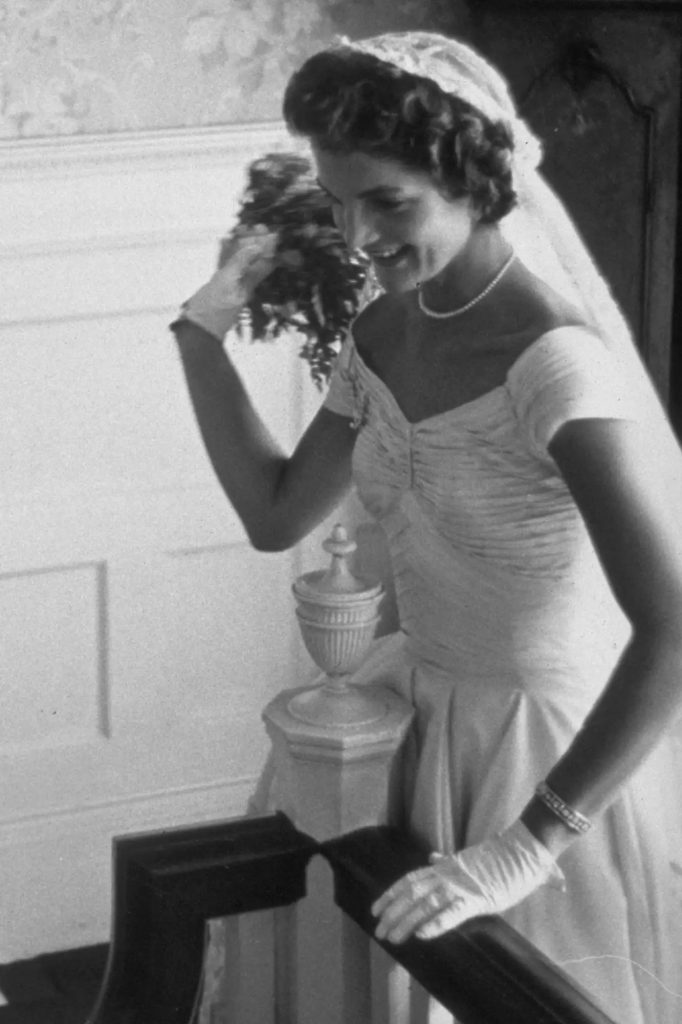
The couple tied the knot on September 12, 1953, in a lavish Newport, Rhode Island celebration that is still remembered as one of the most glamorous weddings of the 20th century. Jackie stunned in an ivory silk taffeta gown with a portrait neckline, bouffant skirt, and delicate embellishments of rosettes and wax flowers. The timeless creation was designed by African American fashion designer Ann Lowe, whose artistry brought Jackie’s vision to life.
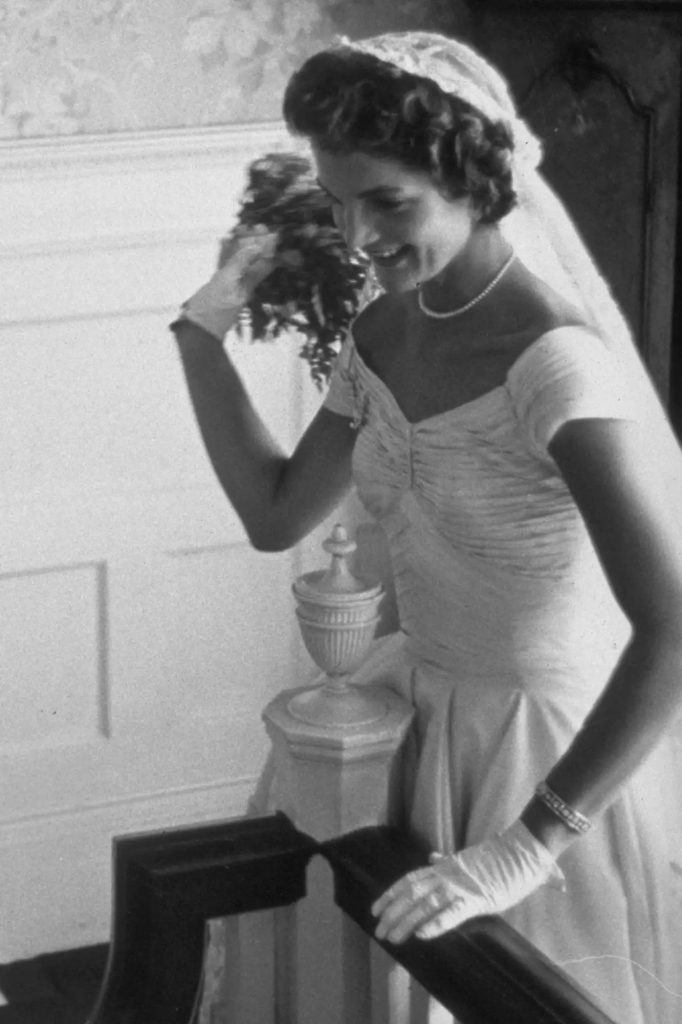
More than seven decades later, the gown remains one of Jackie’s most iconic fashion statements. While her pillbox hats and elegant tailored outfits defined her White House years and influenced fashion throughout the 1960s and 1970s, her wedding dress set the tone for her lifelong reputation as a style icon.
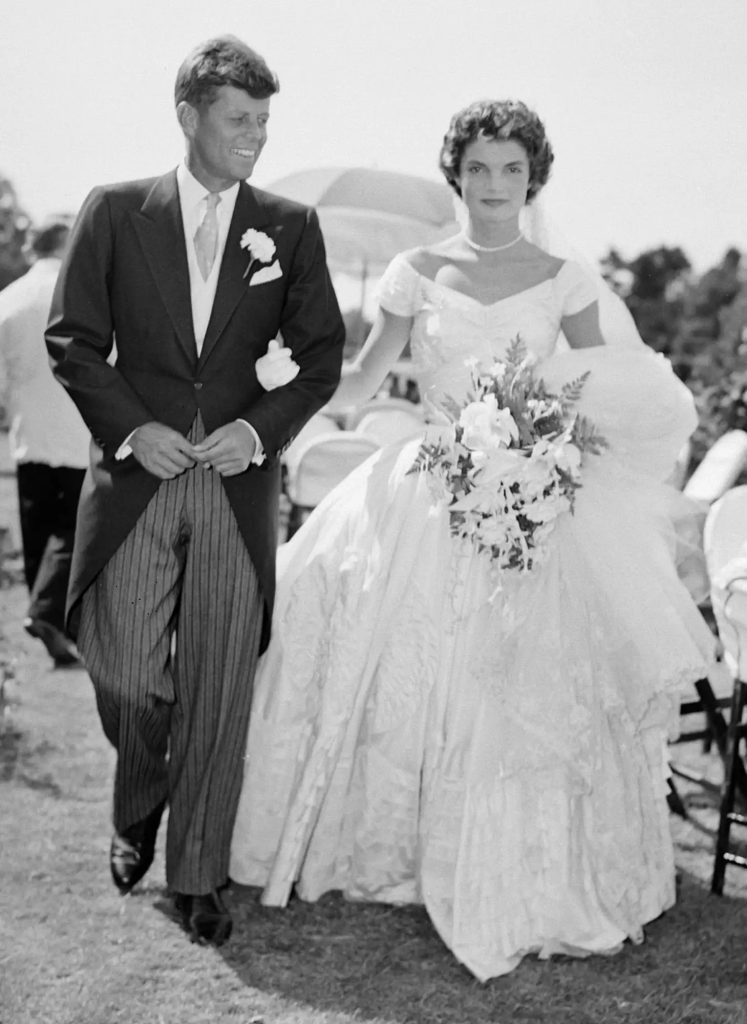
Life magazine captured the fairy-tale moment, documenting the ceremony at St. Mary’s Church attended by more than 600 guests and a grand reception of 900. JFK wore a traditional morning suit with tails and pinstripe trousers, complementing Jackie’s graceful look.
Today, Jackie Kennedy’s wedding gown is still celebrated not only for its romantic design but also for the way it symbolized the beginning of a new American era. Her bridal style continues to inspire designers and brides around the world, proving that true elegance never fades.
Jackie’s wedding dress was designed by Ann Lowe
Jackie Kennedy’s wedding dress was designed by Ann Lowe, an incredibly talented African American fashion designer who, for many years, did not receive the recognition she deserved.
Lowe was already well known among America’s elite, creating gowns for families such as the du Ponts and the Rockefellers. However, when Jackie married JFK in 1953, her contribution went largely unacknowledged — in part due to the racial prejudices of the era. It wasn’t until decades later that Ann Lowe’s name began to gain the credit and respect it merited.
Jackie’s gown, with its ivory silk taffeta fabric, portrait neckline, and bouffant skirt, remains one of Lowe’s most iconic creations and a timeless masterpiece of classic bridal fashion.
Her original gown was destroyed by water damage
Just one week before Jackie Kennedy and John F. Kennedy’s highly anticipated wedding, disaster struck at designer Ann Lowe’s studio. According to the National Museum of American History, a waterline burst and flooded the workspace, destroying Jackie’s bridal gown along with nine bridesmaid dresses.
Rather than burden the Kennedy family with the setback, Lowe made a remarkable decision: she kept the incident to herself and quietly purchased new fabric to start over. Jackie’s original gown had taken nearly eight weeks to create, but Lowe and her dedicated team worked tirelessly, remaking the intricate dress in just five days — a feat that highlighted both her skill and her determination.
Although Lowe had been set to earn a $700 profit, the emergency forced her into a staggering $2,200 loss, a significant sum at the time. Despite the financial hardship, her sacrifice ensured that Jackie walked down the aisle in the now-iconic ivory silk taffeta gown that became a symbol of elegance and grace.
Today, this story adds an even deeper layer of admiration for Ann Lowe. Not only did she craft one of the most famous wedding dresses in American history, but she did so under immense pressure and personal cost — an untold act of dedication that helped cement her legacy in fashion.
The dress featured a pleated bodice and full skir
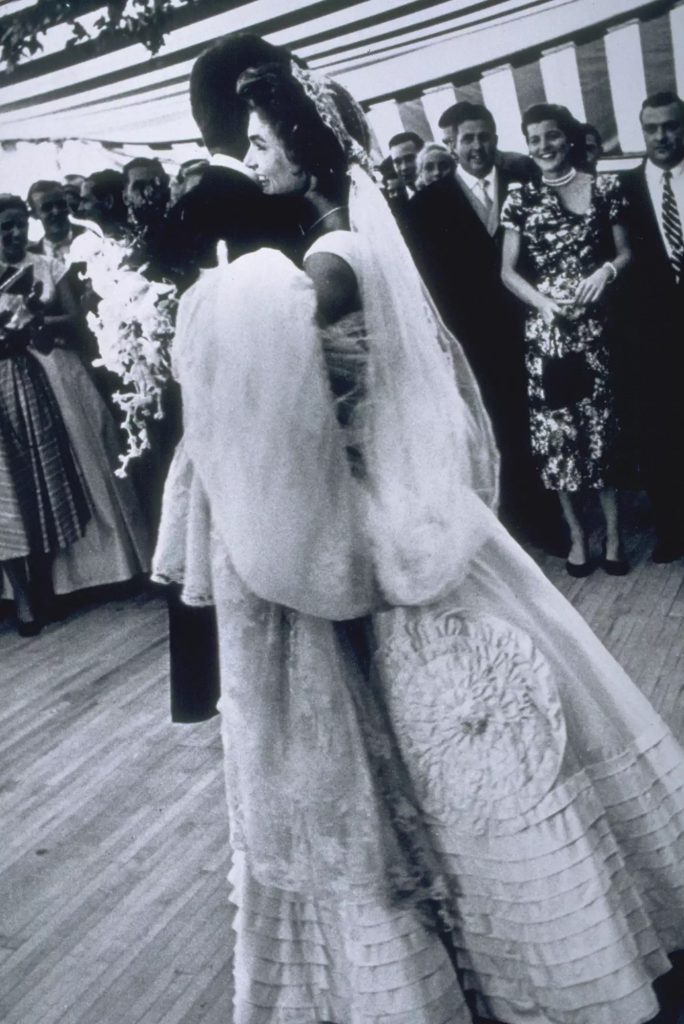
The ivory wedding gown that Jackie Kennedy wore down the aisle was a true masterpiece of craftsmanship, created from nearly 50 yards of luxurious silk taffeta, according to the John F. Kennedy Presidential Library and Museum. The design featured a graceful portrait neckline, a full bouffant skirt, and a finely pleated bodice that highlighted Jackie’s elegant figure. A scalloped hemline added softness to the dramatic silhouette, while oversized rosettes gave the gown a romantic, almost whimsical flair.
In the center of each rosette, designer Ann Lowe added delicate wax orange blossoms — a signature detail in her bridal creations that symbolized purity and joy. These subtle yet meaningful accents reflected Lowe’s meticulous attention to detail and her ability to combine tradition with artistry.
Jackie’s gown was not just a wedding dress; it was a statement of timeless style that blended sophistication with femininity. More than seventy years later, it remains one of the most celebrated bridal gowns in American history, admired both for its beauty and for the remarkable story behind its creation.
“Flowers were something Ann Lowe returned to again and again,” explained Elizabeth Way, associate curator at The Museum at FIT and author of Black Designers in American Fashion, in an interview with Vanity Fair. “She had an extraordinary ability to sculpt fabric, transforming a flat surface into three-dimensional forms that felt almost lifelike.”
This signature technique became one of Lowe’s hallmarks, particularly in her bridal and evening gowns. By layering fabric into rosettes and blossoms, she created depth, texture, and movement, turning her designs into wearable works of art. The wax orange blossoms on Jackie Kennedy’s gown are just one example of this distinctive artistry — a delicate detail that elevated the dress from elegant to unforgettable.
Jackie’s gown also held a few charming hidden details. For her traditional “something blue,” Lowe discreetly stitched a small blue ribbon into the underskirt, adding a personal touch that would remain unseen to the public. Additionally, an Ann Lowe label was sewn into the waistline of the skirt — a subtle signature marking the designer’s handiwork and ensuring her artistry would not go entirely unrecognized.
These thoughtful details reflected Lowe’s attention to both tradition and craftsmanship, turning the gown into not just a statement of style but also a work rich with personal and artistic significance.
Interestingly, Jackie reportedly did not personally choose her wedding dress. According to accounts from the time, her mother, Janet Lee Bouvier, played a significant role in selecting the gown, working closely with Ann Lowe to finalize the design. Despite Jackie’s minimal involvement in the decision-making, the dress perfectly reflected her timeless elegance and would go on to become one of the most iconic bridal gowns in history.
This detail adds another layer to the story of the gown: even without choosing it herself, Jackie’s poise and style brought the creation to life, proving that the right designer can capture a bride’s essence without direct input.