The Lens That Captured the Golden Age of Pin-Up
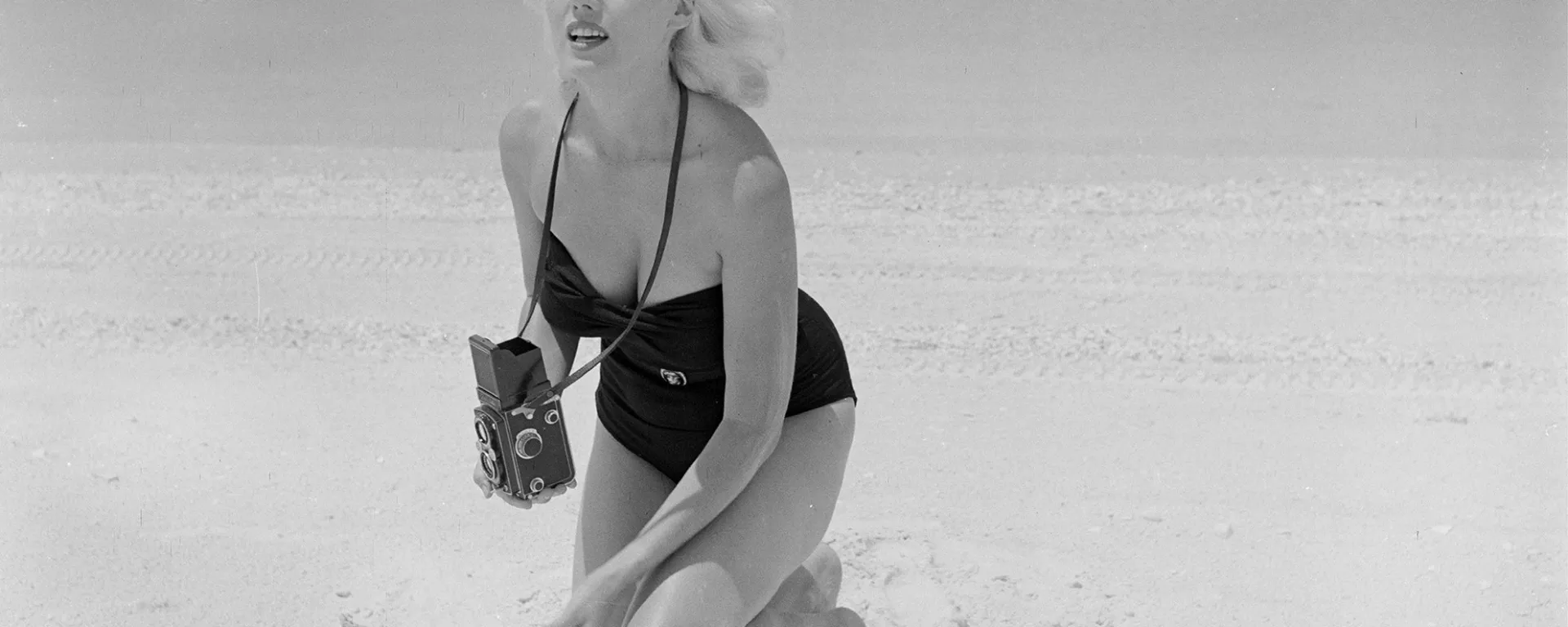
She was born Linnea Eleanor Yeager in 1929 in Wilkinsburg, Pennsylvania, but the world would come to know her by a nickname that sounded light, playful, and unforgettable—Bunny Yeager. That name would later be written in the history of photography, modeling, and popular culture.
Bunny’s life was one of transformation, creativity, and boldness, and she carved out a unique space for herself in the male-dominated world of photography, long before female photographers were widely recognized.Growing up in the 1930s and 1940s, Bunny was captivated by Hollywood glamour. She admired actresses like Betty Grable and Rita Hayworth, women who seemed to own the screen with beauty and confidence.
Her own beauty was undeniable, and by the late 1940s she began entering beauty contests, where her tall frame, radiant smile, and camera-ready presence brought her attention. She won numerous titles, quickly becoming a familiar face on the Florida beauty circuit after her family moved to Miami.By the early 1950s, Bunny had made her mark as a model. But unlike many young women in her position, she had a hunger for more than just being in front of the camera.
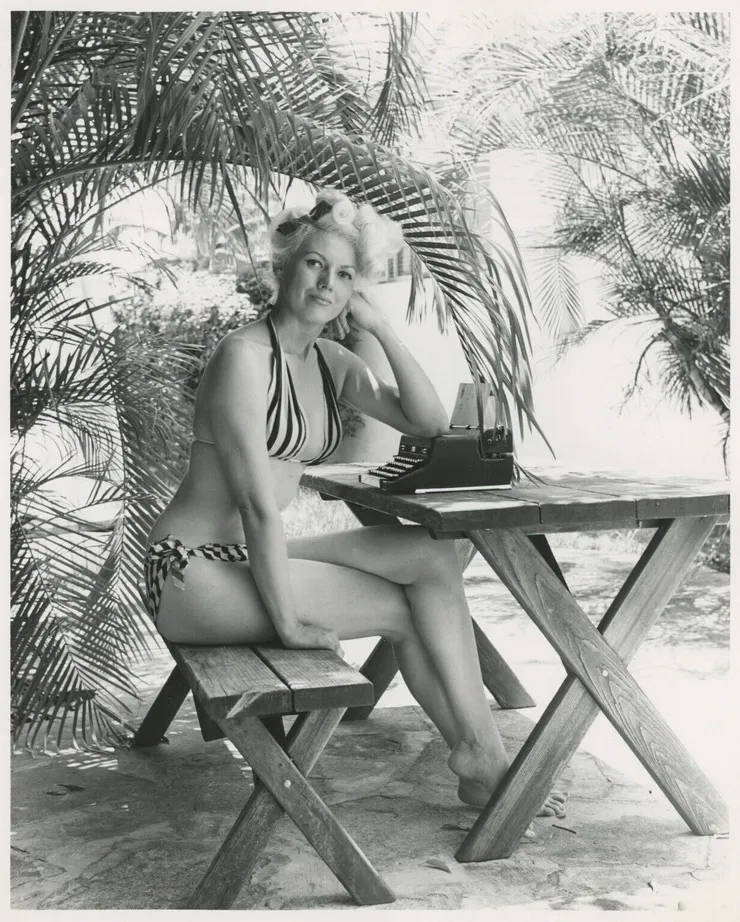
She wanted to control the images, to shape the aesthetic. She enrolled in a photography class at the Lindsey-Hopkins Technical School in Miami. There, she found her calling—not simply as a model, but as a creator. Bunny’s understanding of lighting, composition, and how to pose models—knowledge she had firsthand experience with—made her an exceptional talent behind the lens.
Her first big break as a photographer came in the mid-1950s when she began working with a then-little-known model named Bettie Page. At the time, Page was already beginning to attract attention for her distinctive bangs, dazzling smile, and playful sensuality. But in Bunny Yeager’s photos, Bettie’s image reached a new level. Bunny had a gift for capturing natural, sun-drenched beauty, often shooting outdoors under Florida’s skies.
Unlike many photographers of the time, who relied on staged studio backdrops and artificial lighting, Bunny preferred to use natural light and locations like beaches, gardens, or tropical settings.It was Bunny Yeager who famously photographed Bettie Page in a leopard-print bikini, as well as the now-iconic Christmas photos of Page in a Santa hat and fur-trimmed outfit. These images didn’t just showcase Bettie Page—they also showcased Bunny’s fresh, innovative approach to glamour photography.
She avoided the overly artificial poses common in pin-up work, instead highlighting playfulness, warmth, and accessibility. Her models looked like real women, having fun, basking in sunshine, and brimming with confidence.
Hugh Hefner took notice. In 1955, Bunny Yeager’s photo spread of Bettie Page was published in Playboy magazine, giving both the model and the photographer national recognition. This was groundbreaking in several ways. At the time, female photographers were virtually unheard of in the world of men’s magazines, yet Bunny’s work fit perfectly with Playboy’s image of sophisticated glamour.
She would go on to work with Playboy throughout the 1950s and beyond, not just shooting Bettie Page but also other models who graced the magazine’s pages.Her career, however, did not remain limited to Playboy. Bunny Yeager worked extensively as a commercial photographer, producing photo spreads for numerous magazines and publishing her own books of photography.
She was also a savvy businesswoman, carefully curating her brand and ensuring her images were distributed widely. What made Bunny stand out was not only her technical skill but also her perspective as a woman photographing other women. She often said that women felt more comfortable posing for her, and it showed. Her photos had a natural quality that contrasted with the more exploitative images produced by many male photographers of the time.
Bunny’s models appeared confident, self-assured, and even joyful. This subtle difference would later be recognized as a pioneering aspect of her work, helping shift the way glamour photography was perceived.As the 1960s and 1970s progressed, Bunny Yeager’s reputation continued to grow. She published more than 30 books of photography, some focusing on glamour and pin-up work, others on technical advice for aspiring photographers.
She even stepped into television and film, appearing in documentaries and making cameos that celebrated her role in shaping visual culture.By the time she retired, Bunny Yeager had photographed thousands of women, captured some of the most enduring images of Bettie Page, and helped define the look of postwar pin-up and glamour photography. She was recognized not just as a model-turned-photographer but as a trailblazing woman in a field where men had long dominated.

In her later years, Bunny Yeager enjoyed a revival of interest in her work, particularly as Bettie Page’s popularity exploded once more in the 1980s and 1990s. Exhibitions of her photography appeared in galleries, and new generations discovered her unique blend of artistry and sensuality. She remained proud of her career, often reflecting on the fact that she had lived life on her own terms—both behind and in front of the camera.
Bunny Yeager passed away in 2014 at the age of 85, but her legacy continues. She is remembered not only as the woman who helped turn Bettie Page into a legend but also as an artist who reshaped glamour photography. Her use of natural light, her respect for her models, and her fearless creativity continue to influence photographers today.
From beauty contests to the pages of Playboy, from sunlit beaches to international recognition, Bunny Yeager’s journey was one of reinvention and vision. She proved that a woman could succeed as both subject and creator, leaving behind an archive of images that remain timeless in their charm and vitality.










Post Comment