John Goodman: The Quiet Courage of Starting Over

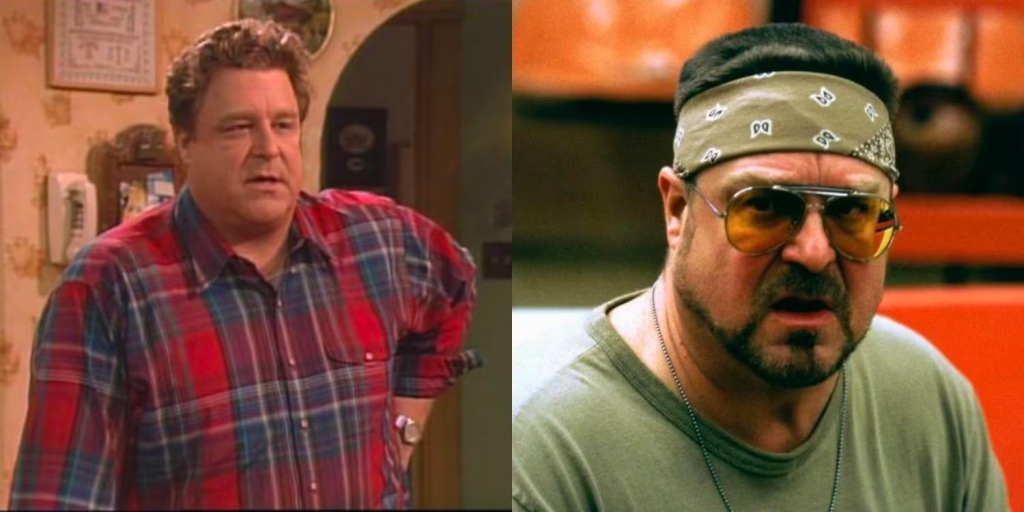
When John Goodman first appeared as Dan Conner on Roseanne, he seemed to embody every working-class father in America — weary but devoted, sarcastic yet loving, the kind of man who carried both humor and hardship in the same breath.
Viewers saw a big-hearted husband, a man who made mistakes but always came home for dinner. What they didn’t see was the silent battle raging behind the scenes.
For years, Goodman fought a private war with alcoholism. The same energy that made him magnetic on camera was often fueled by exhaustion and self-doubt. “I’d drink until I passed out,” he later confessed. “Then I’d wake up and do it again.”

On set, he did his best to hide the struggle. He’d show up hungover, terrified that someone might see through him — that the laughter and applause couldn’t quite drown out the noise in his head. Between takes, he’d retreat into himself, sitting in silence, sweating and shaking, praying no one would notice the cracks forming under the surface.
At the height of his fame, when Roseanne was a cultural phenomenon and his face was instantly recognizable across America, John Goodman reached his lowest point. One morning in 2007, he picked up the phone, called his wife, and finally said the words that would change his life:
“I can’t live like this anymore.”
That moment of honesty — raw, desperate, and real — marked the beginning of his recovery. His wife immediately booked him into rehab the same day, and Goodman has been sober ever since.
The journey that followed wasn’t glamorous. There were no red carpets or applause — just the quiet work of rebuilding a life piece by piece. Goodman returned to acting with a new clarity and purpose. His performances in Treme, The Artist, and 10 Cloverfield Lane reminded audiences that behind the beloved sitcom dad was a deeply gifted actor — one who understood pain, loss, and redemption on a personal level.
He doesn’t romanticize his past or pretend that recovery is easy. He talks about alcoholism for what it is — a disease that thrives in isolation. “It’s a disease that wants you alone,” he once said. It wasn’t fame that saved him, but forgiveness — from his family, his colleagues, and, most importantly, from himself.

When Goodman returned years later to reprise his iconic role in The Conners, something had shifted. Dan Conner was still the same character — blunt, funny, and loyal — but there was a quiet wisdom in his eyes, a tenderness that came from lived experience. Goodman no longer played him as just a sitcom dad. He played him as a survivor, a man who had been to the edge and found a way back.
Today, John Goodman stands as one of Hollywood’s most enduring figures — not because he never stumbled, but because he had the courage to stand up again. His story isn’t about celebrity or success. It’s about recovery, humility, and the quiet bravery of starting over when no one is watching.
In a world that often celebrates perfection, Goodman’s honesty has become its own kind of strength. He’s proof that redemption doesn’t always arrive in the spotlight — sometimes, it begins in a single, trembling phone call that says, “I can’t live like this anymore.”












Post Comment