“Remember the Little Medical Tins?” — A Tiny Piece of Everyday History
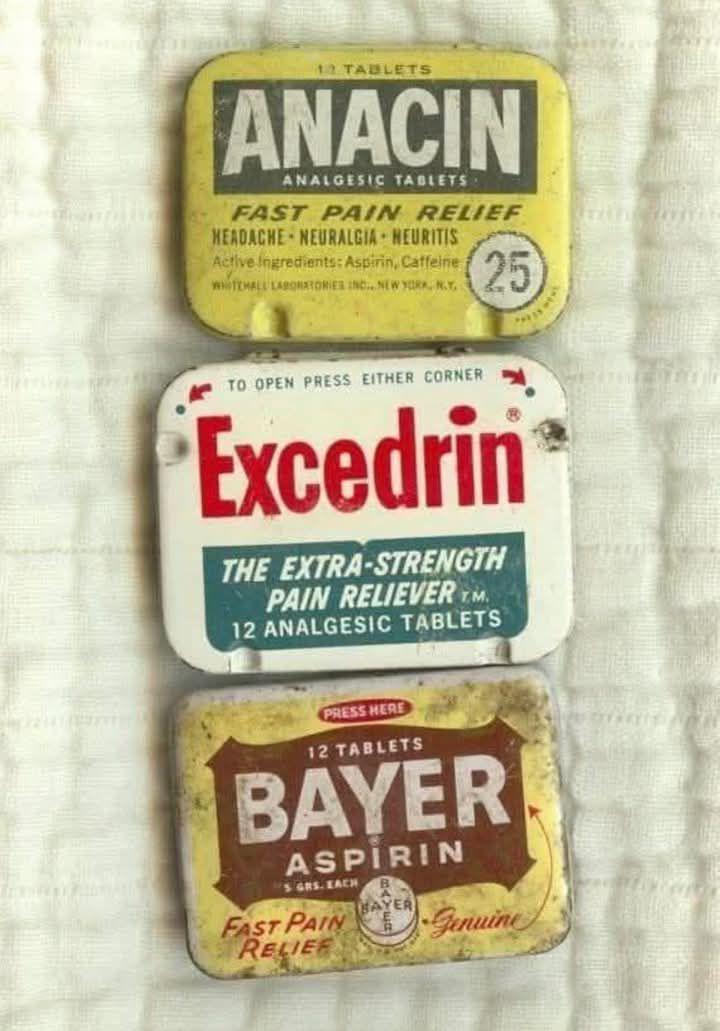
Before plastic bottles took over our medicine cabinets, pain relief came in small metal tins — Anacin, Excedrin, Bayer Aspirin, and others just like them. These palm-sized cases were everywhere in the 1960s and ’70s: tucked inside purses, glove compartments, and bathroom drawers across America.
Each tin had that familiar metallic click — press here, pop there — that instantly transported you to another time. The paint would chip, the corners rusted a little, but the labels promised the same dependable comfort: Fast Pain Relief! They were simple, sturdy, and built to last.
These weren’t just pill containers; they became tiny keepsakes. When the medicine ran out, people reused them to store buttons, safety pins, guitar picks, sewing needles, fishing hooks, and even childhood treasures. Some even served as secret stashes for less-than-official “remedies” during the ’70s.
And who could forget that feeling of accomplishment when you finally managed to pop one open without bending the lid? They were tough little things — like the generation that carried them.
Today, finding one of these tins at a flea market or tucked in a relative’s drawer feels like discovering a piece of living history. They remind us of a time when packaging was reusable, designs were bold, and everyday objects had a little more soul.
Maybe the world has gotten sleeker, shinier, and more disposable — but there’s something comforting about those tiny, indestructible reminders of care and routine. One glance at them and you can almost smell the metal, the medicine, and a hint of nostalgia.












Post Comment