The Green Sheet of Nostalgia: Why This Paper Sparks So Much Emotion
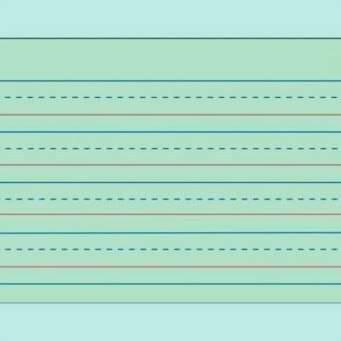
If you were handed a sheet of light green paper with blue solid and dotted lines as a child, chances are you’re feeling a sudden wave of nostalgia right now. This isn’t just any sheet of paper—it’s the handwriting practice paper. And to many, especially those who went through elementary school in the ’80s or ’90s, it’s a powerful relic of a simpler, analog time.
A Symbol of Learning to Write
This lined paper wasn’t just a tool—it was a rite of passage. Designed to teach cursive writing with precision and form, its structure was intentional. The solid blue lines marked the top and bottom of each row, the dotted line in the middle guided the height of lowercase letters, and the faint red line at the bottom was often where descending letters like “g” and “y” would dip beneath. If you were learning the Palmer Method or D’Nealian handwriting, this was your battlefield.
Muscle Memory and Manual Effort
For many, just seeing this paper brings back the feel of a #2 pencil between their fingers and the sound of graphite scratching slowly across the surface as they traced perfect loops. Each letter had rules. There was pride in mastering a flowing “Q” (or frustration, depending on your perspective) and effort in making sure each “z” didn’t look like an accidental scribble. Before keyboards, autocorrect, and swipe typing, handwriting was an art—and this paper was the canvas.
A Shared Experience, Especially for Lefties
For left-handed kids, however, this paper wasn’t always so friendly. The left-to-right motion of cursive writing meant many ended up with smudged ink, stained pinkies, and a lot of frustration. Solutions varied—angling the paper, adjusting wrist posture, or even being pressured to switch hands entirely. Still, those experiences form a strong emotional bond, a kind of “we survived that” moment that unites lefties across decades.
Why It Resonates Today
In a digital-first world where cursive is no longer a required part of the curriculum in many places, this paper symbolizes more than just handwriting lessons—it represents a foundational moment in growing up. It’s a memory of childhood, of classrooms filled with chalkboards and lined desks, of being praised for good penmanship, or getting a gentle reminder to “keep your letters on the line.”
For older generations, this simple sheet of paper holds weight. It’s a portal back to formative years filled with innocence, learning, and the tactile reality of writing by hand. It’s no wonder that when images of this paper pop up online, they trigger an avalanche of emotions—pride, nostalgia, even a bit of longing for a time when communication was slower, but perhaps felt more personal.












Post Comment