The Timeless Radiance of TV’s Trailblazing Icon
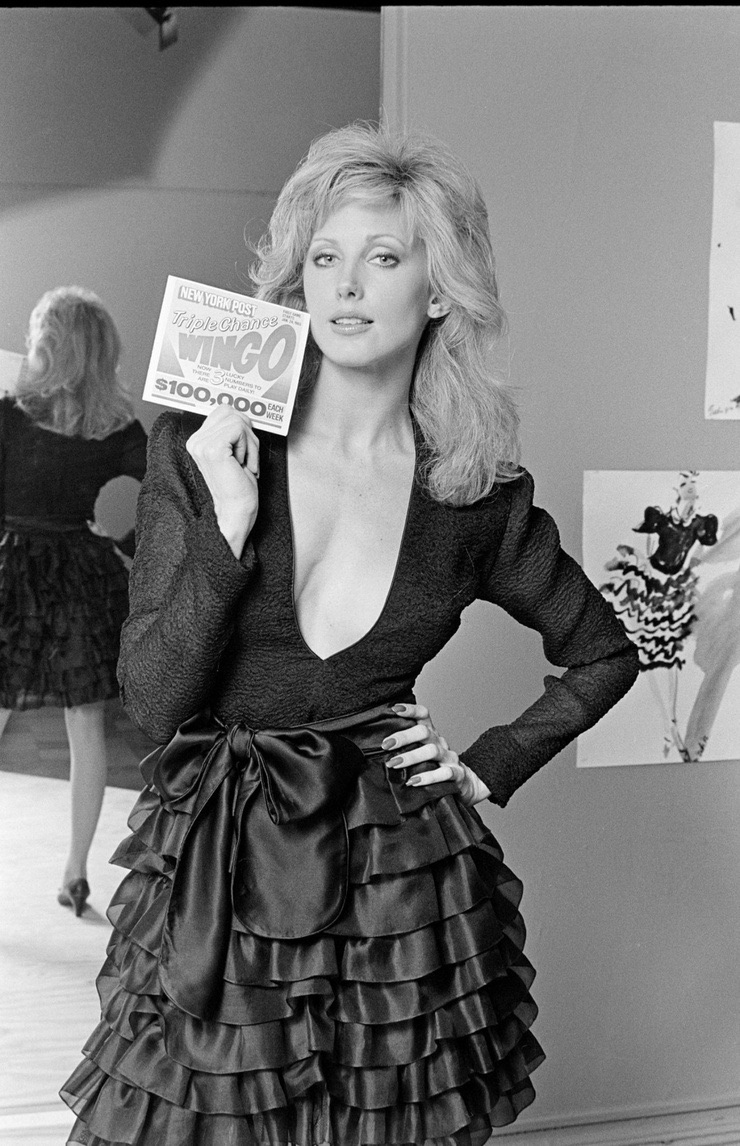
A hush falls over the room. The lights dim. The year is 1950, and the place is Dallas, Texas. There, a little girl named Patsy Ann McClenny entered the world, destined to become one of television’s most glamorous and recognizable faces. Years later, she would be known to millions as Morgan Fairchild—a name that shimmered on television screens and soap-opera marquees across America.Born on February 3, 1950, to Martha Jane Hartt, a high school English teacher, and Edward Milton McClenny, Morgan grew up alongside her younger sister, Cathryn Hartt, who also pursued acting.
As a child, Patsy was painfully shy, so her mother enrolled her in drama classes to help her overcome her fear. Fairchild would later laugh about how she would get sick every Saturday before class but always went anyway. Those early lessons taught her not only performance but perseverance. By the age of ten, she was performing in children’s theatre and dinner-theatre productions around Dallas, developing her craft long before Hollywood ever called
Her first real break came in an unexpected way. In 1967, Fairchild worked as a body double for Faye Dunaway in the classic film Bonnie and Clyde, driving during scenes that Dunaway couldn’t complete. Around that time, she decided to take a new name—“Morgan,” inspired by the 1966 film Morgan – A Suitable Case for Treatment.The new name carried both elegance and edge, setting the tone for her future image.
Determined to chase her dream, Morgan moved to New York City in the early 1970s. She soon landed her first credited screen role as Jennifer Pace on the CBS daytime soap Search for Tomorrow, which she played from 1973 to 1977. It was her first taste of steady television work, and audiences quickly noticed her blend of beauty and emotional precision. As her reputation grew, she began appearing in a variety of television shows, including Happy Days, Kojak, Police Woman, and The Bob Newhart Show.
These guest spots helped her break free from the soap-opera typecasting and showed casting directors her versatility.By the late 1970s, Fairchild had become a familiar face on television. She briefly appeared as Jenna Wade on the hit primetime soap Dallas and later had a recurring role on Mork & Mindy, proving she could hold her own in both drama and comedy. But it was the 1980s that would cement her status as a television icon.
In 1980, Fairchild took on the role of Constance Weldon Carlyle in NBC’s Flamingo Road. The series didn’t last long, but her portrayal of the glamorous and calculating Constance earned her a Golden Globe nomination for Best Actress in a Television Drama. Suddenly, Morgan Fairchild was more than just a familiar face—she was a star. She embraced the image of the sophisticated, ambitious woman who could dazzle, scheme, and dominate every scene she entered. This glamorous archetype became her signature throughout the decade
She continued to thrive on television, starring in Paper Dolls in 1984 and joining Falcon Crest from 1985 to 1986 as attorney Jordan Roberts. Her success on the small screen translated into film work as well. In 1982, she starred in the thriller The Seduction, portraying a Los Angeles news anchor terrorized by a stalker. Although the film received mixed reviews, it showcased Fairchild’s ability to command a movie role with poise and intensity.
As the 1980s gave way to the 1990s, Fairchild began to shift her focus. She made memorable guest appearances on Murphy Brown, earning an Emmy nomination in 1989 for Outstanding Guest Actress in a Comedy Series. The nomination marked a turning point—she was no longer confined to her glamorous persona; she could hold her own in comedy, too. In the early 1990s, she took a daring turn on Roseanne, playing Marla, the girlfriend of Sandra Bernhard’s character.
The role, depicting a same-sex relationship on prime-time television, was ahead of its time, and Fairchild embraced it for its social significance.Her sense of humor and self-awareness became her secret weapons. She began playing satirical versions of herself in films like Naked Gun 33⅓: The Final Insult (1994), Holy Man (1998), and Walk Hard: The Dewey Cox Story (2007). By poking fun at her own glamorous image, she revealed a wit that endeared her to new generations of viewers.
Even after five decades in show business, Fairchild has shown no sign of slowing down. In 2022 and 2023, she appeared on General Hospitalas Haven de Havilland, proving that her screen presence remains magnetic. That same year, she reunited with other television legends in the Lifetime film Ladies of the ’80s: A Divas Christmas, a nostalgic celebration of the era that made her famous. She also returned to her first love—the stage—appearing in Don’t Dress for Dinner in 2023, demonstrating that her theatrical instincts were as sharp as ever
Beyond the spotlight, Morgan Fairchild has long been recognized for her activism. She has lent her voice to causes like AIDS research, women’s reproductive rights, and environmental issues. Within the entertainment industry, she has served as an active board member of SAG-AFTRA, participating in legislative and governance committees, and co-chairing the organization’s Legislative Committee.
Her advocacy has made her a respected figure among her peers—not just for her talent, but for her leadership.Her personal life has been marked by loyalty and quiet strength. She married musician and inventor Jack Calmes in 1967, though the marriage ended in 1973. Years later, she entered a long-term relationship with film executive Mark Seiler, which lasted for decades until his passing in 2023.
Fairchild has also spoken candidly about living with ME/CFS, a chronic illness that she has managed while continuing to work and advocate for others.Morgan Fairchild’s journey—from a shy Texas girl performing in local theatre to an international television star—is one defined by endurance, adaptability, and intelligence. She turned her image of glamour into both armor and art, never letting it define her completely