The Tragic Journey of a Woman Who Dared to Be Desired
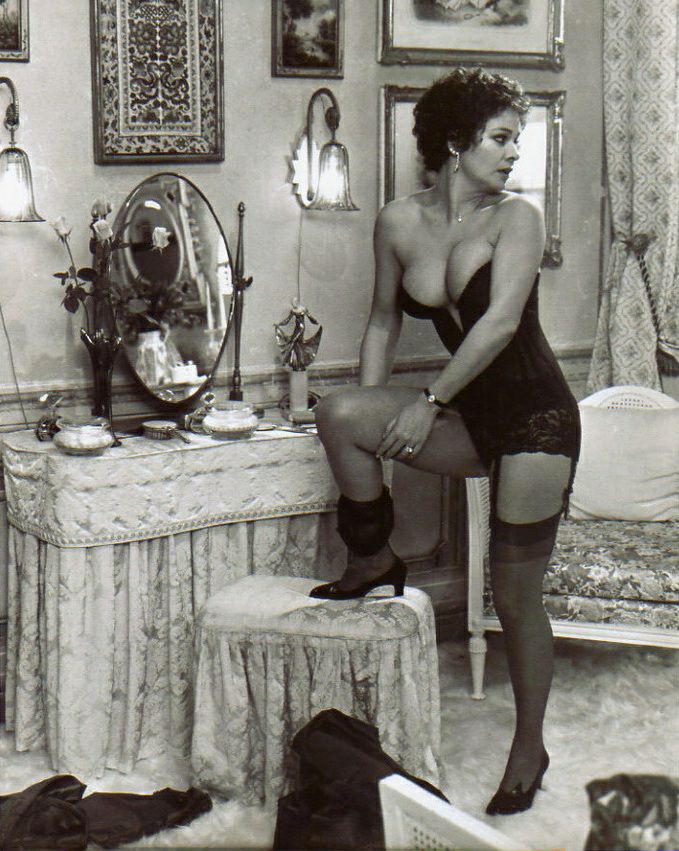
Laura Antonelli’s life was a haunting mixture of beauty, fame, and heartbreak—a story that began with shimmering allure and ended in quiet solitude. She was born Laura Antonaz on November 28, 1941, in Pola, a town in the Istrian peninsula that was then part of Italy and is now Pula, Croatia. Her early years were marked by the upheavals of World War II. Like many Italian families from Istria, hers fled the region when it was ceded to Yugoslavia after the war, eventually settling in Naples.
Her father found work in hospital administration, and Laura, a shy and self-conscious child, was pushed by her parents into gymnastics classes. They believed physical training might help her gain grace and confidence, though Laura later said they considered her “ugly, clumsy, and insignificant.” Yet those long hours of training gave her the poise and body control that would one day serve her well before the camera.
After finishing school, Laura trained as a gymnastics instructor and worked as a teacher in Rome. Her beauty, once overlooked, began to attract attention, and she found part-time work as a model. She appeared in advertisements, photoromans—those popular illustrated love stories of the time—and campaigns for major brands like Coca-Cola. These appearances gradually brought her into contact with people in the entertainment world, and by the mid-1960s, Laura Antonelli found herself standing at the threshold of a film career she had never planned to pursue.
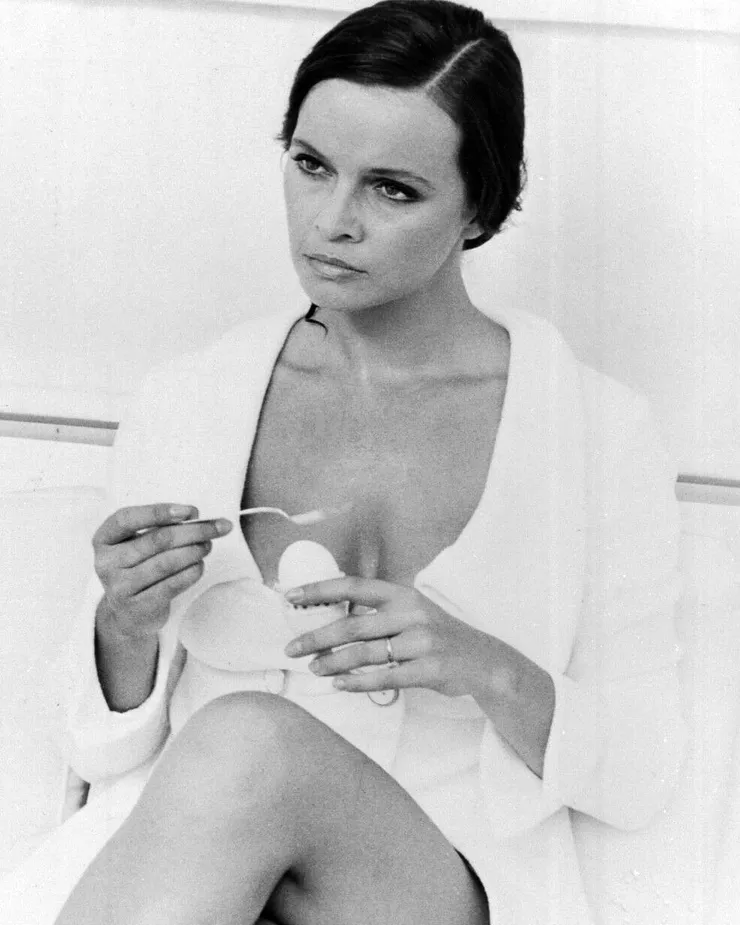
Her first roles were modest and went largely unnoticed. In 1965, she appeared uncredited in Le sedicenni, followed by a small role in the 1966 American-Italian comedy Dr. Goldfoot and the Girl Bombs. For a few years she floated on the margins of Italian cinema, a beautiful face in a crowded industry. Everything changed in 1973 when she starred in Malizia (translated as Malice), directed by Salvatore Samperi.
The film told the story of a young widow hired as a maid in a Sicilian household, where her sensual presence stirs both the father and his adolescent son. The movie became a cultural sensation in Italy, and Antonelli’s performance made her an overnight star. Her natural allure and understated eroticism captured the spirit of the era. Suddenly, the gym teacher from Naples was Italy’s newest sex symbol.
With Malizia’s success, her salary skyrocketed from four million lira per film to one hundred million, reflecting both her new market value and the popularity of Italy’s risqué comedies. For several years she appeared in a string of erotic farces and dramas such as Till Marriage Do Us Part (1974) and Wifemistress (1977), films that solidified her as the reigning queen of sensual Italian cinema. But Laura Antonelli was not content to remain a one-dimensional figure of fantasy. She sought out challenging roles and worked with some of Italy’s most respected directors.
In 1976, she appeared in L’Innocente, the final film of the legendary Luchino Visconti, acting alongside Marcello Mastroianni and Giancarlo Giannini. Five years later, she played in Passione d’Amore by Ettore Scola, proving her range extended well beyond erotic comedy. Critics began to see her as a performer capable of portraying both raw sensuality and complex emotion, and some compared her magnetism to that of Sophia Loren and Stefania Sandrelli.
During the 1970s and early 1980s, Antonelli was one of Italy’s most famous women. Her face graced magazine covers, and her name filled cinema marquees. She embodied a liberated kind of beauty that reflected the changing cultural mood of postwar Italy. Her private life also drew attention: her long relationship with French star Jean-Paul Belmondo, from 1972 to 1980, fascinated fans and the press alike. In 1974, her performance in Malizia earned her the prestigious Nastro d’Argento award for Best Actress, confirming that she was not just a pin-up but a serious talent.
However, fame is fickle, and by the 1980s, the wave that had lifted her so high began to ebb. Tastes changed, and the erotic comedies that had made her a household name fell out of fashion. Attempts to revive past glories failed. The 1991 sequel Malizia 2000 was a commercial disaster, and worse still, that same year, police raided her home and discovered 36 grams of cocaine.
She was convicted of possession and dealing, placed under house arrest, and publicly shamed. Though she maintained her innocence and the conviction was eventually overturned, the damage to her reputation was irreversible. The glamorous actress who once enchanted millions now found herself ostracized by the very industry that had adored her.
As if this humiliation were not enough, a cosmetic surgery procedure went terribly wrong, leaving her face permanently disfigured. Antonelli filed a lawsuit seeking damages but lost the case, deepening her emotional and financial struggles. In the years that followed, she retreated completely from public life.
By the 2000s, she was living alone in a small apartment in Ladispoli, a quiet seaside town near Rome. She battled depression and isolation, a far cry from the days when photographers and fans followed her every step. The once radiant star of Malizia was now a recluse, her only companions memories of fame and disappointment.

On June 22, 2015, Laura Antonelli was found dead in her Ladispoli home, having suffered a heart attack. She was 73. Reports said she had been alone, discovered only when her housekeeper arrived the following day. News of her death sparked a wave of sadness in Italy. Former co-stars and admirers paid tribute to the woman who had once symbolized Italian sensuality and cinematic charm. Actor Lino Banfi mourned her loss, remarking, “An actress that beautiful and talented shouldn’t have ended like this.”
Laura Antonelli’s life remains both inspiring and tragic—a tale of talent undone by fate and circumstance. She represented an era when Italian cinema dared to explore sensuality with humor, emotion, and courage. For a brief, shining moment, she was the nation’s dream: elegant, mysterious, and impossibly alluring. Yet her story also serves as a stark reminder of how fragile fame can be.
Behind the glamour lay vulnerability, loneliness, and the heavy cost of being idolized. Today, her films continue to captivate cinephiles who see in her not just a sex symbol but a gifted actress who carried both light and shadow in her gaze—a star who burned bright, faded fast, and left behind a legacy tinged with both beauty and sorrow.











Post Comment