The Woman Behind the Golden Image
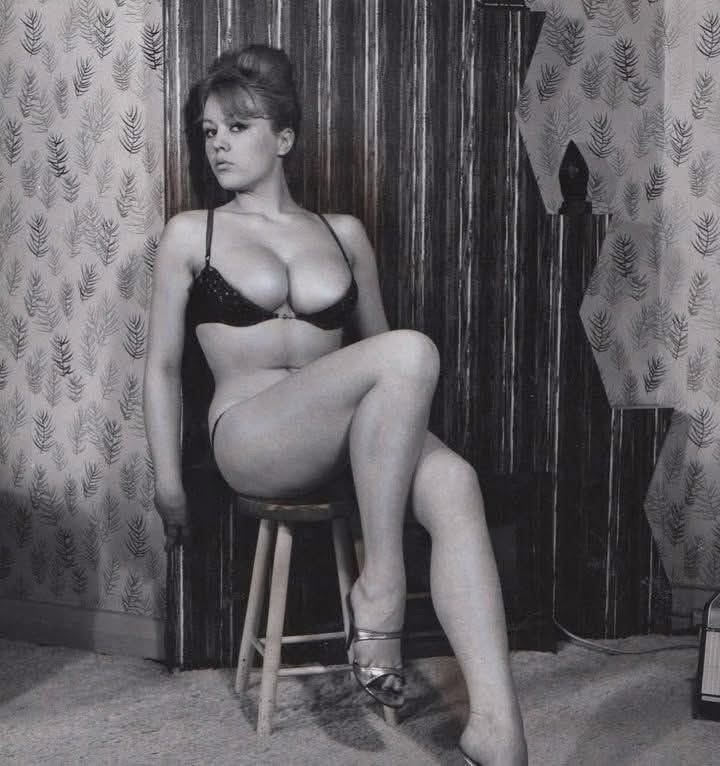
Margaret Nolan’s image is immortalized in one of the most iconic sequences in cinema history—the glistening, gold-painted body in the opening credits of Goldfinger (1964). But behind that dazzling figure was a woman of remarkable depth, humor, and resilience. Often pigeonholed by her looks, Nolan forged a unique and quietly defiant path through British film, television, and visual art. Her life is a tale not just of fame and glamour, but also of subversion, reinvention, and a fight for identity in an industry obsessed with image.
Margaret Ann Nolan was born on October 29, 1943, in Hampstead, London, during the Second World War. Her father, an Army clerk, and her Irish mother raised Margaret between England and Waterford, Ireland, before she returned to London as a young teenager. Nolan trained as a teacher but gravitated toward modeling and acting in the early 1960s. With her statuesque figure, blonde hair, and sultry looks, she quickly became a staple in glamour photography and British pop culture.
Her modeling alias, Vicky Kennedy, gave her early exposure in pin-up magazines, where she embraced the sexually liberated spirit of the Swinging Sixties. But Nolan was never merely content to be objectified—her choices often reflected a sense of irony and awareness that would become a theme in her later work.

In 1964, Nolan landed her most famous assignment: the gold-painted woman in the title credits and promotional materials for the third James Bond film, Goldfinger. While Shirley Eaton played Jill Masterson—the character who dies famously from “skin suffocation” after being covered in gold paint—it was Nolan’s body that appeared in the title sequence, designed by visual artist Robert Brownjohn.
Though she had a small acting role in the film as Dink, Bond’s masseuse, Nolan’s golden silhouette became a cultural touchstone, synonymous with Bond girl glamour and 1960s excess. Yet she later expressed mixed feelings about the role. In interviews, she noted that her contribution was often mistaken for Eaton’s and that the notoriety it brought was both a blessing and a limitation.
Rather than retreat into obscurity or typecasting, Nolan embraced the vibrant British comedy scene of the 1960s and 1970s. She became a familiar face in the Carry On series—a franchise of bawdy, slapstick films that were wildly popular in the UK. Nolan appeared in six Carry On films, including Carry On Cowboy (1965), Carry On Henry (1971), and Carry On Girls (1973), often playing curvaceous bombshells or saucy secretaries.
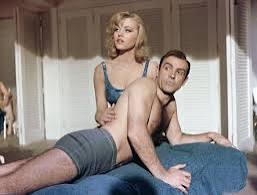
Her appearances were always infused with a cheeky knowingness. She brought a sense of comic timing and awareness to roles that might have been flat or purely decorative in other hands. Though the films were often dismissed as lowbrow, they remain a crucial part of Britain’s comedic heritage—and Nolan’s contributions were far from insignificant.
Nolan was also a regular on British television throughout the 1970s and 1980s. She had roles in series like Steptoe and Son, The Sweeney, Crown Court, and Budgie. She also worked in theater, which allowed her to stretch her acting chops beyond the stereotypes she was often assigned on screen.
Despite the playful sex-symbol image, Nolan was deeply thoughtful about her craft and the industry’s limitations. She gradually withdrew from acting in the 1980s, frustrated by the lack of substantial roles for women who didn’t fit the narrow mold of youth and beauty.