U.S. Ambassador’s fiery speech abruptly cut off at UN General Assembly
What happened
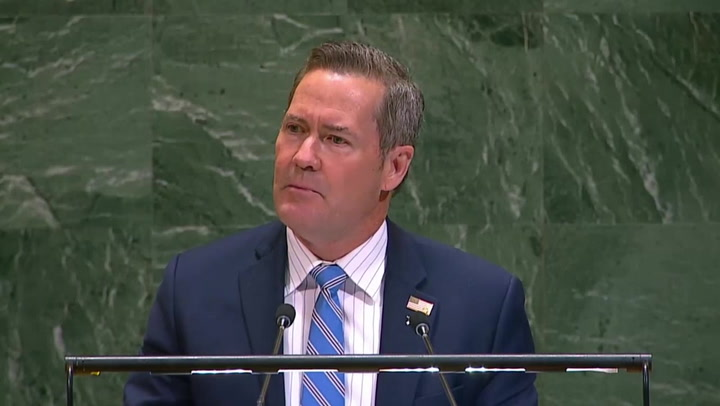
In a short yet dramatic moment at the UNGA debate on the U.S. embargo on Cuba, U.S. Ambassador to the UN Mike Waltz (serving under the Donald Trump administration) was delivering remarks when the Cuban delegate, Bruno Rodríguez Parrilla (Foreign Minister of Cuba), sharply interrupted him. The Cuban delegate’s rebuke:
“Mr. Waltz, this is the United Nations General Assembly — it is not a Signal chat. Nor the House of Representatives.” The New Republic+1
This interruption clearly aimed at Waltz’s style, tone and perhaps his past conduct (referenced “Signal chat”). The U.S. position had already been heavily criticised — the UNGA later adopted a resolution condemning the U.S. embargo on Cuba with an overwhelming majority: 165 countries in favour, 7 against (including the U.S.), and 12 abstaining. Reuters+2Responsible Statecraft+2
The clip that went viral is of that interruption moment — the Cuban minister calling out the U.S. ambassador mid-speech, and the visible shift in atmosphere. Reddit users flagged it as an embarrassing moment for the U.S. diplomacy.
Why it’s so widely discussed
Several factors combine to make this a noteworthy episode:
1. Breach of diplomatic decorum
The UNGA is supposed to be a forum of formal diplomacy, courtesy and state-to-state decorum. An interruption like this, publicly calling out the ambassador’s tone and referencing internal communications (“Signal chat”), breaks the expected script. It suggests tension, breakdown of formal diplomatic channels, and a kind of theatrical moment.
2. Symbol of U.S. standing
This incident plays into broader concerns about the U.S.’s international posture. The fact that the U.S. was arguing against a resolution condemning its own embargo on Cuba, and lost overwhelmingly (165 vs. 7) signals isolation. The interruption suggests that other countries (represented by Cuba) feel confident enough to publicly challenge the U.S. voice at the UN. That is symbolically significant.
3. Domestic/political framing
Online commentary (especially on Reddit) reflects frustration, embarrassment and broader critique of U.S. foreign policy. For many viewers outside the U.S., this moment becomes shorthand for a perception of U.S. decline in diplomatic stature. One Reddit user put it bluntly:
“Holy shit, weapons grade shame.” The New Republic+1
In short: this isn’t just a diplomatic slip-up — for many it’s a moment of reputational damage.
4. Context of the Cuba resolution
The debate wasn’t just about rhetoric. It centered on the longstanding U.S. economic embargo on Cuba. Every year the UNGA adopts a non-binding resolution condemning the embargo; this year was no exception, though the margin had shifted slightly in U.S.’s favour due to some lobbying. Responsible Statecraft
The U.S. intervention in the debate, coupled with the strong rebuke, puts the moment in a larger geopolitical context of U.S.–Cuba, U.S.–Latin America, and U.S.–multilateral relations.
What the broader implications might be
A. Diplomatic credibility
While the UNGA resolution itself is non-binding, the symbolic weight matters. When a U.S. ambassador is publicly interrupted and the motion proceeds overwhelmingly against the U.S. position, it sends a message about the effectiveness of U.S. diplomacy and influence among UN member states.
B. Tone and style in diplomacy
The incident highlights how tone, style and context matter. Diplomacy isn’t just about what is said — it’s how, when, to whom, and with what decorum. The Cuban minister’s rebuke pointedly referenced an informal private-chat atmosphere (“Signal chat”), suggesting that the U.S. remarks were too informal, too combative, or too domestic-politics-oriented for a multilateral forum.
C. U.S. internal politics projecting externally
There is a sense that some of the rhetoric used here is more akin to domestic politics — confrontational, rhetorical, aimed at a base rather than at building consensus. That raises questions about how the U.S. presents itself in international institutions, and whether the style aligns with the medium.
D. Cuba and other states carving out space
For Cuba, despite being under a long-running U.S. embargo, moments like this are valuable for symbolic international support and visibility. The strong vote, the interruption, the spotlight — they all feed into Cuba’s diplomatic narrative of being isolated by the U.S. and supported by the international community.







Post Comment