Woman, 65, Plays Clarinet During Brain Surgery After Parkinson’s Disease Left Her Unable to Use ‘Beloved’ Instrument
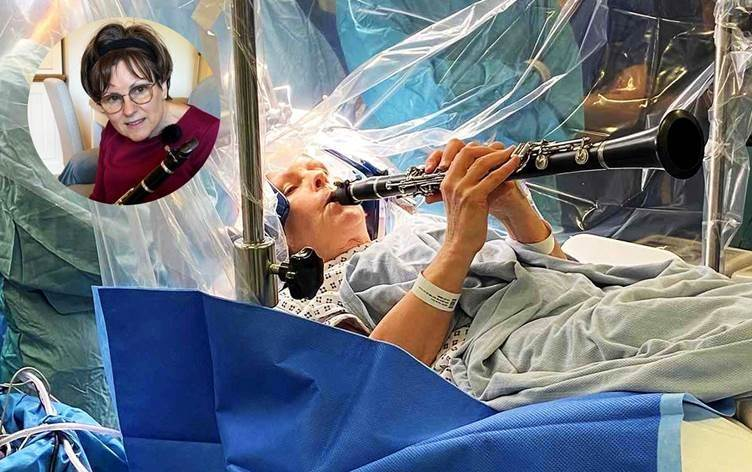
Denise Bacon, from the U.K. town of Crowborough, played her beloved instrument as she underwent deep brain stimulation (DPS) on July 16 of this year
Denise Bacon, 65, from Crowborough in East Sussex, underwent a four-hour deep brain stimulation (DBS) procedure on July 16, allowing surgeons to implant electrodes in her brain to help control her symptoms.
DBS involves inserting electrodes into targeted brain regions to deliver mild electrical impulses that regulate abnormal activity. A small device implanted in the chest — similar to a pacemaker — controls the stimulation levels.
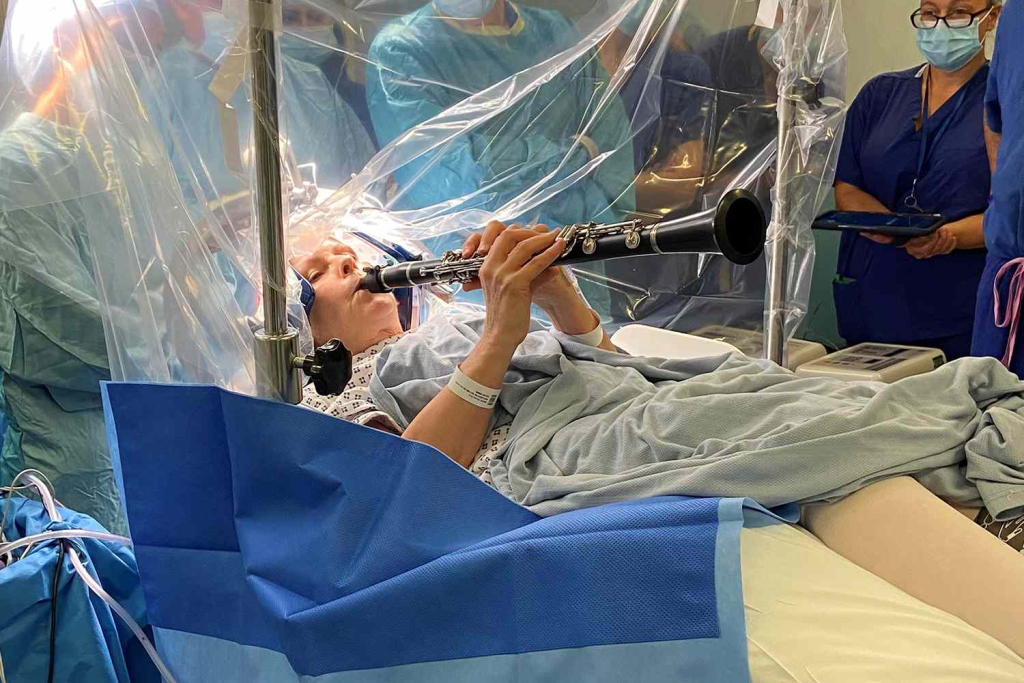
Bacon, a retired speech and language therapist and lifelong clarinetist, was diagnosed with Parkinson’s in 2014. The condition had gradually affected her ability to play, as well as to walk, swim, and dance.
During surgery, which was performed under local anesthesia to keep her awake, Bacon played her clarinet so surgeons could instantly assess improvements in her motor control. According to King’s College Hospital, “The movement in Denise’s fingers improved immediately, allowing her to play the clarinet with much greater ease.”
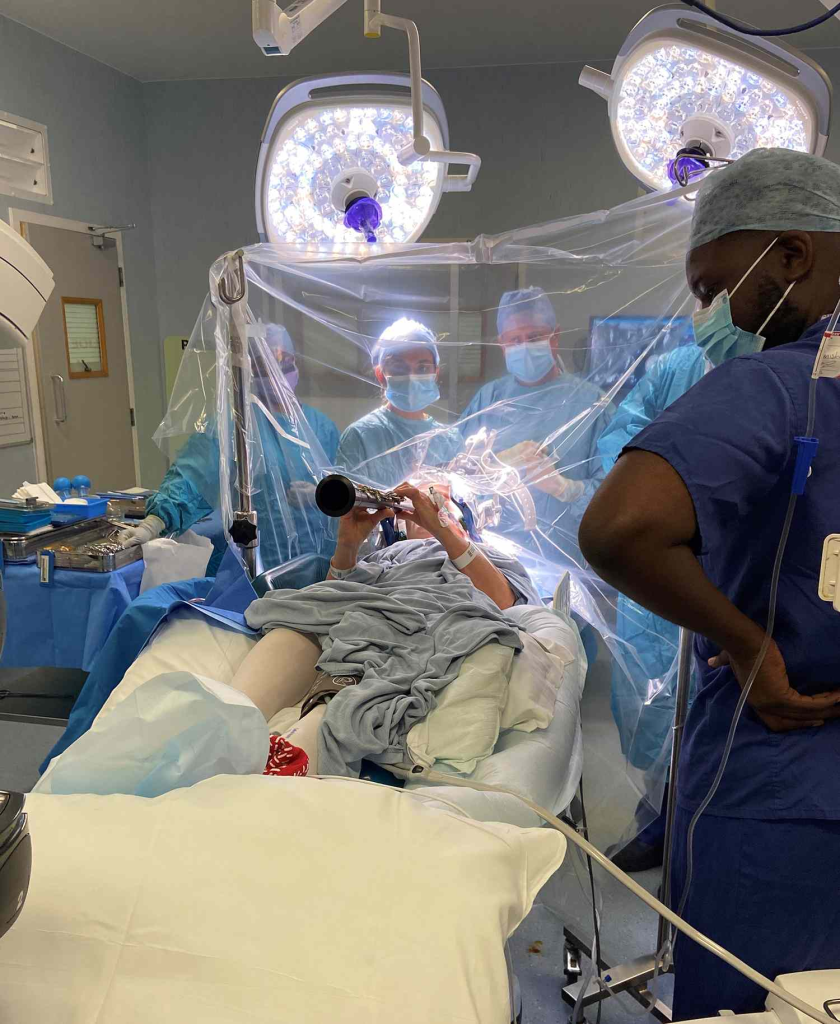
Professor Keyoumars Ashkan, who led the operation, said the team made two small openings “half the size of a five-pence piece” in her skull to insert the electrodes. “Once stimulation was delivered to the brain, there was an immediate improvement in her hand movements and ability to play,” he said.
Bacon said she was “delighted” with the results. “I remember my right hand being able to move with much more ease once the stimulation was applied. I’m already experiencing improvements in my walking, and I’m keen to get back in the pool and on the dance floor.”
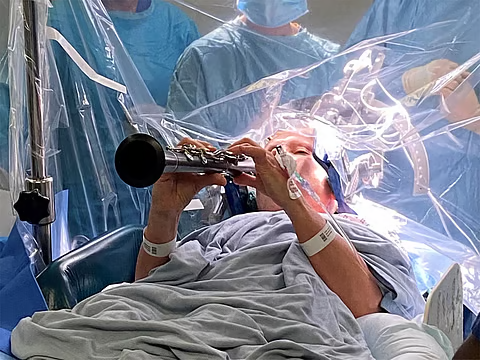
Her rechargeable pulse generator, implanted in her chest, can last up to 20 years and automatically adjusts stimulation as needed.
While DBS can’t cure Parkinson’s or stop its progression, it can significantly reduce symptoms such as tremors, stiffness, and slowed movement, improving patients’ quality of life.










Post Comment